The Sahelian region has entered a new phase of instability, where the convergence of insurgency, political upheaval, and geopolitical recalibration is reshaping security frameworks. Since 2025, militant groups have expanded their operational reach beyond traditional strongholds in Mali and Burkina Faso into coastal states, signaling a transition from localized insurgency to a broader regional threat.
This transformation has placed significant pressure on national governments to rethink their security strategies. The erosion of centralized authority in rural territories, combined with rising civilian displacement, has exposed the limitations of earlier counterterrorism approaches that relied heavily on external military assistance.
Expansion Of Armed Networks Across Borders
Armed groups have demonstrated increased coordination, exploiting porous borders and weak governance structures. Their ability to operate across Mali, Niger, and Burkina Faso has allowed them to sustain momentum despite targeted military campaigns.
The spread into previously stable coastal regions reflects a calculated effort to diversify operational zones. This expansion challenges the assumption that containment within the Sahel core is feasible, raising concerns about long-term regional destabilization.
Governance Gaps And Localized Vulnerabilities
The persistence of governance vacuums continues to fuel recruitment and territorial control by insurgent factions. In many rural areas, the absence of state services has created an environment where non-state actors can establish parallel systems of authority.
These localized vulnerabilities complicate military responses, as the conflict is no longer solely about territorial control but also about legitimacy and service provision.
Emergence Of Regional Security Coalitions
In response to these challenges, regional actors have begun to assert greater control over their security frameworks, emphasizing Sovereignty and Solidarity as guiding principles. The formation of new alliances marks a departure from reliance on external powers.
This shift reflects both strategic necessity and political recalibration. Governments increasingly view localized solutions as more sustainable, particularly after the perceived shortcomings of earlier multinational interventions.
Formation Of The Alliance Of Sahel States
The Alliance of Sahel States, comprising Mali, Burkina Faso, and Niger, represents a significant institutional development. Its creation in late 2025 signaled a unified approach to addressing cross-border threats through coordinated military operations.
Early operations have demonstrated improved tactical coordination, particularly in border regions where joint patrols have disrupted militant supply routes. However, the alliance’s long-term effectiveness remains tied to its ability to maintain cohesion among member states.
Departure From Previous Multinational Models
The decline of earlier frameworks, such as the G5 Sahel Joint Force, has influenced the design of new regional mechanisms. Unlike its predecessor, the current approach prioritizes autonomy over donor-driven agendas.
This transition has allowed participating states to align operational priorities more closely with national interests. At the same time, it introduces new challenges related to resource mobilization and institutional capacity.
External Actors And Strategic Realignment
While regional actors emphasize autonomy, external powers continue to shape the security environment through strategic partnerships. The evolving role of non-Western actors has introduced a new dimension to the Sahelian crisis.
These partnerships are not merely transactional but reflect broader geopolitical shifts. The diversification of alliances indicates a move toward a multipolar security landscape, where influence is distributed among competing external stakeholders.
Expanding Role Of Russian Security Support
Since 2025, Russian security involvement has expanded through bilateral agreements with Sahelian states. These arrangements have included military training, equipment transfers, and operational support aimed at strengthening local forces.
This engagement has enabled rapid tactical gains in certain مناطق, particularly in contested northern territories. However, it has also raised questions about long-term dependency and the transparency of such partnerships.
Declining Western Military Presence
The withdrawal of Western forces over recent years has created both opportunities and risks. On one hand, it has allowed regional actors to reclaim decision-making authority. On the other, it has left gaps in intelligence and logistical support.
The recalibration of Western engagement, shifting from direct intervention to limited cooperation, reflects changing political priorities but also underscores the challenges of sustaining long-term security commitments.
Operational Realities Of Regional Forces
The effectiveness of regional security initiatives depends on their ability to translate political alignment into operational success. While progress has been observed, significant constraints continue to shape outcomes on the ground.
The complexity of the conflict environment requires adaptable strategies that combine conventional military tactics with localized knowledge. This dual approach remains difficult to implement consistently across diverse national forces.
Coordination And Tactical Gains
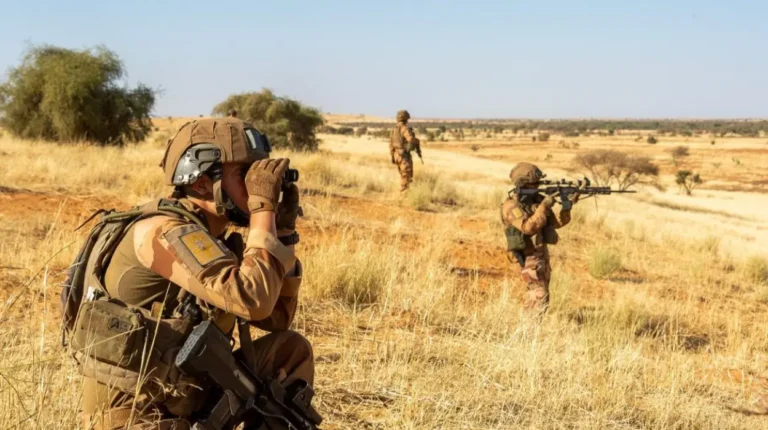
Joint operations conducted since late 2025 have shown measurable improvements in coordination. Shared intelligence and synchronized patrols have reduced the frequency of large-scale cross-border attacks in certain مناطق.
These gains highlight the potential of regional collaboration when supported by coherent command structures. However, they also reveal the uneven distribution of capabilities among participating forces.
Logistical And Financial Constraints
Sustaining military operations across vast and often inaccessible مناطق presents significant logistical challenges. Limited infrastructure and resource constraints hinder the ability to maintain a consistent operational tempo.
Financial limitations further complicate efforts to scale operations. While regional funding mechanisms have been introduced, they remain insufficient to fully support long-term stabilization efforts.
Human Security And Civilian Impact
The Sahelian crisis cannot be understood solely through a military lens. The humanitarian dimension continues to shape both the trajectory of the conflict and the legitimacy of state responses.
Rising displacement and food insecurity have intensified the pressure on governments to deliver not only security but also basic services. This dual burden underscores the interconnected nature of security and development.
Displacement And Economic Strain
By late 2025, millions of civilians had been displaced across the region, placing immense strain on already fragile economies. The disruption of trade routes and agricultural activities has further exacerbated economic instability.
These conditions create a feedback loop in which economic hardship fuels further instability, complicating efforts to achieve lasting peace.
Community Trust And State Legitimacy
The success of regional security initiatives depends heavily on public perception. If military operations are perceived as heavy-handed or disconnected from community needs, they risk undermining trust.
Efforts to integrate community engagement into security strategies represent a recognition of this challenge. Building legitimacy remains a critical factor in countering insurgent influence.
Future Prospects For Regional Stabilization
The trajectory of the Sahelian crisis will depend on the ability of regional actors to sustain cooperation while addressing structural weaknesses. Sovereignty and Solidarity offer a framework, but their practical application remains uneven.
The coming years are likely to test whether these principles can evolve into a durable security architecture capable of adapting to shifting threats.
Balancing Autonomy With Cooperation
Regional actors must navigate the tension between maintaining sovereignty and engaging in collective action. This balance is essential for ensuring both national control and effective coordination.
The success of this approach will depend on the willingness of states to align their policies while respecting internal political dynamics.
Integrating Security With Governance Reforms
Military efforts alone are unlikely to resolve the underlying drivers of instability. Governance reforms, economic development, and social inclusion must complement security initiatives.
The integration of these elements remains a complex and long-term process, requiring sustained commitment from both national governments and regional institutions.
As regional forces continue to redefine their approach, the Sahel stands at a crossroads where local ownership of security may either consolidate stability or expose deeper structural limits. The evolving interplay between autonomy, cooperation, and external influence suggests that the outcome will not hinge on a single strategy, but on the ability of regional actors to adapt faster than the challenges confronting them.