The rise of the Sahel as the world’s most dangerous terrorism epicentre is one of the most important security dynamics over the last decade. Figures from the Global Terrorism Index 2025 show that the region is now responsible for over 50% of global terrorism fatalities, a stark shift from its previous marginalised status. Countries such as Burkina Faso, Mali and Niger have become epicentres, where violence has impacted national governance and global threat perceptions.
This escalation is more than an escalation in numbers. The United Nation Security Council declaration of the Sahel as the “global epicentre of violent extremism” in 2015 reflects a shift in the nature of conflict. Violence has transitioned from intermittent attacks to sustained campaigns, revealing a growing coordination and ambitions of groups.
Jihadist consolidation and strategic adaptation
The transformation of the Sahel into a focal point of global terrorism is linked to the consolidation of militant networks that blend local insurgency and transnationalism with a jihadist ideology.
The rise of JNIM and territorial entrenchment
Jama’at Nusrat al-Islam wal-Muslimin (JNIM) has become a key player in the central Sahel. By bringing together various elements, the group has grown in size while remaining cohesive. The group’s presence in rural and peri-urban areas has allowed it to shift from guerrilla warfare to governance-based insurgency, where it can rule and tax.
This development is part of a wider trend towards insurgency-based governance. JNIM is not only using violence but also tapping into local grievances, providing alternative forms of governance in regions where the government is weak or non-existent. This has improved its sustainability and created challenges for the traditional “death and destruction” approach to counterterrorism.
Islamic State affiliates and operational reach
Beyond JNIM, Islamic State-affiliated groups have boosted their capabilities. Their operations increasingly impact infrastructure and urban centres, demonstrating a shift from rural insurgency. For example, a 2026 attack near Niamey’s airport showcases their ability to attack national infrastructure targets.
The presence of numerous jihadist networks has fostered a competitive and evolutionary environment. Tactics are shared amongst groups, enabling swift adaptation and transnational integration. This combination obscures the lines between localised insurgencies and global terrorism.
Western withdrawal and security vacuum dynamics
The escalation of violence in the Sahel has occurred at a time of diminished Western military and intelligence operations, and shifted the strategic environment.
End of French military leadership
The conclusion of France’s Operation Barkhane in 2022 (due to political conflict with governments in the region) marked the end of a key component of the counterterrorism campaign. Further French expulsions from Burkina Faso and Niger further signalled a rejection of Western influence. These moves eliminated a deterrent against militant activities.
Despite the claimed ineffectiveness of Operation Barkhane in the long term, its intelligence gathering and rapid response capabilities had a stabilising effect. Its withdrawal has left security lacunae which local powers have been unable to address.
United States drawdown and intelligence gaps
The 2024 U.S. drawdown in Niger exacerbated the security gap. This move to close drone and intelligence centres resulted in reduced surveillance capabilities, making it harder to monitor militant activities and respond accordingly.
This move is part of a shift in Western priorities. But it has also highlighted the unintended effects of withdrawal. As Western powers disengage, terrorist groups have greater freedom to operate in areas that may have been previously contested or observed.
Governance breakdown and political fragmentation
The security crisis in the Sahel is linked to political instability. Governance breakdown and institutional weakness has allowed extremism to flourish.
Military juntas and regional realignment
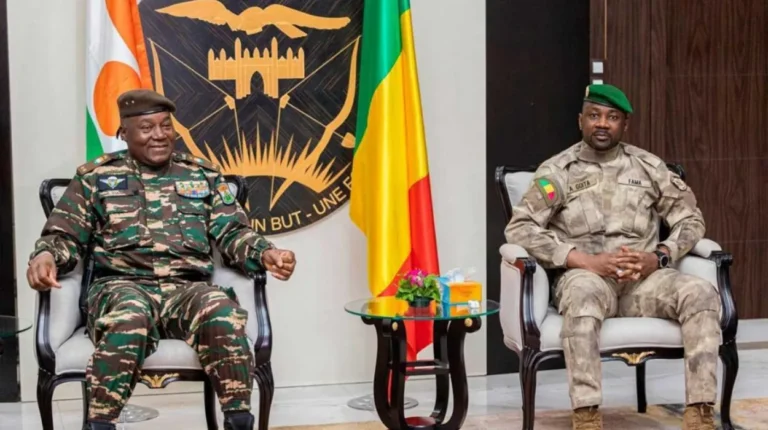
Mali, Burkina Faso and Niger have witnessed military coups that have altered the political landscape. The regimes have cut ties with their former allies, such as the Economic Community of West African States, and forged new partnerships.
This shift has been in response to the failures of existing security frameworks, but it has also led to divisions within the region. The lack of coordinated approaches has undermined collective responses to transboundary challenges, and has enabled militant groups to exploit gaps.
Alternative security partnerships and limitations
Sahelian nations have turned to Russia-linked private security companies instead of Western counterparts. These alliances offer short-term tactical assistance, but analyses from 2025 and 2026 indicate they have little effect on security. Issues related to human rights and institutional degradation have also inhibited their success.
Over-reliance on non-domestic actors without concomitant reforms heightens the risk of instability. Without devoting resources to addressing political and economic conditions, military responses are unlikely to improve security.
Expansion toward coastal West Africa
The Sahel crisis is now transpositional and not restricted to the geographical area. The expansion into coastal West Africa represents a new threat in the region.
Spillover into coastal states
Increasing reports of attacks by Sahel-based militant groups have been reported in Benin, Togo and Côte d’Ivoire. These attacks take place in areas of weak state presence on the borders, offering opportunities for insurgents.
This is part of a broader strategy by militant groups to gain access to new areas. Pushing into coastal states, they enhance their profile and ability to affect economically vital regions.
Economic and security implications
Shifting towards coastal areas has wider economic implications. Interruption of trade routes, tourism and infrastructure are likely to further exacerbate the effects of terrorism beyond a direct security threat. Governments in these regions must prevent insurgencies from taking hold and maintaining economic growth.
This shift also demonstrates the transnational implications of the crisis. Sahelian instability is impacting the broader region and is creating a larger arc of instability that is not confined to the traditional hot spots.
Rethinking global counterterrorism priorities
The rise of the Sahel as a hub for terrorism poses questions about the adequacy of current counter-terrorism policies and strategies.
Structural drivers and long-term risks
Underlying factors such as demographic growth, climate stress, and economic marginalization contribute to the persistence of violence. These conditions create fertile ground for recruitment and sustain militant operations. Addressing them requires long-term engagement that extends beyond immediate security measures.
The persistence of these structural drivers suggests that counterterrorism strategies focused solely on military solutions may be insufficient. Without addressing root causes, efforts to suppress militant groups risk being temporary.
The future of international engagement
The trajectory of the Sahel indicates that it will remain central to global terrorism dynamics in the near term. The challenge for international and regional actors lies in balancing security operations with governance reform and economic development.
The evolution of militant networks in the Sahel reflects broader trends in how terrorism adapts within fragile environments. As these groups continue to expand and refine their strategies, the region increasingly serves as a testing ground for global counterterrorism approaches. The question that emerges is whether current responses can adapt quickly enough to address not only the manifestations of violence but also the deeper conditions that sustain it, or whether the Sahel’s position at the center of global terrorism will become a lasting feature of the international security landscape.