According to reports, Turkish and Syrian authorities have arrested ten people during a joint security operation due to their supposed connections with ISIL, which shows that the terrorist group’s transnational networks keep attracting the focus of regional intelligence agencies. This case highlights the efforts that both Turkey and Syria are making against the threat of terrorism, along with Turkey’s ongoing campaign against ISIL operations within its borders.
The report is important, not only due to the large number of detainees but also due to the apparent level of cooperation between Turkish and Syrian officials in a context where cooperation on regional security issues continues to be a politically delicate issue. The report also underscores the continued presence of ISIL despite its military defeat in Syria and Iraq.
What did Turkish and Syrian officials do?
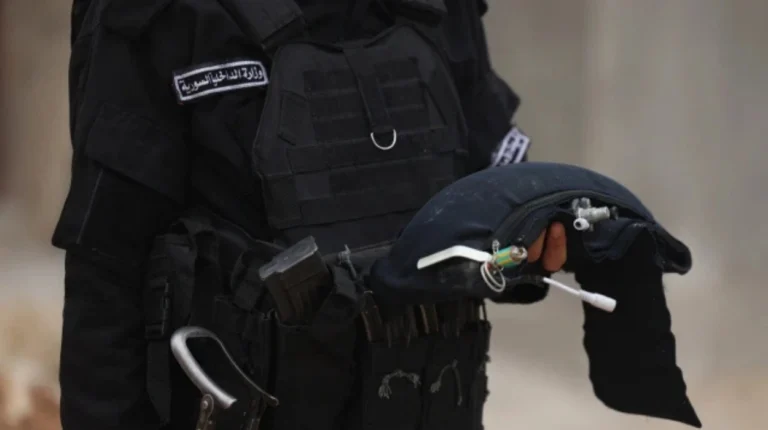
As per the report, Turkish and Syrian security forces have arrested 10 people associated with ISIL in what is termed as a joint intelligence-driven effort against an entity that was reportedly operating in the cross-border area and involved in terrorist acts in Turkey in the past.
This particular reported act is significant in terms of the fact that it indicates that the security forces are still working to track down the suspects from old ISIL-related cases as opposed to seeing them as a purely present-day security challenge. This implies that there is the perception that ISIL-affiliated individuals might have stayed in the region by virtue of the underground routes of movement and communication.
Why is this case important?
Here are some reasons why this case is notable. One, the arrests involve both Turkish and Syrian authorities, suggesting a collaboration that is perhaps not always obvious from the media reports. Two, the arrested individuals were allegedly members of ISIL, which continues to be a terrorist threat even without having any territorial caliphate anymore. Three, one of the arrested individuals was linked with the Ankara bombing – one of the most violent events to occur in the history of contemporary Turkey.
All of this puts into perspective the reason behind the arrest, suggesting that it goes far beyond being just an announcement of an arrest.
What are the alleged links to ISIL?
According to the report, the 10 individuals were taken into custody due to the suspicion of links with ISIL and were believed to be active participants in the coordination of attacks in Turkey. It was noted that one of the arrested individuals was linked to the 2015 bombing in Ankara, resulting in the death of over 100 people, and became an example of a tragic event caused by ISIL influence in Turkey.
In addition, it is mentioned that some of the individuals had received Interpol Red Notices. Such information provides additional value to the case, since it indicates that the suspects were known in the international police circles.
These associations imply a network of actions that might have involved recruiting, planning, intelligence exchange, and crossing the Turkish-Syrian border area. Without even proving their claims legally, the allegations provide significant information because of what they tell us about the nature of the threat Turkish authorities still face from the ISIL: fragmented, mobile, and able to operate through clandestine networks.
How does Ankara view the threat?
ISIL has always been seen by Turkey as being among its major security threats, particularly following the string of attacks conducted on various urban centers and social gathering places. The Ankara bombings have played a key role in shaping such a perception in the country, and hence any information suggesting involvement in the attack is bound to receive significant government interest.
It is important to point out that the general position held by the Turkish state has always been that ISIL should be regarded as an unfinished security threat, since it represents a resilient organization that can reorganize itself and benefit from the prevailing instability in the region.
In this sense, the mentioned detentions are not merely reactive measures, but rather reflect an official practice where Turkey tries to show that it continues to fight ISIL on its soil as well as on its border with Syria. Indeed, the idea is obvious – earlier attacks are still under investigation, and their alleged accomplices are being tracked down.
What role does Syria play here?
The role that Syria plays in the context of ISIL activities is still crucial considering its geographical location, the ongoing conflict, and the history of militant movements from the neighboring territories. Despite being defeated territorially, the region along the Syrian-Iraqi border has remained an area where different armed groups operate alongside intelligence organizations and criminals.
Syrian officials’ involvement mentioned in the report has significance in its own right for it implies cooperation as opposed to independent actions. This aspect takes particular relevance bearing in mind the current situation in the region with limited coordination due to political reasons, conflicting security interests and the consequences of the conflict in Syria itself. The cooperation among the countries would mean a security alliance on a practical level against ISIL notwithstanding the conflicts within the region.
This would mean, in addition, that the suspects could have been suspected of being in Syria or in the vicinity of its borders, where enforcement activities face difficulties due to jurisdiction issues and fragmented governance.
What do the Interpol notices mean?
A point worth highlighting in regard to the case is the involvement of Interpol Red notices, as this indicates the possibility that the suspects might be internationally sought out, and not confined to one country. A Red notice, despite its name, is not an arrest warrant; rather, it represents a request for international cooperation in apprehending a person who is sought for prosecution or for carrying out a sentence.
This indicates that information gathering in this particular case would have taken time, and the process involved sharing of intelligence and data collection on an international scale.
The Interpol element strengthens the picture of a transnational case. It suggests that these were not random arrests but part of a much wider effort to track suspected ISIL figures through international law-enforcement systems.
What was said about the suspects?
The report describes the detainees as individuals with alleged ISIL ties, and some were said to have taken part in attacks against Turkey. One suspect was reportedly linked to the Ankara bombings, while others were described as part of a broader ISIL network that had received instructions or support through organized channels.
That kind of language is common in initial security reporting, but it should be understood as allegation until courts or official charging documents confirm it. Still, these statements matter because they show what the authorities believe they have uncovered: a connected group rather than isolated individuals.
In news terms, the accusation pattern suggests the operation may have targeted not only fighters but also planners, facilitators, and intermediaries. That is often how counterterrorism cases develop, especially when investigators try to reconstruct older attack networks.
What does this mean for regional security?
The arrest of ten persons suspected of ties to ISIL confirms that the fight against terrorism in Turkey and Syria is ongoing. Although the terrorist organization does not control territory any more, the threat lives on via covert networks, clandestine sympathies, and the fluid movement across borders.
On the Turkish side, the arrests confirm that vigilance should be sustained both in domestic space as well as on the Syrian border. On the Syrian side, the arrests suggest that cooperation in matters of security is feasible even when diplomatic ties are strained.
The general conclusion is that ISIL retains its existence as a security problem in various incarnations – ideological, organizational, and case-based. The latter refers to open cases from previous years.
The most important next step is whether officials release more concrete details about where the detentions took place, what charges will be filed, and whether any of the suspects are formally linked to past attacks. Court documents would be especially important in confirming how strong the evidence is. Another key issue is whether additional arrests follow. In cases like this, initial detentions often lead investigators to other names, phone records, financial trails, or safe houses.
It will also matter whether Turkish and Syrian officials speak publicly in more detail. If they do, their wording will help clarify whether this was a narrowly focused counterterrorism strike or part of a broader campaign against ISIL remnants operating across the region. The reported case is therefore both a security story and a political signal. It shows that, despite years of defeat on the battlefield, ISIL-linked concerns still shape intelligence priorities, border policy, and regional coordination.