Military escalation is now rife in the Middle East as the Iranians retaliated against the United States’ attacks on their land through missile attacks on United States’ military installations in Bahrain, Kuwait, and Jordan. This military escalation comes at a time when the Iranians have been in a state of war for several months now.
The latest development stands among the most risky escalations in the current military rivalry between the United States and Iran, with Tehran making clear its intention to target US assets in different countries and issue a threat of
“even more severe reaction if the US keeps attacking us.”
These developments follow the recent action by the US to strike back in kind with a proportional attack at Iranian facilities located in the vital Strait of Hormuz following the US loss of an Apache helicopter on Monday to what President Donald Trump attributed to Iran.
The Helicopter Downing: Catalyst for Escalation
The chain of events that triggered this most recent clash commenced on Monday when a US Apache helicopter was shot down in the water of the Gulf of Hormuz. The clash became a direct result of the trigger which initiated another war between two countries who have already been at war for some time. According to the reports of the Pentagon, two people on board the helicopter survived the crash and were rescued by an American drone.
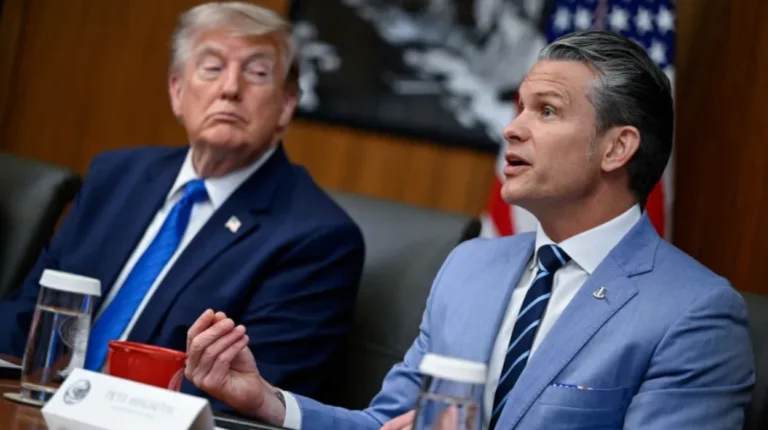
President Trump’s response was immediate and unequivocal.
“Iran shot down the helicopter and the US ‘must, of necessity’ respond,”
the President stated, demonstrating his administration’s determination to maintain military pressure on Tehran. This statement set the tone for what would become a full-scale retaliatory operation against Iranian military infrastructure near the Strait of Hormuz, one of the world’s most critical energy shipping passages.
The shooting down of the chopper, although fairly insignificant in terms of losses suffered, amounted to a direct provocation aimed at undermining the activities of the American military in the region, thus providing the White House with a reason for intensifying their strikes against Iranian soil. Considering the fact that the provocation took place in the middle of an already ongoing confrontation between the two parties, some observers concluded that Tehran might have been probing the limits of America’s tolerance.
U.S. Strikes on Iranian Territory: Targets and Methodology
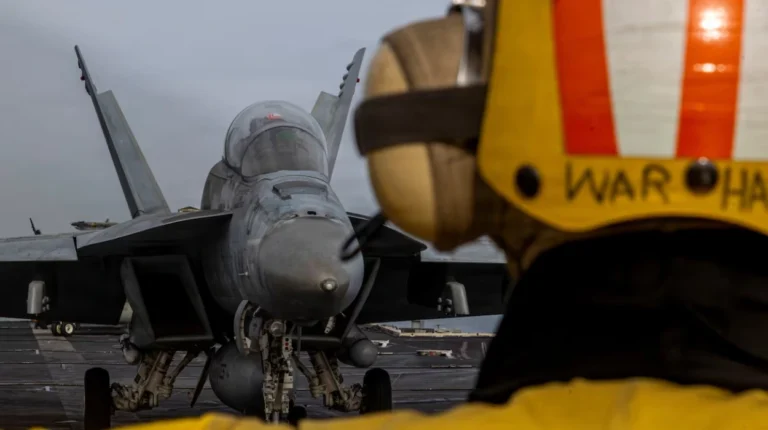
The United States Central Command (Centcom) executed a comprehensive aerial assault on Iranian military installations in the early hours of Wednesday, conducting several hours of airstrikes on multiple locations across southern and coastal Iran. The attack was aimed at Iran’s air defense system, control centers on the ground, and surveillance radars around the Strait of Hormuz. This was achieved through the use of smart bombs launched from the American fighters both in the Air Force and the Navy.
The geographical range of American attacks was wide, including some strategic points in Iran. The United States hit targets in Qeshm Island, which is strategically placed in the Strait of Hormuz, as air defense was noted to be taking place in the region. Explosions took place in Sirik port, with Iranian claims indicating that the American attacks hit a telecommunications tower and two water tanks.
Bandar Abbas, Iran’s major port city and a critical hub for maritime operations in the region, also came under attack.
“The United States military US Central Command has primarily targeted the southern and the coastal regions of Iran, especially Bandar Abbas, which is an important port of Iran,”
according to reports covering the operation’s geographic focus. The targeting of Bandar Abbas demonstrated the U.S. military’s intent to strike at Iran’s coastal infrastructure and maritime capabilities.
The operation was described by the U.S. Central Command as
“a proportional response to recent attacks on US forces and international commercial ships transiting regional waters,”
establishing the official American justification for the strikes. This characterization positioned the U.S. operation not as a unilateral escalation but as a measured response to Iranian aggression against American military assets and international shipping in the Gulf region.
Iran’s Retaliatory Strikes: Expansion Across Three Nations
Iran’s reaction to the attacks was quick and well-rounded and represented a considerable step up in terms of the geographical scope of the attacks. It conducted a series of coordinated drone and missile strikes against US assets in several countries located within the Persian Gulf region, with Iran alleging that it had attacked at least 21 US assets in the region. The fact that this attack occurred within multiple countries in the Gulf region illustrates an increase in the capability of Iran to project its military force in the region.
The first attack in Jordan took place at the Al-Azraq base which is one of the main US military bases in the region. According to the Jordanian Armed Forces, they were able to repel the Iranian attack, shooting down five missiles without any casualties or damage being inflicted. While this means that there were no losses sustained by either side, the attack itself demonstrates the capability of Iran to conduct attacks on US assets in another country.
Iran has been said to strike the Ali Al-Salem base in Kuwait, which is another major US military base in Kuwait where US military operations in the region have been carried out from before now. The army in Kuwait reported that they managed to intercept the attacks by the Iranians but did not give any more information on how effective or damaging this may have been. It can be deduced that Iran has decided to target Kuwait again because this was the second time in the last week that it happened.
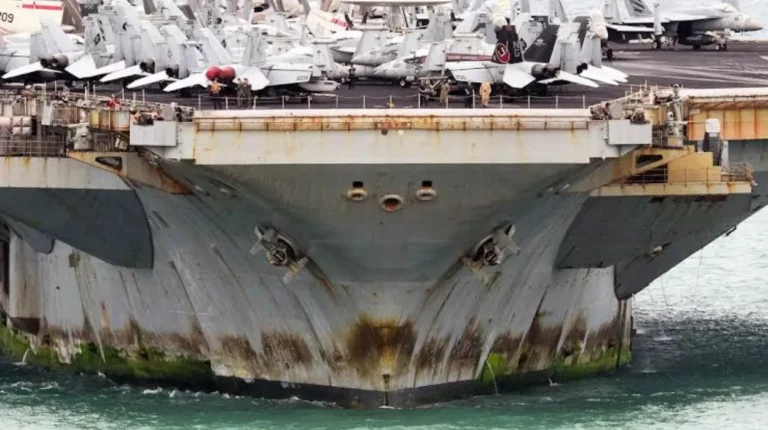
Bahrain, which hosts one of the US navy’s most vital commands, the Fifth Fleet, suffered Iranian strikes on US facilities in the country. Bahrain’s Interior Ministry reported that siren alarms were going off and that people should take cover while explosions were observed throughout the country. The significance of targeting Bahrain was that it housed the most vital navy unit of the United States.
Iran’s Expanded Strategic Scope: F-35 Hangars and Command Centers
These accusations of the IRGC about the targeted sites showed that Iran was well aware of US military capabilities in the region, and it possessed high levels of precision when targeting. According to these accusations, Iran’s aerospace units attacked F-35 fighters’ hangars located in the US military facility and command and control center located in Jordan. The attack on such objects, where there are the most advanced American fighters, shows Iran’s growing capabilities for launching strikes against highly valuable US objectives.
Tehran is widening its operation zone by adding Jordan to the list of places and naming the specific targets, such as F-35 hangars. Such actions are perceived by many people as a signal that Iran is ready for the resumption of the regular dynamic fight. Expansion of the zone for conducting operations by the Iranians is an indicator of growth in their military capabilities and readiness to conduct attacks on US forces in various locations of the Middle East.
The IRGC’s claims about targeting command and control centers further indicated Iran’s strategic understanding of US military operations in the region. Command and control facilities represent the communications and coordination infrastructure that enables US military operations, and their targeting suggested Iran’s intent to disrupt American operational capabilities rather than simply inflict damage on physical infrastructure.
Iran’s Warning to Gulf Nations: Legal and Moral Responsibility
Beyond the immediate military exchange, Iran issued a significant diplomatic warning to countries on the southern shores of the Gulf, establishing a broader geopolitical framework for its actions.
“Iran issued a warning to countries on the southern shores of the Gulf, saying they have a legal and moral responsibility to prevent their territory being used by the US and for the defence of Israel, and that Iran will not hesitate to target bases and logistical facilities used for aggressive operations against it,”
Tehran’s statement outlined Iran’s position on the role of Gulf nations in the conflict.
This warning represented Iran’s attempt to establish political pressure on Gulf Cooperation Council (GCC) nations, particularly those hosting US military facilities. By framing the issue as a “legal and moral responsibility,” Iran positioned itself as opposing not just the United States but the entire regional infrastructure that enables American military operations. The specific mention of Israel’s defense suggested that Iran views the conflict through the broader lens of its opposition to Israeli influence in the region.
The warning also included a clear threat of escalation:
“Iran will not hesitate to target bases and logistical facilities used for aggressive operations against it,”
demonstrating Tehran’s determination to continue strikes if US operations persist. This threat positioned Iran as willing to expand its operations beyond current targets if the United States maintains its military campaign.
Official Responses: U.S. and Iranian Positions
The official statements from both sides revealed starkly contrasting positions on the legitimacy of the military exchanges and the broader conflict. President Trump’s administration maintained that the U.S. strikes were defensive and proportional, while Iran’s government characterized the American operation as an illegal violation of Iranian sovereignty.
“Iran condemned the US attacks as a violation of Iran’s sovereignty and reiterated Iran’s right to respond in self-defence,”
Iranian Foreign Minister Abbas Araghchi stated, establishing Tehran’s official position on the U.S. operation. Araghchi’s condemnation framed the U.S. strikes as an illegal use of force against Iranian territory, positioning Iran’s retaliatory strikes as legitimate self-defense under international law.
The IRGC’s characterization of the U.S. attacks was more direct and hostile.
“IRGC described the attacks as ‘vicious,'”
the statement encapsulated Iran’s official position on the American operation. This characterization positioned the U.S. strikes as unprovoked aggression rather than legitimate military action, establishing Iran’s narrative of defensive resistance against American aggression.
President Trump’s response to the Iranian strikes maintained the administration’s focus on ending the conflict.
“The US would be declaring ‘total victory’ over Iran in the next two weeks,”
Trump stated, continuing his administration’s timeline for concluding the monthslong war. This statement demonstrated the administration’s determination to maintain military pressure on Iran despite the Iranian retaliatory strikes.
The Strategic Importance of the Strait of Hormuz
The geographic focus of the conflict on the Strait of Hormuz underscores the strategic importance of this critical waterway in global energy markets and international security. The narrow and congested Middle East waterway has become a site of escalating U.S.-Iran tensions, with the Strait serving as the primary flashpoint for military confrontation between the two nations.
“Trump’s war on Iran has placed it in the middle of the battlefield, driving a spike in oil and gas prices worldwide,”
according to analysis of the strategic implications of the conflict positioning.
Because the Strait of Hormuz is the principal route for exporting Persian Gulf oil, any military action occurring in the Persian Gulf will immediately cause repercussions in the global economy because energy markets react to any escalation in the fight.
The strategic significance of the waterway is what has caused it to be the focal point of military operations by both countries in the area. Access to the Strait and control over its waters play such a critical role in their respective national interests that the United States’ military operation, which includes the Fifth Fleet in Bahrain, seeks to safeguard its interests in the waterway, whereas Iran’s military action seeks to counter the U.S.’s control over the area.
Diplomatic Efforts and the Threat of Full-Scale War
In the midst of all the fighting, diplomatic talks have not been stopped. There are diplomatic negotiations going on to avoid a total war between the US and Iran, based on reports about the situation during this conflict. Diplomatic talks, including those being done in Qatar, reflect the world’s efforts to make sure the conflict does not escalate into a larger regional war.
That there are ongoing talks while there is fighting implies that there is an attempt by both parties to reduce the tension, even while carrying out military operations. In Qatar, diplomacy is being conducted internationally to provide means of resolving the issue between Washington and Tehran.