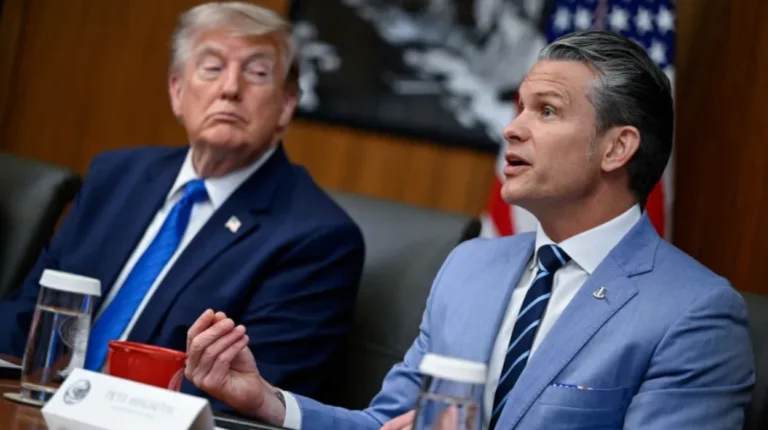
Saudi Arabia, Türkiye and Pakistan have signed a landmark defence agreement in Makkah, committing to treat an armed attack against any one of the three countries as an attack against all. The agreement, signed on Friday, August 7, comes as the Middle East faces widening conflict, missile and drone threats, and growing uncertainty over the reliability of traditional security partnerships.
Makkah Joint Defence Treaty includes three countries with differing military and geopolitical capabilities. Firstly, Saudi Arabia has financial influence and oil influence, as well as strategic position; secondly,Türkiye possesses a large NATO-style army and a highly developed defence sector; thirdly, Pakistan provides significant military experience, large army and the only one among the three parties of the treaty nuclear weapon. Some analysts have started referring to the Makkah Joint Defence Agreement as a base for a future “Muslim NATO”. This term is premature now. Unlike the NATO, the new agreement does not include any official permanent military command, force structure, response plan or automatic troop deployment commitment.
The official statement nevertheless contains a significant collective-defence commitment.
“The agreement is intended to strengthen collective deterrence against any act of aggression, and stipulates that any armed attack against any one of the three States shall be regarded as an attack against them all,”
the joint statement issued after the summit said. It added that the agreement would enhance
“all aspects of defence cooperation among the three states.”
What the agreement actually says
This agreement was signed at Makkah by Saudi Crown Prince and Prime Minister Mohammad bin Salman, Turkish President Recep Tayyip Erdoğan and Pakistani Prime Minister Shehbaz Sharif. This summit was convened under the Makkah Al-Mukarramah Summit for Joint Defence, on invitation by Saudi Arabia. As per Pakistan’s Foreign Ministry, this agreement was made based on the existing historical relationship and shared strategic interests of the two countries along with their cooperation in the field of defense. It is presented as a defensive arrangement which will help in enhancing deterrence and security of the three governments. The core provision of this agreement is politically strong but operationally deficient. The publicly released version of the agreement lacks details about whether the attack would lead to automatic military assistance, whether the aid would be military in nature or whether the decision regarding response would be made separately by each of the governments.
The full treaty text and possible classified annexes have not been made public. As a result, several important questions remain unanswered. It is not yet clear whether the agreement covers cyberattacks, attacks by proxy groups, missile and drone strikes, attacks on military personnel stationed abroad or threats to commercial shipping and energy infrastructure.
There is also no public confirmation of a joint command, permanent headquarters, rapid-reaction force, shared air-defence network or regular trilateral military exercises. These details will determine whether the pact becomes a functioning military alliance or remains primarily a political declaration of solidarity.
Why the pact matters now
The agreement has emerged during one of the most volatile periods in the region’s recent history. Gulf states are facing the possibility of attacks involving ballistic missiles, cruise missiles, drones and armed proxies. The conflict involving Iran has increased pressure on Saudi Arabia and other regional governments, while Houthi and militia activity has added to insecurity around the Red Sea and Gulf.
The pact is also based on the Strategic Mutual Defence Agreement entered into by Pakistan and Saudi Arabia in September 2025. According to that bilateral pact, an attack on one of the two parties would amount to an attack on both countries, thus making this long-standing relationship even stronger. The involvement of Türkiye brings a new military and political perspective to the arrangement. For Saudi Arabia, this agreement gives a wider security umbrella at a time when it wants to cut itself loose from any dependency on an individual outside power. This agreement does not necessarily mean a shift from the US, which continues to be a major security partner for the Kingdom.
Rather, this agreement highlights Saudi Arabia’s move to maintain several different relationships and yet have access to American weaponry, intelligence, and diplomatic backing. For Türkiye, this agreement opens up a way to expand its influence in the Gulf region and to build closer defence industry relations with Saudi Arabia and Pakistan. Türkiye has been trying to sell its range of drones, armoured vehicles, missiles, warships, and other defence-related equipment in the region.
For Islamabad, the pact enhances its strategic relevance beyond South Asia. Pakistan has close political, economic and military ties with Saudi Arabia, while its relationship with Türkiye has expanded rapidly in defence, aviation and naval cooperation. The agreement allows Pakistan to present itself as both a Gulf security partner and a country capable of contributing to wider Muslim-world diplomacy.
Three different military strengths
The significance of the arrangement lies less in the creation of a single integrated force than in the combination of three different forms of power.
Saudi Arabia is the big spender of the bunch. According to calculations based on SIPRI data, Saudi Arabia spent around $83.2 billion on its armed forces in 2025. This made Saudi Arabia the highest military spender in the Middle East region. Saudi Arabia has spent much money on fighter jets, missile defense systems, naval capabilities, precision-guided missiles and other military infrastructure, despite its armed forces remaining highly dependent on foreign hardware and training. Turkey has a large army and extensive combat experience in Syria, Iraq and Libya. It is also a member of NATO and has a burgeoning domestic arms industry.
Turkish unmanned aerial vehicles (UAVs), electronic warfare systems, armored vehicles, naval capabilities and missile technologies are becoming increasingly important tools in Ankara’s foreign policy toolkit. Pakistan has one of the largest and most experienced armed forces in the region. It has been engaged in anti-insurgent operations in different environments and has remained in a high state of alertness due to rivalry with India. Pakistan has a well-developed missile program and a nuclear arsenal estimated at around 170 warheads at the start of 2025 according to SIPRI.
The inclusion of Pakistan is therefore strategically sensitive. It raises the possibility that Saudi Arabia could view the agreement as an additional layer of strategic deterrence. However, there is no publicly confirmed evidence that the Makkah agreement provides Saudi Arabia with a Pakistani nuclear umbrella or commits Pakistan to use nuclear weapons in Saudi Arabia’s defence.
Claims that the pact automatically creates a nuclear guarantee go beyond the publicly released text. The agreement does not mention nuclear weapons, nuclear sharing or the deployment of Pakistani nuclear-capable systems in Saudi Arabia.
Not yet an “Islamic NATO”
The comparison with NATO can be seen as justifiable, considering that there is a collective defence provision in the agreement. Similarly, Article 5 of NATO stipulates that an armed attack on one member shall be treated as an attack on all members. Nevertheless, NATO enjoys a solid political foundation, integrated military strategy, consultations procedures and a considerable level of experience. In contrast, the current Makkah agreement seems less institutionalized; it creates the obligation to consult and assist in case of an attack, but does not create a standing military organization and does not specify what action should be taken in case of attack. Furthermore, the NATO membership of Türkiye adds another dimension to the comparison. First of all, the new agreement does not mean the automatic inclusion of Saudi Arabia and Pakistan under the NATO security umbrella. Neither does it mean that any attack on either country will automatically invoke Article 5 of NATO.
The three governments have also insisted that the arrangement is defensive and not directed against a named country. That position is designed to prevent the agreement from being interpreted as a formal anti-Iran alliance, although Tehran is clearly among the countries most likely to assess its consequences.
Iran sees a warning signal
Iran has reacted critically to the new defence arrangement. Iranian parliamentarian Ebrahim Rezaei dismissed the pact as a “paper agreement” and argued that cooperation with Türkiye and Pakistan would not guarantee Saudi security. His comments suggested that Tehran considers the agreement an attempt to build a regional security structure in response to Iranian influence.
Iran’s concern is not only the wording of the collective-defence clause. The deeper issue is the possibility that the three states could eventually coordinate intelligence, missile defence, military exercises, defence production and regional diplomacy.
If the agreement remains limited to political consultations, its immediate military impact may be modest. If it develops into integrated air-defence planning or joint operations, however, it could change the strategic calculations of Iran and armed groups aligned with Tehran.
The pact could also create risks for the signatories. A missile or drone strike carried out by a proxy group could generate disagreement over whether the attack qualifies under the agreement. Without a clear activation mechanism, the three states may face pressure to respond while attempting to avoid a wider war.
Implications for the United States and India
It is improbable that the deal will put an end to the US security presence in the Middle East. The kingdom relies on American equipment, spare parts, training and intelligence in certain areas, and the US is still a key diplomatic and military player in the Gulf region. But what matters is that the deal serves as a political statement: the states of the region seek for more autonomy in terms of their security. As a result, the US might be under more pressure to explain the nature of its engagements with Gulf states within a region where the countries try to pursue their policies, using the US, Turkey, Pakistan and other security alliances. India should also be interested in the agreement. The country usually looks into the defense partnerships of Pakistan in the Gulf from the viewpoint of its own interests.
Nevertheless, the agreement does not mention India and is not formally directed at South Asia. Its immediate purpose is collective security among the three signatories amid Middle Eastern instability, rather than the creation of an anti-India bloc.
The real test lies ahead
The Makkah Joint Defence Agreement is important because it formalises a relationship that had previously developed through bilateral ties, military cooperation and political coordination. But its credibility will depend on what happens after the signing ceremony.
It would be necessary for the three governments to conduct consultations regularly, agree on information sharing protocols, conduct joint exercises, arrange defence production, and set out their responses to any attacks. The three countries also have to find out what the role of this pact will be in relation to their other commitments, especially Türkiye’s membership in NATO and Pakistan’s defence pact with Saudi Arabia. The most immediate significance of this pact is hence political. The message this pact sends out is that Saudi Arabia, Türkiye, and Pakistan are willing to be on the same side at this juncture when the region is uncertain. It is also a sign of the changes happening in the Middle East, in that the governments are now no longer dependent on just one security guarantor. At this stage, the pact needs to be seen only as a defensive alliance and not as a functioning NATO-like pact.