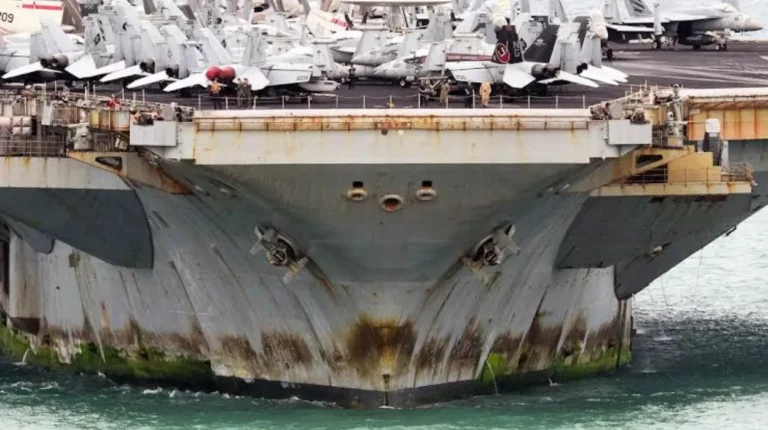
Norwegian authorities have detained the Russian vessel Professor Molchanov in the Arctic port of Barentsburg, Svalbard, as part of Ukraine’s effort to enforce a multibillion-dollar compensation award against Russia. The operation was launched at the request of Ukraine’s state-owned energy company Naftogaz, which is seeking payment for assets it says Russia unlawfully seized after occupying and annexing Crimea in 2014.
This decision to detain the ship was issued by the Nord-Troms and Senja District Court on August 31, 2026. Just two days later, on September 2, 2026, the Governor of Svalbard, who was the enforcement authority, took command of the ship and ordered that the ship be berthed in Barentsburg until further notice from the governor or court. The arbitral award being contested is worth an estimated $4.22 billion, apart from further interest and other legal fees. This award was issued in The Hague, where the international tribunal sat in April 2023 after Naftogaz petitioned the tribunal due to the loss of its Crimean assets.
Russia, which owes the debt, disputes this award and the proceedings that led to this award. This marks a new phase in Ukraine’s efforts to translate its international legal victories into tangible financial gains. It also raises questions surrounding maritime jurisdiction, sovereign assets, enforcement of arbitral awards, and the political status of Crimea.
The vessel at the centre of the dispute
The Professor Molchanov is a research ship belonging to the Russian state which has been employed as a cruise liner too. It has already worked in the Arctic region, having reportedly made another voyage between Murmansk and Barentsburg. When the arrest took place, the Professor Molchanov was at Barentsburg. The ship is connected to Russia’s hydro-meteorological agency, Roshydromet, and has been used on scientific and commercial tours. It has reportedly been described as a scientific vessel converted into a commercial Arctic tourism vessel, thus being vulnerable to enforcement since it is involved in commercial activities and operates in Norway’s territorial waters. The court arrest does not mean that Naftogaz has gained ownership of the ship. This legal step involves a ship’s arrest or attachment in order to prevent its movements. Any subsequent sale of the vessel would have to take place through the courts too. The value of the ship on the market is likely to be significantly lower than $4.22 billion awarded by the court. Thus, the arrest of the ship is unlikely to contribute significantly to the recovery of the entire amount.
Origin of the $4.22 billion claim
The underlying dispute dates back to Russia’s seizure of Crimea in 2014. Naftogaz says the Russian authorities took control of its assets on the peninsula, including energy infrastructure, gas-related property and assets associated with Chornomornaftogaz, a Black Sea energy company.
After the annexation, Naftogaz and several companies within its group began legal proceedings seeking compensation. The company argued that Russia’s actions amounted to unlawful expropriation and violated protections available under international investment law.
The case eventually reached an arbitration tribunal in The Hague. In April 2023, the tribunal ordered Russia to pay Naftogaz approximately $4.22 billion. The sum covered compensation for the seized assets, while interest and legal costs were to be added separately.
Naftogaz subsequently went about recognizing and enforcing the award in various jurisdictions. It has reportedly been found to be enforceable in a Dutch court in late 2024, while the award had also previously been recognized for the purpose of enforcement in Norway prior to the Professor Molchanov case. The significance of the difference is worth noting. An award in arbitration creates a duty, but in most cases, the award would have to be recognized first by the courts in the relevant country before enforcement can take place.
Naftogaz’s strategy to recover Russian assets
Naftogaz has made clear that it intends to pursue Russian property wherever it can legally identify assets within the reach of national courts. The company says enforcement actions are being coordinated across multiple jurisdictions, including the United States, France, the United Kingdom and Finland.
The company has reportedly already secured the freezing or seizure of Russian-linked assets in Finland and France. It has also pursued property associated with Trust Arktikugol, the Russian entity responsible for operating Moscow’s settlements and commercial interests in Svalbard.
Naftogaz Acting Chief Executive Sergii Fedorenko framed the Norwegian action as part of a long-term effort rather than an isolated maritime incident.
“This is another important step toward restoring justice. We will continue to track down Russian assets around the world until the compensation awarded to Naftogaz and other companies in the Group is paid,”
Fedorenko said.
He also argued that Russia could not avoid its legal responsibilities simply by refusing to comply with the award.
“Russia cannot escape responsibility by simply refusing to obey an international arbitral ruling,”
Fedorenko said, according to reports carried by Reuters and other outlets.
For Ukraine, such cases have a dual purpose. They seek financial compensation for losses caused by Russia’s actions, while also reinforcing Kyiv’s position that the seizure of Ukrainian property cannot be normalised through the passage of time or the physical control of territory.
The Norwegian court order
The Nord-Troms and Senja District Court issued the order on August 31. The order prohibits the vessel from leaving its current location and directs Norwegian authorities to take the measures necessary to prevent its removal.
The Governor of Svalbard confirmed that the order was executed on September 2.
“The Governor of Svalbard, acting as the enforcement authority, seized the vessel on Wednesday, 2 September, following an order from the Nord-Troms District Court,”
the governor’s office said.
The governor further stated:
“It has been decided that the vessel will remain berthed in Barentsburg until the Governor or the Nord-Troms District Court decides otherwise.”
It is also associated with practical obligations since there were people on board when the vessel was seized and Norwegian officials announced that arrangements for the comfort of these people will be made in coordination with Trust Arktikugol. It was reported that the passengers and crew members themselves were not arrested as part of this procedure but rather that the ship itself and its departure were the subject of the enforcement action. According to the lawyers of Naftogaz, the seizure occurred after a day-long stand-off between the Norwegian Coast Guard.
Russia calls the action ‘piracy’
Moscow’s reaction to the seizure was fierce. According to Russian state news agency TASS, the Foreign Ministry spokeswoman Maria Zakharova has described the act of Norwegian authorities as “piracy.” Apparently, the Russian government has viewed the detention as part of a wider pattern of actions by the West in violation of established maritime laws and practices. In its turn, Russian government officials will argue that the vessel is state property and thus should have the status of sovereign immunity against attachment. Moreover, Russia has challenged the very proceedings of the case, asserting that it was not informed appropriately of the process. The possible Russian arguments can be advanced in the Norwegian court when challenging the arrest warrant.
Two main arguments form the basis of the Russian position. First, the Russian side will deny both validity and enforceability of the compensation award. Second, Russia will claim that the state-owned ship carrying out scientific and public functions should not be considered in the same way as an ordinary commercial vessel. Naftogaz argues that the ship has been operating commercial expedition cruises in the Norwegian territory. Thus, the vessel is subject to the attachment according to the international award.
Why Svalbard makes the case especially sensitive
Svalbard is under Norwegian sovereignty, but its legal status is governed by the 1920 Svalbard Treaty. The treaty gives citizens and companies from signatory states, including Russia, equal rights to engage in certain commercial activities in the archipelago.
Russia runs the settlements of Barentsburg and Pyramiden, while Norway holds the territory and conducts law enforcement activity there. Barentsburg is the Russian-run settlement located in Norwegian territory that has always been the site of interaction and sometimes tension between Moscow and Oslo. According to Reuters, these two Russian settlements have a total population of 392 people out of 2,914 people who live on the Svalbard territory, according to Statistics Norway.
Thus, the arrest of Professor Molchanov becomes important in the context of Russia’s presence in Svalbard, Norwegian jurisdiction in this area, and the continuous accusations made by Russia of restrictions by Norway on Russian activities there. Previously Norway rejected the charges that it was militarizing Svalbard. While the treaty limits military activity in this area, it does not fully exclude Svalbard from Norwegian military concerns. The current case, although a civil enforcement issue, cannot be separated from geopolitics due to its location.
Enforcement, sovereignty and the road ahead
The following will show if the vessel continues to be detained, if the Russians succeed in challenging the order, and if there is going to be a subsequent sale or another enforcement measure. In the meantime, the Professor Molchanov is virtually stranded at Barentsburg. This will likely set a valuable legal precedent for other Ukrainian entities seeking to enforce their awards against Russian properties internationally. Ukraine has already obtained a few international legal judgments regarding Russian actions, but obtaining financial compensation is not easy since Russian government property has immunity or is situated outside the reach of such enforcement measures.
The Norwegian action appears to indicate that assets in commercial use are more vulnerable than those in use solely for governmental purposes. Yet, the result will very much depend on the ownership structure of the vessel, the vessel’s functionality, the content of the arbitration award, and the interpretation of immunity rules by the Norwegian court.
There is also a financial limitation. Even if the ship were eventually sold, the proceeds would probably represent only a small amount compared with the principal claim. The broader importance lies in establishing that Russia’s refusal to pay does not necessarily end the matter.
For Naftogaz, the seizure provides a visible demonstration that international arbitration can be followed by practical enforcement. For Russia, it creates another dispute with a European state and a direct challenge to its treatment of state-linked property. For Norway, it tests how its courts balance international legal obligations, sovereign immunity and the administration of justice in a strategically important Arctic territory.
The detention of the Professor Molchanov is therefore more than a dispute over one ship. It is a test of whether an international compensation award related to Crimea can be converted into enforceable action against Russian assets—and whether that process will deepen the legal and diplomatic confrontation between Moscow and Western governments.