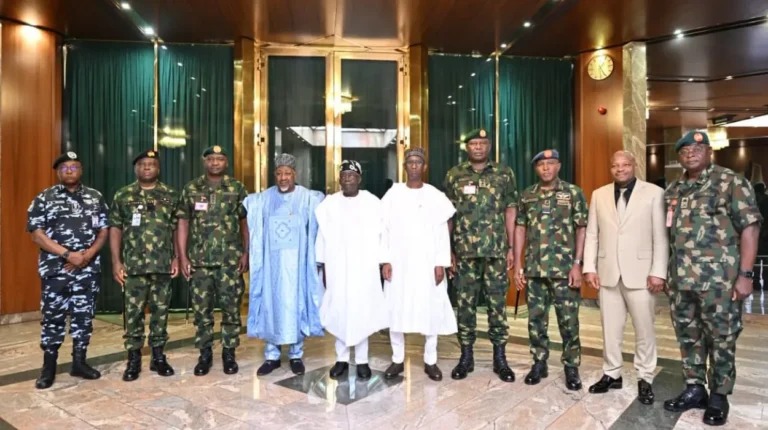
Structured bilateral security coordination was achieved through the launching of the Nigeria-US Joint Working Group, held in Abuja, on January 22, 2026. That framework unites senior defense and intelligence and diplomatic officials of both governments and institutionalizes cooperation that had been run ad hoc and through Joint Terrorism Task Force interactions.
The project was proposed after the United States in October 2025 listed Nigeria as a Country of Particular Concern in the International Religious Freedom Act. That title had created diplomatic strife at first, yet it hastened official security discussions. By the end of 2025, consecutive high-level gatherings were the foundation of a synchronized counterterrorism roadmap, which would result in the January launch.
Nuhu Ribadu, the National Security Adviser described this new phase as taking a decisive move beyond the discussion to action, which indicated the transition between the business of policy discussion, and the business of operational implementation. His comments show how Abuja would want to show how a specific security can be realized whilst ensuring that sovereignty is not compromised.
Operational Architecture and Military Commitments
The Nigeria-US Joint Working Group is organized around the exchange of intelligence, transfers of equipment as well as planning joint operations. The meetings are based in the National Counter Terrorism Centre of Nigeria, and the flow of information between the services of the Nigerian and the U.S.Africa Command is defined.
Intelligence Integration and ISR Expansion
United States Africa Command Lt. Gen. John Brennan provided a framework that focused on intelligence, surveillance, and reconnaissance. Further flights of ISR, and analytical flights are aimed at increasing the targeting precision in the insurgency-affected areas, especially in the Northeast and Northwest.
This cooperation is based on the airstrikes conducted on December 25, 2025, against the ISIS-related camps in Sokoto State, which officials of the United States claimed to be organized with the Nigerian leadership. Brennan said that Washington has become much more aggressive, targeting the humiliation of ISIS affiliates within the Sahel corridor. The comments indicate a more radical change in the dogma of the contemporary U.S. security policy, as it focuses more on pre-emptive disruption, as opposed to reactive containment.
Equipment Deliveries and Tactical Training
A second pillar of the framework is formed by material support. In January 2026, AFRICOM announced the supply of spares and specialized equipment, which is related to past Nigerian purchases. Other discussions comprise the drone platforms, helicopters, and maintenance packages that are aimed to fill the existing long-term capability gaps in the Nigerian Air Force.
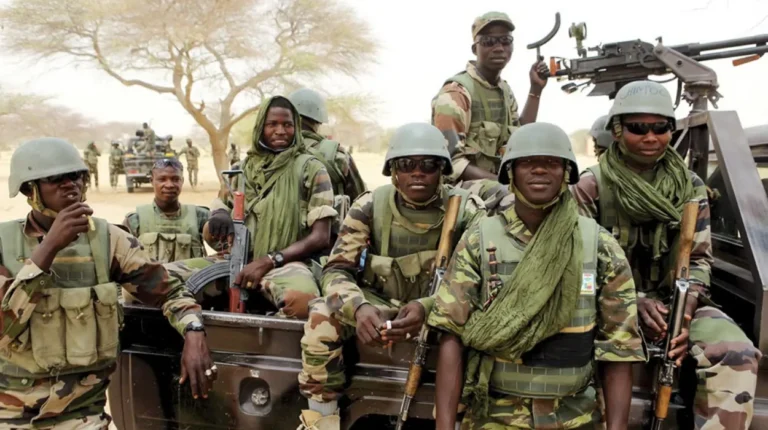
The tactical, technique, and procedures training is aimed at standardization of the operational practices. The officials of Nigeria say that better coordination has already bolstered Operations Hadin Kai in the Northeast and Operation Fasan Yamma in the Northwest where combined intelligence allegedly facilitated precise raids on militant logistics centers.
Strategic Context After the 2025 CPC Designation
A turning point in bilateral relations was the designation of 2025 Country of Particular Concern. Although Abuja did not accept all of the elements of the religious freedom assessment, the further involvement reformulated the question into the protection of civilians and accountability systems.
U.S. Under Secretary Allison Hooker credited the progress of cooperation to late 2025, noting an improvement in data coordination and cooperation in assessments. Concurrently, she brought up the issue of re-abductions in Kaduna State, implying that the improvement is still asymmetrical.
In November 2025, president Bola Tinubu authorized Nigeria to join the Joint Working Group. When Tinubu assigned Ribadu to head a multi-agency delegation, he was sending a strong message that security reform will be at the core of the domestic agenda of his administration, especially, considering the fact that insurgent violence is overlapping with economic fragility and election sensitivities.
Regional Threat Landscape and Cross-Border Pressures
The security issues in Nigeria are deeply intertwined with the rest of Sahel instability. The two cells of the Islamic State West Africa Province and Islamic State Sahel Province have operational connections across porous borders, which capitalize on the governance vacuity in adjacent countries, Niger and Mali.
Northwest and North-Central Flashpoints
The Northwest has experienced a series of increasing attacks on the rural communities such as kidnappings, attacks on infrastructure. Cooperation among intelligence agencies through the Joint Working Group will disrupt cross-border supply networks which fund those activities.
North-Central Nigeria has a long history of farmer-herder conflict, but is currently experiencing a hybrid form of threats that are characterized by communal violence and insurgent infiltration. Officials maintain that enhanced intelligence sharing will facilitate the detection of militant movements at earlier stages when they do not have the power to enhance their territorial dominance.
Airpower and Its Limits
Airstrikes are now a very significant tool in the counter insurgency policy of Nigeria. Although the use of precision operations is said to have killed high-value targets, analysts warn that the use of aerial operations cannot completely replace territorial permanence and government reforms.
The increased ISR assistance of the Joint Working Group can enhance the precision of strikes, yet the stabilization process in the long-term is based on the restoration of the local trust. The fact that insurgent networks continue to be operationally resilient despite tactical defeat as seen in the cases of Abuktawa and Zamfara in 2025, in Kaduna and Zamfara, respectively, reflects the ability of ISs to endure.
Accountability, Sovereignty, and Political Sensitivities
The two regimes have insisted that cooperation does not interfere with the sovereignty of Nigeria. Ribadu has had numerous occasions of claiming that the relationship is based on trust, candour and shared responsibility. However, more American intervention is bound to bring about domestic concerns of independence and foreign domination.
The reports about the potential use of up to 200 more U.S. staff to be used as trainers has created controversy, but authorities have underlined that the training positions are advisory and not combat oriented. The difference holds a political weight in Nigeria where there is still historical sensitivity to foreign military presence.
Prominent accountability mechanisms also take part. Hooker has demanded open reporting on casualty and enhanced prosecution of terrorism related crimes. Nigeria has increased early-warning systems and even sanctioned the employment of 20,000 more police officers to strengthen the capacity within the country.
Measuring Counterterrorism Gains in 2026
According to an information minister Mohammed Idris, intelligence-based operations in the recent past have led to the killing of hundreds of militants and destruction of logistics networks. The arrests, rescues, and seizures are examples of momentum cited by the authorities.
Nevertheless, casualty numbers still are not widely checked. Human rights observers still observe the effect on civilians especially in airstrike areas. The credibility of the Joint Working Group will be determined not only by the success in the tactic but also by the evidence of displacement and kidnapping reduction.
According to security analysts, the militant capacity can be deteriorated by equipment and intelligence, but insurgencies tend to reappear in such a setting that has been characterized by poverty, poor administration and inadequate service delivery. The anti-money laundering reforms and community stabilization programs that are being undertaken by the Tinubu administration are meant to supplement the security operations.
Evolving Dynamics and Long-Term Implications
Nigeria-US Joint Working Group foretells a more aggressive counterterrorist stance informed by 2025 diplomatic friction and rising violence. Through institutionalising coordination arrangements, the two governments are seeking to transform the intermittent cooperation into longer-lasting functional coordination.
However, the instability in the Sahel has been a challenge to even well endowed partnerships. The militant groups evolve faster and switch to asymmetric attacks and monetary penetration instead of occupying territory. With technology and training widening the scope of tactical operations in Nigeria, the strategic issue revolves around the question of whether governance reforms and regional diplomacy can keep up.
The trajectory of the Joint Working Group will ultimately be judged less by the scale of equipment delivered than by its impact on everyday security conditions in affected communities. If abductions decline and territorial control stabilizes, the framework may be seen as a template for pragmatic security collaboration. If violence persists despite intensified support, policymakers in Abuja and Washington will face renewed scrutiny over whether aggressive counterterrorism alone can recalibrate a conflict landscape shaped by deeper structural forces.