Sunday began a fiercely contested election in Myanmar which the military junta claims will restore democratic rule after they ousted the elected government in 2017.
The country remains trapped in ongoing civil warfare, while military-backed political parties continue to control the entire political system.
Aung San Suu Kyi and other prominent political figures are still incarcerated, and her party has been disbanded. The new laws restrict voter choices because they lead to mass arrests of individuals who express opposition to election procedures, or interfere with the voting process.
Where is voting taking place amid the ongoing conflict?
The country remains unable to conduct elections in large areas because of continuing battles between ethnic rebel forces and pro-democracy fighters mainly in the hilly borderlands and dry central plains.
The military forces engaged in heavy combat operations at these locations, which enabled them to reclaim ground through Chinese weapons supply and conscripted troops. According to analysts, this geographical advantage has enabled the junta to proceed with elections in the hopes that the resulting parliament. It will have a quarter of seats set aside for military officials, and will promote minimal foreign involvement.
How are electronic voting machines shaping the election?
The junta-controlled election commission allows electronic vote-counting machines to accept only party-approved votes. This eliminates the option for voters to submit blank ballots. The military gains more control over election results because of this technological development.
What is the atmosphere in major cities like Yangon?
In Yangon, Myanmar’s commercial hub, national flags line major highways while electronic billboards display state media coverage of the vote, emphasizing the military’s preferred candidates. The junta has openly called for citizens to select candidates “who can cooperate sincerely with the Tatmadaw,” the official Burmese term for the military, signaling a tightly controlled political environment.
Is this a genuine democracy or a military facade?
The observers noted that the current election environment operates at a lower level of activity when they compare it to the democratic experiment of Myanmar from ten years back. The public no longer hears about Suu Kyi and other leading figures because she spends her days behind bars after receiving a 27-year sentence from politically driven court rulings.
The civil war, together with military violence, has taken control of Myanmar’s political scene. It used to be dominated by civil resistance for democratic progress.
How has the junta treated opposition and civilians?
The military has carried out systematic abuses which Human rights organizations and UN investigators have confirmed after the 2021 coup. The military government faces accusations of forced recruitment of young people, village destruction, local population extermination, and political imprisonment.
Tom Andrews, who serves as the UN special rapporteur, reports that the situation has deteriorated substantially because medical facilities face attacks, while humanitarian aid encounters numerous barriers. The military refuses to acknowledge any human rights violations, while labeling their victims as terrorists despite multiple proofs that show otherwise.
What triggered the ongoing civil war in Myanmar?
The military seized power during February 2021, which triggered the conflict because they argued that Suu Kyi’s National League for Democracy (NLD) won the elections through fraudulent means, although international observers confirmed the elections were free and fair.
The military faced opposition from local communities and young people, who created People’s Defense Forces after peaceful protests evolved into armed resistance. The groups managed to resist the junta during their initial encounters even though they possessed limited weaponry. This led to a stalemate.
How has the conflict affected the population and economy?
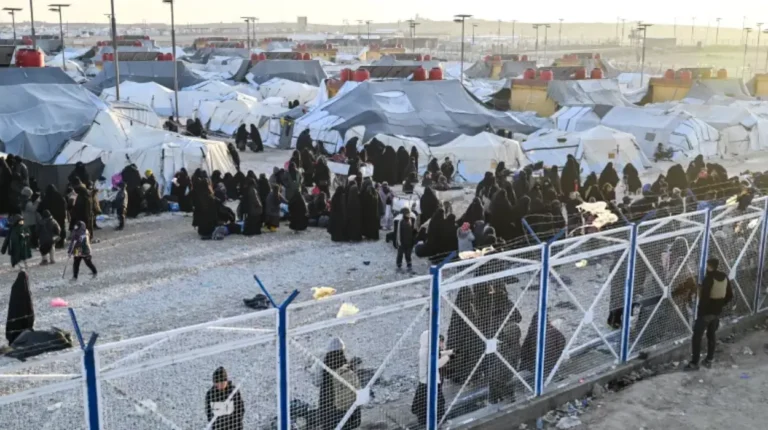
Myanmar has experienced extensive destruction throughout the past five years of war. The United Nations reports that more than three million people have been forced to leave their homes, while tens of thousands have escaped overseas to avoid military service.
The United Nations reports that over three million people have been displaced from their homes, while tens of thousands have fled abroad to escape military conscription.
The United Nations data shows that the nation leads the world in methamphetamine and illegal opium production. The territories under rebel control have experienced an increase in criminal operations, which include major fraud schemes. The schemes operate on a global scale to affect victims from all around the world.
What role do international powers play in Myanmar’s election?
The majority of Western nations, including the United States, denounce the election as illegitimate and refuse to recognize the junta. The military has received backing from China and Russia, while they have shown no support for elections in Myanmar.
In order to avoid spillover crises along their borders, regional neighbors like Thailand and India have pushed for engagement with the junta. China applies its economic power to force rebel groups into submission. This allows the military to take back control of essential mining areas like Mogok.
How will the election unfold and when will results be announced?
Three rounds of voting are scheduled, with the second round taking place on January 11, and the final phase on January 25. The current environment prevents citizens from exercising their rights because violent acts and oppressive measures continue to exist.
UN human rights chief Volker Türk states that real democratic participation becomes impossible because people cannot freely express themselves. They face severe limitations on their rights to gather and form groups.