The Lebanese army has announced that it has taken over security responsibilities in southern Lebanon, an area long dominated by the Iranian-backed Hezbollah movement, claiming progress in enforcing state authority after years of parallel armed control.
But despite official declarations of success, growing skepticism from Israel, the United States, and domestic critics suggests that the army’s move may be more symbolic than transformative, raising questions about whether Hezbollah has genuinely relinquished military power or merely recalibrated its footprint.
Despite the statements published today in Lebanon, the facts remain that extensive Hezbollah military infrastructure still exists south of the Litani River. The goal of disarming Hezbollah in southern Lebanon remains far from being achieved.
— Israel Foreign Ministry (@IsraelMFA) January 8, 2026
This can be seen in the attached… pic.twitter.com/NPTIEbUapQ
A deadline met — but at what cost and depth?
The army said it had met its year-end deadline to clear the area south of the Litani River — roughly 30 kilometers from the Israeli border — of non-state weapons, describing the operation as “effective and tangible.” The deployment is part of a government-backed plan rooted in UN Security Council Resolution 1701, which has required the absence of armed groups other than the Lebanese state and UN peacekeepers in the area since 2006.
Yet the military acknowledged that significant challenges remain, including the clearance of unexploded ordnance, suspected tunnel networks, and remnants of fortified infrastructure built over decades of Hezbollah control.
UN agencies estimate that southern Lebanon remains heavily contaminated with unexploded munitions after the year-long conflict that ended with a ceasefire in November 2024, posing long-term risks to civilians and delaying the return of tens of thousands of displaced residents.
Hezbollah withdrawal — compliance or calculated retreat?
In recent months, Lebanese troops have dismantled military positions in former Hezbollah-controlled villages without encountering resistance. Hezbollah says it has complied with the ceasefire and withdrawn fighters from the south, while Palestinian factions such as Hamas have also scaled back their presence.
However, critics argue the lack of resistance does not amount to disarmament. Hezbollah has not surrendered weapons publicly, allowed inspections of its arsenals, or committed to dismantling its command structure. Instead, the group has repeatedly stated it will not disarm north of the Litani River, where it retains strongholds in Beirut’s southern suburbs (Dahieh), the eastern Bekaa Valley, and parts of southern Lebanon beyond the current phase of the army’s plan.
International pressure mounts amid Israeli skepticism
Lebanon has faced intense diplomatic pressure, particularly from Washington, to curb Hezbollah’s military capacity. Israel and the US — both of which designate Hezbollah as a terrorist organization — argue that the group is attempting to regroup and rebuild with Iranian backing.
The office of Israeli Prime Minister Benjamin Netanyahu dismissed the Lebanese army’s announcement as insufficient, warning that Hezbollah continues efforts to rearm and restore its “terror infrastructure.” Israeli officials have repeatedly accused Iran of using Lebanon as a forward operating base in its regional confrontation with Israel.
Despite these claims, Israel has not publicly released evidence to support allegations of renewed Hezbollah military activity in areas now under Lebanese army control. UNIFIL, the UN peacekeeping force deployed in southern Lebanon, has stated it has observed no clear indicators that Hezbollah is rebuilding its infrastructure in those zones.
Ceasefire violations and the credibility gap
Although a ceasefire has been in place since November 2024, Israel continues to carry out near-daily strikes on targets it says are linked to Hezbollah and maintains control over at least five strategic positions in southern Lebanon.
The Lebanese government rejects Israel’s justification for these operations, calling them violations of the ceasefire and a direct obstacle to restoring full state authority. Officials argue that continued Israeli military action undermines the army’s deployment and fuels instability, while Israel insists its actions are preventive and necessary.
This standoff has created a credibility gap: Lebanon claims progress toward sovereignty, Israel claims imminent threat, and international monitors remain unconvinced by either side’s narrative.
A cash-strapped army with expanding responsibilities
The next phase of the Lebanese army’s plan is expected to extend northward between the Litani and Awali rivers, including the port city of Sidon. No timeline has been announced, reflecting both political sensitivities and material constraints.
Lebanon’s army, widely seen as one of the country’s few remaining national institutions, is underfunded and overstretched. Since Lebanon’s economic collapse in 2019, soldiers’ salaries have lost much of their value, and the military relies heavily on foreign assistance for fuel, equipment, and training.
Western and Gulf donors have conditioned reconstruction funds — estimated by the World Bank to run into the billions of dollars — on tangible steps to curb Hezbollah’s military autonomy, placing Beirut in a bind between internal stability and external demands.
A political and sectarian minefield
President Joseph Aoun has ruled out using force against Hezbollah, warning that coercive disarmament could inflame sectarian tensions and push the country toward renewed civil conflict. Hezbollah remains deeply embedded in Lebanon’s political system, holding seats in parliament and cabinet positions, while also operating hospitals, schools, and welfare networks that secure loyalty among much of the Shia population.
Opponents argue that Hezbollah’s battlefield losses during the war present a rare opportunity to finally assert state monopoly over arms. Hezbollah, however, has rejected calls to discuss the future of its weapons, framing them as a necessary deterrent against Israel.
Displacement, destruction, and a fragile calm
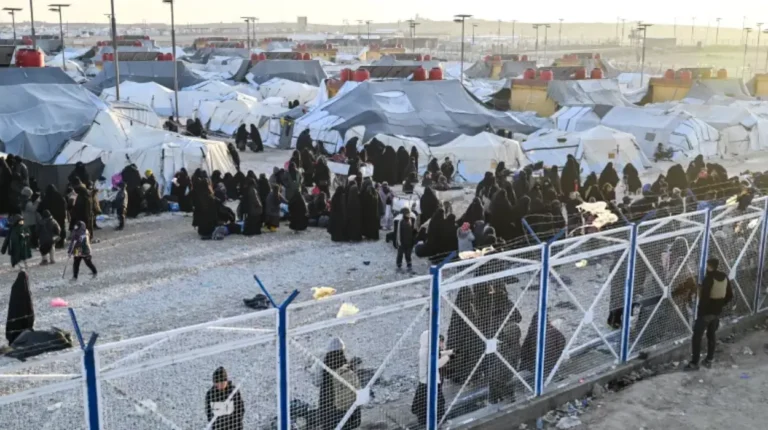
In southern Lebanon, entire towns remain in ruins, infrastructure is shattered, and tens of thousands of civilians remain displaced months after the ceasefire. For many residents, the debate over security control feels detached from daily realities of loss, poverty, and uncertainty.
As Lebanon’s army declares progress and international actors demand results, the core question remains unresolved: whether the state is genuinely reclaiming sovereignty — or merely managing the optics of control while Hezbollah’s power endures just beyond reach.