In a diplomatic clash at the United Nations, the United States and Europe showed a dramatic divide since the inauguration of US President Donald Trump.
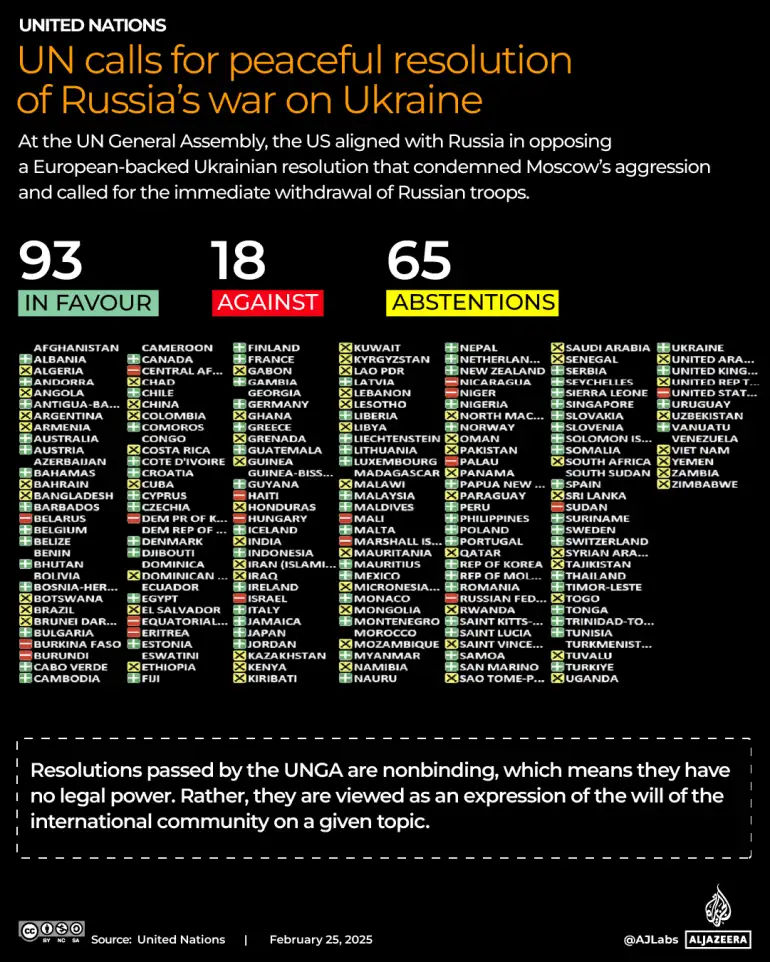
Conflict arose over rival UN resolutions marking the anniversary of the Russian invasion. The resolution was initiated by Ukraine and backed by most Western countries. It explicitly recognized Russia as the aggressor. On the other hand, a version enabled by the United States adopted a more neutral manner and highlighted the need for peace.
The United States opposed the UN General Assembly resolution denouncing Russian aggression in Ukraine, standing with a handful of nations, including Russia, Belarus, and North Korea. The importance of this US realignment was widely cited.
The following day, the US successfully proposed a resolution at the UN Security Council calling for a “swift end” to the dispute and encouraging a “lasting peace between Ukraine and the Russian Federation.” Interestingly, Russia was not designated as the aggressor. As a result, this was the first adoption of a Security Council resolution on Ukraine since the beginning of Russia’s full-scale invasion. Russia maintains veto power in the Security Council and has effectively stopped the body from handing any resolutions on the invasion of Ukraine until now.
While many Americans support Trump’s impulse for peace in Ukraine, the move to vote alongside Russia and other countries has flashed concern and some bipartisan censure.
Trump has often stated that his purpose is peace in Ukraine. His team demands the recent UN maneuvers were sought to form a less confrontational climate and set the scene for meaningful talks.
According to critics, any meaningful peace process must identify the root causes of the fight and acknowledge the major role played by Russia’s imperial aims. Declining to name Russia as the aggressor may demonstrate popularity in Moscow, but this does not alter the fact of Russia’s actions. On the other hand, it attempts to fuel the Kremlin’s sense of immunity.
This week’s actions to bypass offending Russia at the United Nations will add to living concerns that the Trump White House is siding with Russia against Ukraine and the rest of the collaborative West.
While a powerful case can be made for desiring to engage Russia, it is dark why an administration eager to launch strength appears so ready to make concessions to an autocratic dictator while pressuring the target of Russian aggression. There are few UN votes that go down in history, but the extreme interest in this week’s resolutions images a far deeper sense of international warning over what many notice as the modification of US foreign policy under Donald Trump.