The United Kingdom and the European Union are quietly exploring renewed talks on defence cooperation, as Prime Minister Keir Starmer signals a desire to move the post-Brexit relationship beyond its current limits and respond to a rapidly deteriorating global security environment.
Speaking on Friday, Starmer said he wanted to “go further” in relations with Brussels, a message that comes amid mounting concerns over US reliability under Donald Trump, Russia’s ongoing war in Ukraine, and Europe’s struggle to accelerate defence production.
Restarting Talks After a High-Profile Breakdown
Diplomatic sources say London is keen to revive stalled negotiations on defence cooperation as soon as possible, even though formal talks are not yet on the official agenda. The push comes ahead of a visit to London next week by Maroš Šefčovič, the EU’s trade commissioner, who is scheduled to discuss trade, energy, and fisheries.
Previous talks collapsed in November 2025 over UK participation in the EU’s €150bn (£130bn) Security Action for Europe (Safe) defence fund. The breakdown was particularly awkward, coming just months after Starmer and European Commission president Ursula von der Leyen had publicly hailed the prospect of “enhanced cooperation” at a summit in May.
Brussels insiders have since described the failure as “an embarrassment” for both sides, underscoring how politically sensitive defence cooperation has become amid broader geopolitical instability.
The Safe Fund: Strategic Ambition, Political Friction
The Safe fund is central to the EU’s effort to rapidly expand its defence industrial base. Financed through borrowing by the European Commission and repaid over 45 years, the fund offers low-cost loans to member states to procure military equipment, ranging from ammunition and drones to missile systems.
Although Safe loans are primarily designed for EU members, procurement can include suppliers from outside the bloc—including the UK, Canada, and other partners—if formal arrangements are in place.
The UK is not eligible to apply for loans itself, but joining Safe as a third country would allow British defence firms to bid for large-scale procurement contracts, potentially worth billions of euros over the lifetime of the programme.
France, Germany, and the Battle Over Conditions
The failure of the 2025 talks exposed divisions within the EU itself. France has denied responsibility for the collapse, but multiple diplomatic sources say Paris pushed for conditions that London viewed as unacceptable.
One European source said France wanted UK participation in Safe to be tied to involvement in a separate €90bn defence-related loan package for Ukraine, agreed by EU leaders in December and backed by profits from frozen Russian assets held in Belgium.
Germany, by contrast, is reported to have opposed preconditions, with officials arguing that UK involvement in Safe should happen “as soon as possible” to strengthen Europe’s collective defence capacity.
From London’s perspective, the dispute was not just political but financial. The EU reportedly demanded a UK contribution of around €2bn, while British negotiators believed a contribution “in the hundreds of millions” was more proportionate for a non-member state without access to Safe loans.
Why Defence Cooperation Is Back on the Table
Momentum for a second attempt has grown on both sides, driven in part by Donald Trump’s renewed threats to undermine Nato commitments and even to take control of Greenland—remarks that have deeply unsettled European capitals.
For EU leaders, Trump’s rhetoric has reinforced the urgency of building autonomous defence capabilities and reducing reliance on Washington. For the UK, strained relations with the US have sharpened the strategic case for closer security ties with Europe, even without rejoining EU structures.
As one source close to the UK government put it:
“Europe needs the UK. That reality hasn’t changed. What changed was politics.”
Starmer’s Broader Vision for EU Relations
Speaking in Beijing on Friday, Starmer avoided explicit mention of defence but emphasized that the UK should not limit itself to implementing existing agreements.
“I think we should not just follow through on what we’ve already agreed,”
he said.
“The relationship with the EU and every summit should be iterative. We should be seeking to go further.”
Starmer signalled that future cooperation should focus on the single market rather than the customs union, which he said
“doesn’t now serve our purpose very well.”
Possible areas for expanded agreements include chemicals and automotive manufacturing, both of which face new tariffs next year on non-electric vehicles.
The UK is also negotiating a youth mobility scheme, with the government seeking a cap on numbers and fixed time limits to manage domestic political sensitivities.
Domestic Political Pressure Builds
Starmer is under increasing pressure from within the Labour Party to deepen ties with Brussels, particularly on defence, national security, and economic resilience.
Stella Creasy, Labour MP and chair of the Labour Movement for Europe, said there is a “growing recognition” that Britain’s future lies in rebuilding strong working relationships with EU partners.
“That means everything should be on the table,”
she said, arguing that defence cooperation cannot be separated from broader economic and security concerns.
Diplomacy in Motion, Defence Still Off the Agenda
Šefčovič is due to meet Nick Thomas-Symonds on Monday for the annual EU-UK Partnership Council, which oversees the post-Brexit agreement. Defence is not formally included in the agenda, with the UK currently prioritising progress on food and drink trade.
He will also hold meetings with Chancellor Rachel Reeves on geoeconomic strategy, as well as talks with business secretary Peter Kyle, reflecting a wider effort to recalibrate UK-EU relations across multiple fronts.
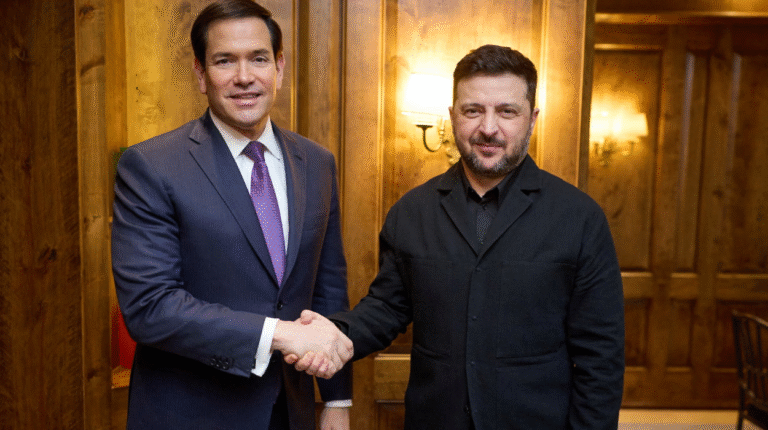
Another potential venue for defence discussions is a political summit in Washington on critical minerals, convened by US Secretary of State Marco Rubio, where a UK minister is expected to attend.
Strategic Stakes for Britain and Europe
At its core, the debate over Safe reflects a larger strategic question: whether Europe’s defence future can afford to exclude one of the continent’s most capable military powers.
The UK remains a nuclear-armed state, a leading Nato contributor, and home to a globally competitive defence industry. For EU policymakers racing to boost production and resilience, keeping British firms at arm’s length risks slowing rearmament efforts at a critical moment.
For London, the challenge is balancing sovereignty narratives with strategic necessity—seeking influence, access, and security cooperation without reopening politically toxic debates about EU membership.
A Second Chance, With Limits
Sources close to the UK government say London is open to a second attempt at defence talks but warn that any renewed proposal must reflect political realities on both sides.
“If the EU came back with the same kind of proposition, it would be the same answer,”
one source said.
“There was a huge gap between the parties.”
Whether that gap can now be bridged will depend not only on money and institutional design, but on whether the UK and EU can align their strategic priorities in an era of rising global insecurity.
What is increasingly clear, however, is that defence cooperation—once seen as too sensitive to revisit after Brexit—is no longer optional. It is fast becoming a test of whether Europe, with or without Britain formally inside its structures, can act decisively in an unstable world.