As Russian and Ukrainian negotiators are set to reconvene in Abu Dhabi later this week for peace talks arranged by the Trump administration, one question has been at the forefront of negotiations: what will happen to the Donetsk region?
For several months, Russian officials have made it clear that unless Ukraine surrenders the 2,082 square miles of Donetsk territory that Kyiv still holds, Moscow will not call a halt to its military campaign. The region, which is smaller than the US state of Delaware, has become the most contentious issue left unresolved in peace talks to bring an end to the conflict.
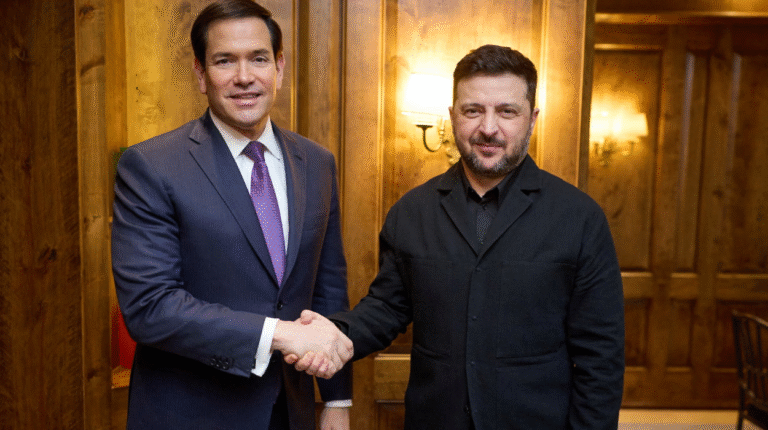
US Secretary of State Marco Rubio, testifying before the Senate last Wednesday, characterized Donetsk as “the one remaining item” that is still preventing a deal from being reached.
“It’s still a bridge we haven’t crossed,”
Rubio said.
The Kremlin reacted to this assessment a day later. Yuri Ushakov, foreign policy aide to President Vladimir Putin, said that several issues remain unresolved, including security guarantees for Ukraine from the West. Nevertheless, it is hard to argue that Donetsk is not at the center of the negotiations.
Why Does Putin Prioritize Donetsk Over Other Ukrainian Regions?
Russia has asserted its claim over several regions in Ukraine, but Donetsk has a special position in the war story told by the Kremlin. Since the first invasion of Ukraine by Russia in 2014, Donetsk has been the key region in the Russian attempt to secede and annex the industrial part of eastern Ukraine, which the Kremlin has repeatedly called “historically Russian” territory.
Together with the neighboring region of Luhansk, Donetsk makes up the Donbas, an area that has been portrayed by Russian state media for years as a population in need of “liberation” and protection from the Ukrainian government. Russia has already taken complete control of Luhansk.
What Role Does Domestic Propaganda Play?
In the latter part of 2022, the Kremlin declared the annexation of four regions in Ukraine: Donetsk, Luhansk, Kherson, and Zaporizhzhia. However, in the course of negotiations, the Kremlin dropped its demand for control of Kherson and Zaporizhzhia, opting for the territory it already held. But Donetsk was non-negotiable.
If Ukraine were to hold on to a large part of Donetsk, Russian President Vladimir Putin may find himself at odds with hardline nationalists who believe that control of the Donbas region is a major objective of the war. This is especially true as the war has dragged on.
Why Is Sloviansk So Symbolically Charged?
The remaining Ukrainian-held portion of Donetsk includes Sloviansk, a city where Moscow-backed forces launched what Russia described as a pro-Russian “separatist uprising” in 2014.
Russian propaganda frequently portrays Sloviansk as the birthplace of the so-called “Russian Spring.” After more than a decade of fighting, failure to capture the city could sharpen criticism from pro-war constituencies who already question the costs and outcomes of the war.
Can Taking Donetsk Redefine Who “Won” the War?
Securing Donetsk through negotiations—rather than battlefield victory—could allow Putin to declare strategic success regardless of Russia’s military setbacks elsewhere.
“If you can get at the negotiation table something you have not achieved by force, the question of who won the war and who dictated the terms of ending the war will be answered,”
said Alexander Gabuev, director of the Carnegie Russia Eurasia Center in Berlin.
“There will be possibly no credible way to spin that this has been a strategic Russian defeat and a victory for Ukraine,”
he added.
Why Would Concessions Be So Dangerous for Ukraine?
Any decision by Kyiv to hand over Donetsk would be deeply destabilizing domestically.
“People have shed blood for that,”
Gabuev said.
“Lots of families lost their loved ones during the fighting in Donbas. Now you are surrendering it? It’s a ticking bomb under Ukrainian unity.”
Ukrainian President Volodymyr Zelensky reiterated on Friday that while he is prepared to make compromises to end the war, he will not compromise Ukraine’s territorial integrity.
In December, Zelensky floated a conditional proposal: Ukraine would withdraw its troops from parts of Donetsk it controls and convert them into a demilitarized zone—but only if Russia withdrew from an equivalent area. Moscow rejected the idea.
What Is the ‘Anchorage Formula’ Russia Keeps Invoking?
As President Trump’s peace initiative stalled last summer, his administration proposed a territorial swap involving Donetsk. Putin responded with a counteroffer that led to a high-profile summit in Alaska.
While the contents of that meeting remain undisclosed, Russian officials have since insisted that any peace deal must adhere to “the spirit of Anchorage” or the “Anchorage formula.”
The phrase is widely understood as Kremlin shorthand for a deal in which Russia would end the war if Ukraine surrendered the remainder of Donetsk—alongside a set of non-territorial concessions.
Zelensky refused, pointing out that Ukraine’s constitution bars territorial concessions without a nationwide referendum.
Why Did the Proposal Resurface in a New Form?
The Donetsk issue resurfaced last fall in a 28-point plan drafted by US negotiators with input from Putin’s special envoy, Kirill Dmitriev.
The proposal called for Ukrainian forces to withdraw from the remaining Donetsk territory and establish a neutral demilitarized buffer zone, internationally recognized as Russian territory but off-limits to Russian troops.
Having already agreed to a version of this plan in Alaska, Putin may see any revisions as a betrayal.
“If you’re Russia and you’re offered this, are you going to accept that it has been walked back?”
asked Sam Charap, a senior political scientist at the RAND Corporation.
The central problem, however, remains unchanged: Ukraine never agreed.
Why Does Donetsk Matter Militarily?
The Ukrainian-controlled areas of Donetsk are among the most heavily fortified sections of the front line. Many of these defenses date back to 2014, long before Russia’s full-scale invasion.
Analysts warn that losing these fortifications would leave Ukraine more exposed to future Russian offensives, particularly if a peace agreement collapses.
How Do Water Shortages Factor Into Moscow’s Calculations?
Donetsk’s importance is not only symbolic and military—it is also logistical.
The Russian-occupied city of Donetsk has suffered severe water shortages since 2022, after the Siverskyi Donets–Donbas Canal was destroyed early in the full-scale invasion. Crucially, the canal originates northeast of Sloviansk, in territory still controlled by Ukraine.
During his December call-in press conference, Putin blamed the crisis on Ukrainian control of the water intake.
“The main water intake is located in territory that is unfortunately still controlled by the enemy,”
he said, adding that the issue could be “fundamentally resolved” once the area falls under Russian control.
Is Donetsk the Key to Ending—or Prolonging—the War?
Donetsk now stands at the intersection of propaganda, military strategy, domestic politics, and resource control. For Putin, securing the region could offer a narrative of victory, silence nationalist critics, and consolidate Russia’s claims over the Donbas.
For Ukraine, surrendering it could fracture national unity and undermine the sacrifices made over more than a decade of war.
As negotiations resume, Donetsk remains not just a bargaining chip—but a test of whether peace is even possible without redefining what victory means for both sides.