New evidence has emerged that suggests Egypt has not only been diplomatically and politically supporting the military in Sudan but has also been secretly intervening in the civil war in the country through air operations. According to an investigation by The New York Times, Egypt has been using a secret airbase located in the western desert of Egypt to carry out drone and air attacks on the Rapid Support Forces of Sudan.
Flight patterns, videos, and interviews with officials indicate that these activities have been taking place for at least six months. The base is allegedly concealed within Egypt’s East Oweinat desert reclamation project, a large agricultural development scheme close to the Sudanese border, indicating the extent to which these military activities have been concealed from public and international view.
From Diplomatic Broker to Active Belligerent
During most of the war in Sudan, Egypt has maintained a diplomatic stake in the region, calling for stability in the area while supporting the Sudanese Armed Forces (SAF) politically. However, the new evidence that is emerging indicates that Egypt has passed a point of no return and is now directly involved in military action.
The significance of this development cannot be overstated. The SAF has recently experienced significant losses on the battlefield, having lost several key towns to the RSF, including el-Fasher in North Darfur. The capture of el-Fasher, followed by reports of large-scale killings, ethnic cleansing, and the displacement of tens of thousands of civilians, seems to have served as a catalyst for Egypt’s more extensive involvement.
President Abdel Fattah el-Sisi has publicly stated that the situation in el-Fasher represents a “red line,” which now seems to have been matched by clandestine military involvement rather than just diplomatic pressure.
Evidence of Air Strikes and Cross-Border Operations
Regional analysts had already been pointing to Egyptian military activity before the New York Times investigation. In December, analyst Jalel Harchaoui reported that Egyptian MiG-29 jets were conducting strikes on RSF supply convoys moving from eastern Libya into Sudan — a critical logistical artery for the paramilitary group.
Middle East Eye previously reported that Egypt had begun bombing RSF convoys near its border and that both Egypt and Turkey had agreed to intensify military support for the SAF following the capture of el-Fasher. These reports now appear corroborated by independent satellite and flight data.
The RSF itself acknowledged in November that drones targeting its forces were being launched from a “foreign base,” warning it would retaliate “at the appropriate time and place” — a statement that raises the risk of direct retaliation beyond Sudan’s borders.
A Proxy War with Regional Backers
The conflict in Sudan has increasingly assumed the features of a regional proxy conflict. The RSF is known to be supported by the United Arab Emirates, despite Abu Dhabi’s repeated claims to the contrary. There have been several investigations into the provision of logistical, financial, and arms support to the RSF by the UAE, via eastern Libya.
This has been made possible through the help of Libyan warlord Khalifa Haftar, who controls the al-Kufra airbase, which is an important transit point for the flow of supplies into Sudan. Egypt, which supports Haftar both politically and militarily, has recently forced him to stop supporting the RSF, but so far to no avail.
On the other side, the SAF is now supported, formally or informally, by Egypt, Turkey, Qatar, and Saudi Arabia, due to a confluence of interests in opposing the RSF and UAE’s regional ambitions.
Growing Rift Between Saudi Arabia and the UAE
The Sudan war is now intersecting with an increasingly public rupture between Saudi Arabia and the UAE, once close allies. Riyadh has grown more assertive in opposing Emirati support for armed groups across the region, including the RSF.
In Yemen, UAE-backed Southern Transitional Council forces were last month driven out of eastern territories by pro-government fighters supported by Saudi air power. The episode was accompanied by rare public criticism between the two Gulf states.
Earlier this month, reports indicated that Egypt shared intelligence with Saudi Arabia on Emirati activities in Yemen — a sign of deeper coordination among Riyadh, Cairo, and Ankara in countering Abu Dhabi’s regional agenda.
The Irony of Emirati Investment and Egyptian Air Strikes
Adding a layer of irony to the unfolding conflict is the fact that Egypt’s East Oweinat agricultural project — from which the drone operations are reportedly launched — has received substantial foreign investment from Emirati agricultural companies.
This overlap underscores the complexity and contradictions of regional alliances, where economic partnerships coexist uneasily with proxy conflicts and covert military campaigns.
Civilian Cost: El-Fasher Reduced to Ruins
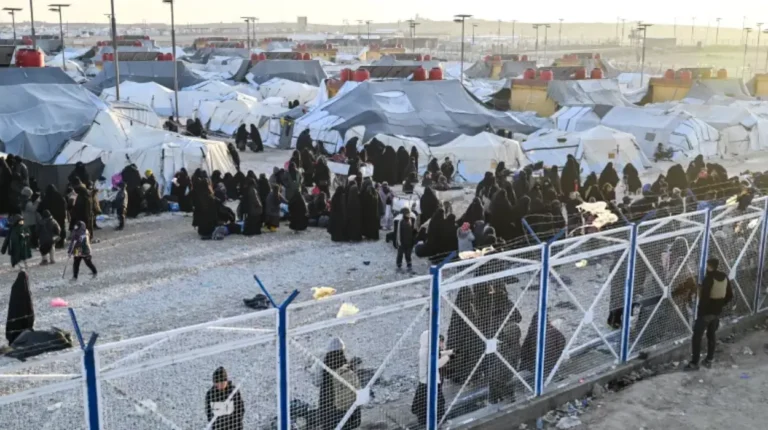
While regional powers maneuver, civilians continue to bear the brunt of the war. Doctors Without Borders (MSF) visited el-Fasher in January for the first time since February 2025 and described the city as “largely destroyed” and “empty.”
MSF staff spent four hours in the city on 15 January, reporting widespread devastation, abandoned neighborhoods, and the near-total collapse of civilian life.
“The regional capital now looks like a ghost town, with few civilians remaining,”
MSF said, adding that even this limited visit revealed the “sheer scale of the destruction” and the effective wiping out of much of the city’s population.
According to UN estimates, Sudan’s war has displaced more than 8 million people, making it the world’s largest displacement crisis, while tens of thousands are believed to have been killed since fighting began.
Risks of Escalation and Accountability Gaps
Egypt’s covert air campaign risks deepening and prolonging the conflict while further internationalizing a war already marked by atrocities. By operating secretly and without public parliamentary or international authorization, Cairo sidesteps accountability mechanisms designed to limit civilian harm and regional escalation.
At the same time, Emirati support for the RSF — a force accused by human rights groups of ethnic cleansing and possible genocide in Darfur — continues largely unchecked, highlighting the failure of international actors to enforce arms embargoes or meaningful sanctions.
A War Expanding Beyond Sudan’s Borders
What began as a power struggle between rival Sudanese generals has evolved into a multilayered regional conflict involving Egypt, the Gulf states, Turkey, Libya, and beyond. Egypt’s reported air strikes mark a turning point, transforming Sudan’s civil war into an open arena for regional rivalries.
Unless external actors are constrained and civilians placed at the center of diplomatic efforts, Sudan risks becoming another long-term proxy battlefield — one where strategic interests outweigh accountability, and where cities like el-Fasher are reduced to ruins with little consequence for those fueling the violence.