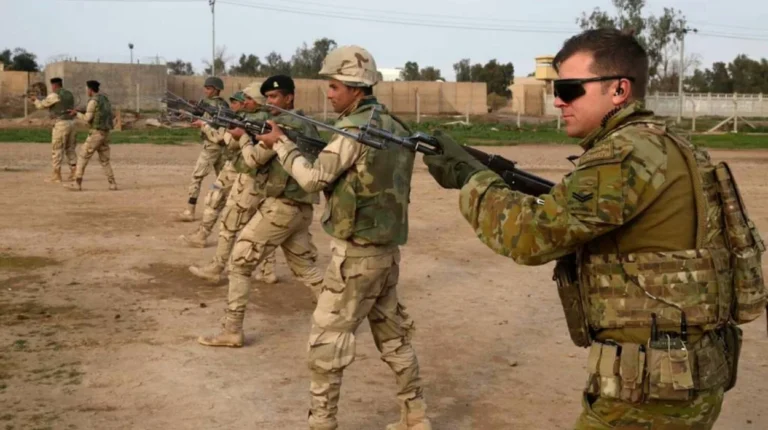
The 19th episode of the series of joint military training between India and Nepal, Exercise SURYAKIRAN-XIX, took place at the Foreign Training Node of Pithoragarh, Uttarakhand, between November 25 and December 8, 2025. The drill united the Indian Army as well as the Nepalese Army on a common counter-terror operation platform that is consistent with Chapter VII of the UN Charter. This edition had more integrated security priorities since both countries struggle with dynamic regional threats and geopolitical pressures.
The site, a few kilometres south of India-Nepal border, further added the operational realism that the aims of this year were all about. Developed bilateral defence relations in 2025, supported by increased military contacts, generated the pressure to coordinate further. The geographical location of Nepal, which lies between India and China, contributes strategic significance to these types of exercises particularly at the time when the non-state actors keep trying to leverage cross-border routes of Himalayan arc.
The final step was collectively validated by the Directors General of Military Operations of both armies; India and Nepal; Lt Gen Manish Luthra and Maj Gen Anup Jung Thapa respectively. Their attendance was an indicator of top-tier dedication to the paper-to-ground transfer of coordination to the cohesion.
Himalayan Terrain Constraints
The rough nature of Pithoragarh provided realistic limitations that defined the tactical decisions. Forested ridges, steep slopes, and sparsely spaced settlements were used to replicate the situation in which counter-terror operations could be conducted, especially in grey zones where movement speed is limited. The troops maneuvered through various levels repeating the same problems in the India-Nepal border where infiltration threat is high.
Complex Operational Demands
The participants were deployed on intelligence-related operations such as simulations of surgical raids and cordon-and-search. Jungle and high-altitude survival training were exposure to jungle warfare and discipline in planning, both able to test the physical stamina and physical strength which are necessary elements in counter-terror missions in the mountains.
UN Framework Adherence
The exercises were based on the UN-stipulated operational practices and were concerned with the proportional use of force in the situations that simulated a hostage and an operation to neutralise hideouts. This mutuality is important in underscoring a mutual commitment to internationally accepted legal frameworks and enhancing practical preparedness.
Technological Integration In Operations
Another characteristic of SURYAKIRAN-XIX was the use of niche and disruptive technologies in the operational stages. The deployment of unmanned aerial platforms, AI-controlled surveillance systems, and precision-guided infantry systems was a doctrinal change, which is an indication that both armies seek to modernise their tactical reactors to new forms of terrorism.
The timing is significant. In 2025, drone warfare has affected the war in Europe, West Asia, and Africa, and has increased the rate of adoption of small, agile platforms globally used in surveillance and strike support. In the case of India and Nepal, the implementation of these technologies helps to abate the visibility limitation and logistical bottleneck that historically plague the operations of the conventional counter-terror units under mountainous ecosystem conditions.
Drone And AI Capabilities
The ISR drone imagery was used to provide real-time reconnaissance on simulations of insurgent clusters and fed endlessly into AI models that then generated predictive threat modelling. These systems reduce the decision loops by indicating abnormal movement patterns, potential escape routes as well as expected areas of resistance. These inventions eliminate the necessity to deploy reconnaissance units to the risky areas.
Unmanned logistics vehicles (carrying supplies to hard-to-reach locations) were also tested by the drills, which is indicative of an increased dependence on autonomous systems to maintain long-range missions in isolated valleys.
Enhanced Communication Systems
All the manoeuvres depended on secure communications. There were encrypted battlefield networks that linked the Indian units of Assam Regiment with the Nepal mind of Devi Datta Regiment in such a way that there would be continuous flow of data. These connections were useful in night operations, which are sensitive to targeting and precision destruction.
Targeting And Weapon Sight Advances
State-of-the-art day-night weapon sights increased the range of engagement as well as accuracy in low visibility conditions, which is important in high-altitude ambush operations. They complemented with AI-assisted reconnaissance such improved targeting systems showed how technological usage is transforming infantry-based responses to counter-terror.
Building Interoperability And Trust
The SURYAKIRAN-XIX had 334 members of each country and that was the reason the structure was balanced so that everyone felt like participating equally in the joint drills. Other than tactical synchronisation, the exercise was based on the development of trust that forms the basis of future joint operations. These interpersonal and institutional connections have gained more significance because the security threats in the region have become more interdependent.
Tactical Coordination Gains
Exercises of urban combat simulation, hostage rescue planning and anti-abduction measures caused units to coordinate tactics, techniques and procedures. The focus on common playbooks facilitates easier collaboration on the actual deployments, whether in case of emergency, border, or humanitarian operations.
Regimental Partnership Dynamics
The Assam Regiment of the Indian Army introduced knowledge in counter insurgency and thick forest navigation and the Devi Datta Regiment of the Nepalese army added a great knowledge in mountain warfare. Sharing of training provided mutual learning. The institutional memory is enriched with every rotating edition, as there is a wider range of experience that both armies share.
Symbolic Measures Enhancing Trust
The planting of a tree of friendship by the DGMOs had a symbolic meaning. The gesture was ceremonial though it meant long-term security alliance between two countries that had an open border and whose cultures were closely aligned. Authorities repeated several times that trust once operationalised will translate into faster intelligence dissemination and coordination against changing threats.
Broader Geopolitical Implications
Exercise SURYAKIRAN-XIX was carried out when the Himalayan geopolitics in 2025 will be of greater complexity. Cross-border tensions, realignment of power regionally, and an increase in non-state activities have put more pressure on both India and Nepal to do more things in concert. The exercise has strengthened a trend that has existed in the neighbourhood policy of India, as far as stability in the Himalayan frontier is concerned.
Strategic Assurances Amid Regional Flux
In the case of Nepal, the drills serve as a capacity building platform which balances its diplomatic activities with the key players of the region and makes it have more confidence in its operations. To India, the exercise will help the country reassure Nepal that the two countries will remain partners in the defence despite the wider geopolitical changes in Asia.
The timing is also in line with the political uncertainty that Nepal has been facing in its internal politics and the talks about defence and infrastructure cooperation. The new political environment is stable through continued military drills.
Reinforcing Open Border Security
The open border between Nepal and India has a long history as demonstrated by the 1950 Treaty of Peace and Friendship and offers flexibility of movement at the cost of monitoring. Increased counter-terror coordination makes vulnerabilities less attractive to militant groups, who can seek to exploit them particularly in remote mountain corridors.
Regional Counter-Terror Posture
Through enhanced joint surveillance on common topographies, the exercise is aimed at a deterrence framework that prevents the infiltration of insurgents and hybrid security threats on the two countries. This kind of synergy remains in line with the wider goal of India in ensuring the stability of its Himalayan and Indo-Pacific neighbourhood.
Future Collaboration Pathways
The achievements of SURYAKIRAN-XIX establish opportunities to extend collaboration in the field of cyber defence and digital monitoring, as well as disaster resistance in future events. In the future, as the two countries perfect their employment of drones and AI, exercises might consider integrating all domains, such as cyber-physical battlefield developments.
As the Himalayan winter settles over regions both armies have trained in, the long-term impact of SURYAKIRAN-XIX will rest in how seamlessly shared instincts translate into real-world readiness. Technology may shape the battlefield, but the trust forged in these quiet valleys often decides how regional security evolves, leaving open questions about the future contours of Indo-Nepal counter-terror cooperation.