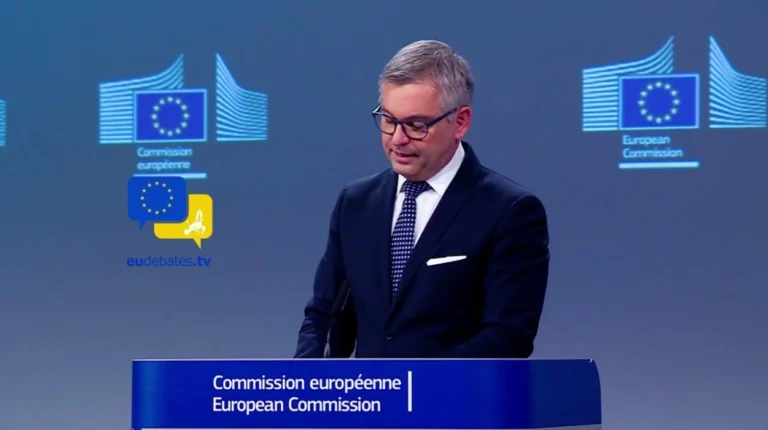
The move by the European Commission to broaden its counterterrorism architecture to include ideological opposition is one of the most significant security recalibrations ever to take place in recent EU history. Presented as a futuristically oriented response to hybrid threats and digitally networked radicalization, the move is more than just the violent extremism to the extent of violent extremism-facilitating narratives.
Although according to the reporting by Europol, the total terror incidents occurring in the bloc went down to 58 in 2024 whereas the total number of terror incidences in 2023 was 120, policy makers believe that the threat has changed and not reduced. The focus has been lost on reactive law enforcement and making proactive disruption especially on the online front where extremist recruiting efforts are gaining grounds.
This wider scope of definition is based on legislative changes that were discussed during 2025, as EU interior ministers supported an enhanced cross-border intelligence pooling and the use of AI to detect possible threats. The Commission sustains that ideological similar formations tend to be earlier than operational cells and justifying the previous intervention.
Prevention as Strategic Doctrine
The key to the expansion is prevention-first doctrine. In 2025, a €5 million Prevention Toolbox is launched, which supports youth resilience, digital literacy, and counter-narrative interventions. The officials refer to the initiative as a protection against the so-called pipelines of ideological incubation, as defined by one of the Commission briefings.
The national security infrastructures are also being integrated with AI-powered monitoring systems. Such systems examine patterns of encrypted communications and cluster of online behavior though the Commission asserts that they are implemented under stringent data protection systems in accordance with EU law.
Integration With Existing Enforcement Tools
The framework correlates with the current enforcement frameworks organized by Europol, whose 2025 Terrorism Situation and Trend Report reported an increase in the cases of online radicalization of minors. There are now improved intelligence-sharing procedures that enable flagging of transnational networks earlier.
Diversification programmes in police recruitment which are also used in member states like Belgium also enhance the policy change. Officials claim that the ethnic diverse forces will be more effective in detecting the early signs of radicalization among the marginalized groups, and this will enhance outreach that prevents radicalization.
Belgium’s Counterterrorism Evolution as Reference Point
The Brussels attacks that Belgium had experienced prior to 2016 serve as an operational guide used in Brussels policy circles. Following the events of coordinated bombings in Brussels and Paris where more than 160 people were killed and wounded, the operations of raiding, prosecuting, and deradicalizing prisons were strengthened by the Belgian authorities.
In the period between 2016 and 2020, the Belgian courts have won 43 cases concerning terrorism and pressed dozens of other charges. Other specialized prison regimes, such as the D-Rad:ex regime, segregated high-risk prisoners and provided the rest with systematic deradicalization programs.
Belgian officials have constantly justified such actions as reasonable and legal. In 2025, the Justice ministry spokesperson also said that “security interventions have continued to be tied to constitutional protections and this is part of an ongoing struggle between enforcement and civil liberties.
Scrutiny Over Detention Practices
The rights groups such as the Human Rights Watch have criticized some of the prison isolation measures practiced in Belgium. The issues revolve around the issue of extended segregation without regular judicial scrutiny and the increase in pre-trial detention authority.
These have re-emerged with the EU-wide expansion. The legal experts caution that standardisation of comparable regimes among the member states would increase the risks of transparency, especially when ideological classification can play into the setting of the thresholds of detention.
2025 Deradicalization Adjustments
In 2025, Belgium honed its deradicalization strategy, focusing on mentorship sessions and community participation as opposed to the extended isolation. Such reforms were accompanied by more extensive EU-wide debates regarding combating online recruitment with educational programs.
The recalibration of the policy reflects the emerging idea of radicalization as a social and digital issue but not just a criminal issue. However, the inclusion of ideological deviation into this system brings in new interpretative complications.
Legal Tensions Surrounding Ideological Inclusion
The aspect of Terrorism Pivot of the EU that is most disputed is the way the ideological dissent is treated. Article 10 of the European Convention on Human Rights keeps the freedom of expression intact unless the restrictions are highly essential in a democratic society.
Legal experts indicate that the process of broadening the definition of terrorism to capture some ideological manifestations can be open to constitutional scrutiny. The trend has been shrinking overly broad terror financing laws in the EU to date, with courts across the EU already indicating judicial attentiveness to the issue of proportionality.
The introduction of the AI-assisted surveillance tools complicates the situation even more. Surveillance of encrypted networks and entry of cryptocurrencies increases privacy concerns, although officials claim that online anonymity helps extremists organize their groups.
Judicial Oversight and Emerging Case Law
The new framework is likely to be pushed to its limits by several cases that the national constitutional courts have before them. People expect that judicial interpretation should be able to define the possibility of counterterrorism machinery to be activated by ideological advocacy without the use of violence.
The European court of Human rights has influenced the need to ensure that all security legislation is well defined through past rulings. According to critics, ambiguity will threaten to freeze legitimate political debate, especially in those activist groups that are on the fringes of mainstream discussion.
Broader European Security Landscape in 2025
The growth occurs in a broader 2025 security setting where technological experimentation and hybrid threat-advice proliferation have been embraced. The Commission put more funds into drone threat detection research and cyber resilience initiatives, as a result of experience overseas.
In the meantime, a comparative analysis shows that it is similar to post-9/11 approaches in the United States, except that the avenue of non-violent ideological currents in the EU is explicitly described. The European policymakers insist that disintegrated online ecosystems require new regulatory approaches.
Civil society groups under the Organization of Security and Co-operation in Europe propose community-based models of prevention as a way of avoiding the huge state surveillance. According to them, inclusive conversation can minimize alienation than punitive systems.
Democratic Resilience Under Examination
The policy is persistently developed by the EU authorities as a defense mechanism and not as a disciplinary measure. In late 2025, a Commission representative observed that the task is to prevent the manipulation of democratic institutions, and not to police legitimate dissent. The difference, however, is open to interpretation.
The recalibration comes at the juncture when the extremists’ events are statistically less but ideologically disintegrated. Digital ecosystems make it unclear whether protest, propaganda, and preparation are taking place, which puts regulators in a difficult situation to create actionable definitions.
The actual implementation will take shape as more details are decided in the implementation of the updated framework as member states transpose the updated framework into national law across 2026. The intelligence assessments are likely to be influenced by judicial review, parliamentary scrutiny, and the involvement of civil society as much as it will influence its path.
The growth of EU Terrorism Pivot thus exists where the limits of pragmatism in security and the constitutional principle interact. The effectiveness of the expanded mandate to enhance resilience or introduce a new set of limits on allowed dissent will be less about proclamation intent and more about the ability of proportionality to dictate the application in coming years.