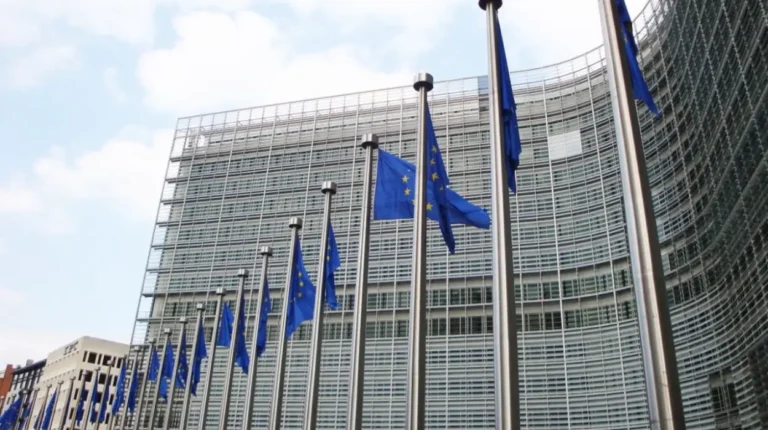
The ProtectEU Strategy Targets Digital Extremism at a moment when the European Union’s security institutions are reassessing how terrorism and radicalization manifest in an increasingly digital and decentralized environment. Announced by the European Commission on February 26, 2026, the framework consolidates lessons from 2025 threat assessments that showed extremist ecosystems adapting faster than regulatory and enforcement mechanisms.
The Commission’s six-pillar architecture anticipating threats, preventing radicalization, protecting online spaces, securing physical infrastructure, enabling rapid response, and strengthening international cooperation reflects both continuity and escalation. Officials described the initiative as an operational reinforcement of existing instruments rather than a conceptual overhaul. Yet the emphasis on artificial intelligence oversight, cryptocurrency tracking, and youth exposure indicates recognition that the threat vector has fundamentally evolved.
Funding allocations reinforce that recalibration. Approximately €5 million is directed toward community-based prevention, while €30 million supports physical infrastructure hardening. Though limited relative to broader EU defense outlays, these figures signal prioritization within civilian security frameworks.
Digital Radicalization As A Structural Security Challenge
Online radicalization is no longer treated as a precursor phenomenon but as the central operating space for extremist recruitment. Internal 2025 EU reports noted that minors accounted for nearly 30 percent of newly flagged radicalization cases, a significant shift compared with pre-2020 trends. Algorithms, encrypted messaging services, and cross-platform propaganda distribution have collectively lowered barriers to entry.
This digital acceleration has prompted a recalibration of regulatory oversight and voluntary cooperation mechanisms. The Commission’s updated approach blends stricter enforcement of content removal obligations with continued engagement through the EU Internet Forum, recognizing that platform compliance remains uneven across jurisdictions.
Youth Exposure And Preventive Intervention
Youth vulnerability forms a core pillar of the new framework. Gamified extremist narratives and peer-driven chat groups have amplified recruitment efficiency. The ProtectEU Prevention Toolbox expands school-based digital literacy programs first piloted in 2025 across Nordic member states, where referral rates reportedly declined by 15 percent.
The €5 million community engagement fund is designed to scale peer mentorship and counter-narrative initiatives. Officials emphasize that prevention must address identity formation and online belonging dynamics, rather than relying solely on content suppression. This reflects growing consensus that radicalization increasingly occurs in fragmented micro-communities rather than hierarchical organizations.
Regulatory Upgrades And Crisis Coordination
ProtectEU strengthens the Terrorist Content Online Regulation by reinforcing compliance deadlines and expanding oversight authority. An upgraded Online Crisis Response Framework enables real-time coordination between member states and major platforms during spikes in extremist dissemination.
Such mechanisms were tested in 2025 following coordinated misinformation campaigns during the European parliamentary elections. Authorities concluded that delayed removals allowed extremist messaging to peak before intervention. The new framework seeks to compress reaction timelines to hours rather than days.
Encryption And Cross-Border Data Fusion
Encrypted platforms remain among the most complex regulatory challenges. ProtectEU does not mandate direct decryption capabilities but enhances Europol’s analytic authority to track metadata patterns indicative of coordinated radicalization clusters.
Cross-border data fusion, a key demand of the 2025 Council review, aims to eliminate jurisdictional blind spots. Intelligence sharing mechanisms are being streamlined to ensure that suspicious digital activity flagged in one member state triggers alerts across the bloc without bureaucratic delay.
Technological Weaponization And Emerging Hybrid Risks
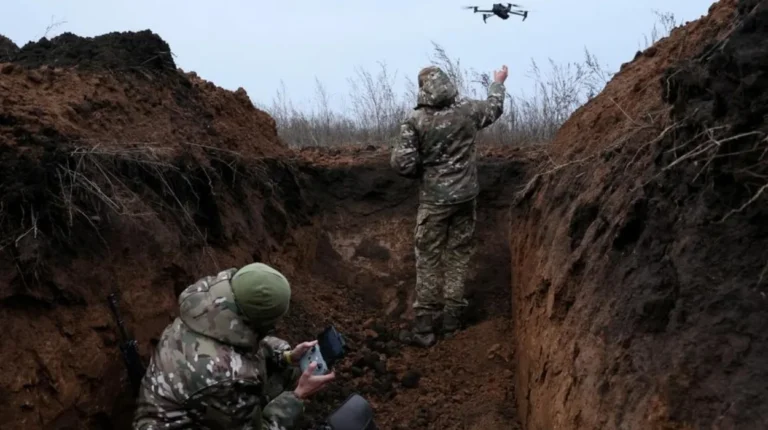
The strategic document underscores that digital extremism increasingly converges with technological weaponization. The risk is no longer confined to propaganda but extends to operational planning facilitated by accessible tools such as AI-generated media, 3D printing, and commercial drones.
The Commission frames these technologies as dual-use innovations requiring calibrated oversight rather than outright restriction. However, threat modeling conducted in 2025 demonstrated that extremist actors are experimenting with these tools at an accelerating pace.
Artificial Intelligence And Deepfake Manipulation
Artificial intelligence-generated deepfakes have moved beyond disinformation into recruitment and impersonation efforts. Commission-funded research now supports real-time authentication tools capable of verifying audiovisual content authenticity.
Europol’s mandate expansion centralizes AI-related forensic expertise. Officials note that while AI-enabled plots remain limited in scale, the technological diffusion curve suggests exponential growth potential. Preventive adaptation is therefore prioritized over reactive enforcement.
3D-Printed Weapons And Decentralized Production
Eurojust data from 2025 indicated that approximately 12 percent of seized illicit firearms contained 3D-printed components. Digital blueprints distributed via encrypted networks complicate traditional interdiction methods focused on physical trafficking routes.
ProtectEU allocates research funding toward traceability solutions, including blockchain-based component monitoring. Western Balkans joint exercises in late 2025 exposed customs screening weaknesses, reinforcing the need for upstream digital monitoring rather than solely border inspections.
Drone Utilization In Attack Planning
Commercial drones appeared in roughly 20 percent of disrupted plots in 2025, primarily for reconnaissance. The strategy introduces standardized counter-drone training and enhanced spectrum monitoring systems.
These upgrades integrate with broader aviation safety frameworks but are tailored to low-altitude systems that operate outside traditional air defense perimeters. The Commission views early technical integration as essential to preventing operational scaling.
Physical Infrastructure And Urban Preparedness
While digital measures dominate discourse, the Commission emphasizes that physical targets remain vulnerable. The €30 million infrastructure package addresses gaps identified in 2025 audits, particularly in Eastern member states where protective coverage lagged.
Urban centers, transport hubs, and public gathering sites are prioritized. The objective is to reach 90 percent security coverage in designated high-risk areas by 2028, combining barriers, surveillance systems, and rapid deployment equipment.
Rapid Response And Interoperability
ProtectEU mandates expanded training for approximately 50,000 first responders across member states. Behavioral detection modules and coordinated crisis simulations build upon 2025 exercises that reduced response times by roughly 25 percent.
Interoperability between municipal and national authorities remains a critical challenge. The updated framework requires standardized communication protocols to avoid fragmentation during cross-border or multi-site incidents.
International Cooperation And Financial Disruption
External geopolitical instability continues to influence European threat calculations. Spillovers from the Sahel and Middle East shaped 2025 intelligence assessments, prompting renewed partnership agreements with Western Balkans and Mediterranean states.
Financial tracking forms a central pillar of this external engagement. Commission briefings estimate that extremist-linked cryptocurrency flows reached approximately €500 million in 2025. Revised anti-money laundering directives tighten exchange reporting requirements and align with United Nations asset-freeze mechanisms.
Enhanced coordination aims to prevent extremist financing from exploiting regulatory disparities between jurisdictions. Capacity-building initiatives assist lower-resource partners in forensic analysis and digital tracing.
Governance Balance And Civil Liberties Considerations
The expansion of Europol and Eurojust authority inevitably raises proportionality debates. Civil liberties organizations have urged transparent oversight to ensure that digital monitoring does not overreach.
Commission officials stress judicial safeguards and compliance with fundamental rights charters. The strategic framing emphasizes that security enhancement and rights protection are not mutually exclusive, though implementation will determine practical balance.
The ProtectEU Strategy Targets Digital Extremism by weaving technological vigilance with community resilience and cross-border coordination. Its success will hinge on sustained political alignment across member states and consistent enforcement amid rapidly evolving digital ecosystems. As extremist networks adapt to tighter oversight and experiment with emerging technologies, the European Union’s capacity to synchronize prevention, protection, and proportionality may define whether this strategy shapes the threat landscape or merely responds to it.