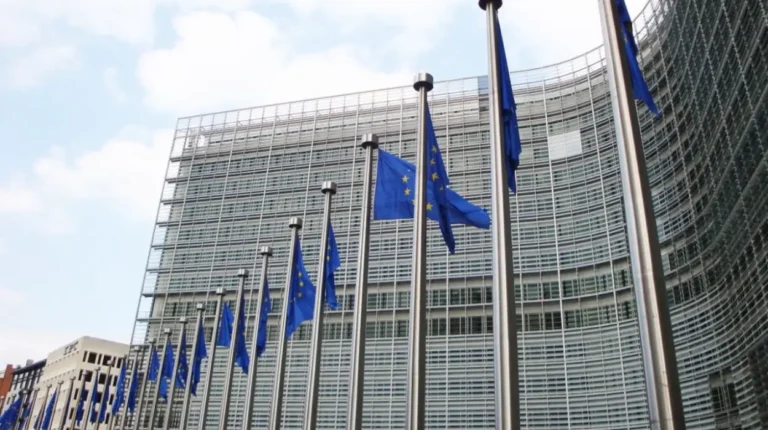
Iran voted to declare the air and naval forces of the member states of the European Union terrorist groups, which is a new level in the relations between the EU and Iran. It is a direct retaliation against the 29 January 2026 blacklisting of the Islamic Revolutionary Guard Corps (IRGC) by the European Union, turning a dispute on sanctions into an equal-measures-reciprocated game of state-on-state terrorist designation.
Tehran explained its move as a legitimate act of reciprocation by saying that when one of the sovereign military institutions is declared to be a terrorist, then there is a need to respond in a similar proportion. European officials, in their turn, insist on the fact that the IRGC listing is based on the violation of human rights and the destabilising regional behaviour. The challenge of counterterrorism tools stretching into geopolitical signalling instruments is now being pushed to its limits by the confrontation, which raises the question of whether counterterrorism tools are being pushed into geopolitical signalling.
The aftereffects are not limited to rhetoric. Duplicate titles cause legal and financial confusion to the military staff, the contractors and diplomatic routes. They also form a headache to maritime security missions in the Gulf, where the European sea voyages carry out near the Iranian military.
EU IRGC blacklist shifts strategic calculus
The move by the European Union to add the IRGC as a terrorist organisation was a break with the past sanction regimes. EU restrictive measures had been imposed on individuals and entities up to December 2021 and had not yet been designated a state military institution, until January 2026.
Protest repression drives European unity
Majan Kallas, the EU foreign policy head, justified the name by referring to Iran’s suppression of nationwide demonstrations that arose in December 2025. Rights monitors estimated more than 2,000 deaths and tens of thousands of arrests in unrest that broke out in Tehran in the Grand Bazaar and on to major cities.
The IRGC was advocated by Germany and the Netherlands, and overcame previous French, Spanish and Italian reluctance to do so. This was the turning point because the internal pressure of the EU member states increased with the legislators stating that the ongoing involvement of the EU without stronger actions sabotaged the European human rights commitments. It had to be a unanimous decision by all 27 member states, an unusual event given the lack of agreement on policy regarding Iran.
The actions of Tehran were publicly characterized by the European Commission President Ursula von der Leyen as not being in line with the international norms. Although Brussels presented the listing as an attack on a particular institution, but not on the Iranian state, Tehran viewed it as an attack on its sovereign defence apparatus at large.
Legal innovation meets political risk
The move by the EU was legalized to add a formal military branch to its list of counterterrorist measures. Asset freezes, travel bans and material support prohibition are all current bloc-wide. The IRGC is placed on the EU list with non-state groups like Al-Qaeda and Islamic State, which cannot be regarded as an actual equivalence but a symbolic one, and this is perceived as provocative by Iran.
The name also puts European firms and financial institutions at the risk of compliance complexities. Any perceived connection with IRGC affiliated entities might result in punishment. The politically risky aspect of the measure is that although it is meant to isolate the Guard Corps economically, it is also politically risky. This response by Tehran shows that a state military institution is the first attempt at sanctioning a state to cross the line of reciprocity, which traditional targeted sanctions had failed to do.
Iran’s symmetric retaliation restores balance
Tehran’s response was swift. Iranian authorities designated air and naval forces of EU member states as terrorist groups under Article 7 of a 2025 domestic law that permitted the mutual designation of terrorist groups.
Precision targeting of European militaries
The Foreign ministry of Iran clarified that the tag labeling refers to the EU military forces that appear to be in support of US regional policies. Parliament Speaker Mohammad Bagher Ghalibaf stated that enforcement mechanisms were already in place and military officials described the action of the EU as illegitimate intrusion on the sovereign defense issues.
The statements of the Iranians emphasized that the action does not target the European civilians but official military buildings. Such a difference is what enables Tehran to portray its move as controlled retaliation instead of unselective escalation. However, the declaration of state armed forces as terrorist organisations is a legal and symbolic step seldom seen between non-warring governments.
Doctrine of mirrored escalation
The strategic culture of Iran has always focused on proportional response. The action of Tehran is a message of deterrence that is not carried out by actual kinetic retaliation by imitating the EU act. The European listing was characterized by officials as a significant strategic error that would create harmful effects in case unresponded.
The policy of reciprocal escalation is meant to reestablish a seeming equilibrium. To Tehran, not to respond would be tantamount to approving the precedent of the EU to attack official institutions in Iran. The line they cross about reciprocity therefore is a national prestige issue not policy content.
2025 tensions built toward confrontation
The exchange in 2026 did not just come out of the blue. It came after a year of increasing tension with regards to Iran and its activities in the region and its internal turmoil.
Mounting pressure within Europe
Over the 2025, European Parliament resolutions condemned Tehran support supposedly to armed forces in the Middle East and the provision of drones to Russia in the Ukrainian conflict. Germany led in new demands to blacklist the IRGC, basing it on security and internal political forces.
Member states were slow in thinking of designation, a motion by the European Parliament in 2019 had already encouraged it, but legal uncertainty slowed things down. The magnitude of the December 2025 protest crackdown changed the calculations. In the case of most capitals in Europe, the price of inaction had started to exceed the diplomatic dangers of confrontation.
Iran’s preemptive legal architecture
Tehran looked forward to escalation. In mid 2025, Iranian legislators passed a law permitting mutual terrorist designations targeted against western military forces. The legislation enabled the simplification of the permission measures via Iran Supreme National Security council.
Such a legal preparatory work allowed rapid retaliation after the EU had taken action. Tehran indicated that it was willing to engage in an extended sanctions conflict as opposed to a series of disputes solved by institutionalising the mechanisms of reciprocity.
Crossing reciprocity’s red line implications
The reciprocal names change legal gray areas that go beyond mere flaunts.
Parallel enforcement challenges
Practically, it is complicated to impose terrorist labels on the armies of states. The more rhetorical aggression or the legal assertion by Tehran may be directed toward the European powers that work in the Gulf within the framework of maritime security missions. In contrast, the IRGC-linked structures in Europe face asset freezes and isolation in the finance industry.
Legal thinkers seek to know how terrorist labels used to refer to non-state actors can logically apply to state military forces. However, economic and diplomatic pressure intensifies even in the presence of selective enforcement as a result of political messaging.
Intra-EU fractures and transatlantic dynamics
Although January was unified, there are still some differences under the EU. France and Spain were the first to show caution, fearing the implications of diplomatic channels and nuclear talks. Ensuring that there is consensus can be a challenge when there is Iranian retaliation on the interests of the European economies or even the state security activities in the region.
The United States rejoiced with this step of Brussels, as it is in tandem with its traditional attitude toward the IRGC. The wider threats of Tehran go to allied countries of America as the decisions of Europe are related to the US. This dynamism incorporates the EU-Iran conflict into broader transatlantic strategic orientations.
European policymakers must now weigh the credibility of their blacklist against potential blowback. Tehran derives domestic legitimacy from defiance, portraying itself as resisting Western coercion. Yet sustained confrontation risks further isolating Iran economically at a time of internal strain.
Reciprocity’s red line has shifted the terrain of EU–Iran relations from incremental sanctions to mutual institutional delegitimisation. Whether these designations remain largely symbolic or evolve into tangible operational constraints depends on enforcement choices in the months ahead. Maritime patrols in contested waters, nuclear diplomacy channels and regional proxy dynamics may all test the durability of this new equilibrium. The episode suggests that counterterrorism tools, once expanded into instruments of state rivalry, can redefine the boundaries of acceptable retaliation leaving both sides to calculate how far symmetry can go before it hardens into lasting rupture.