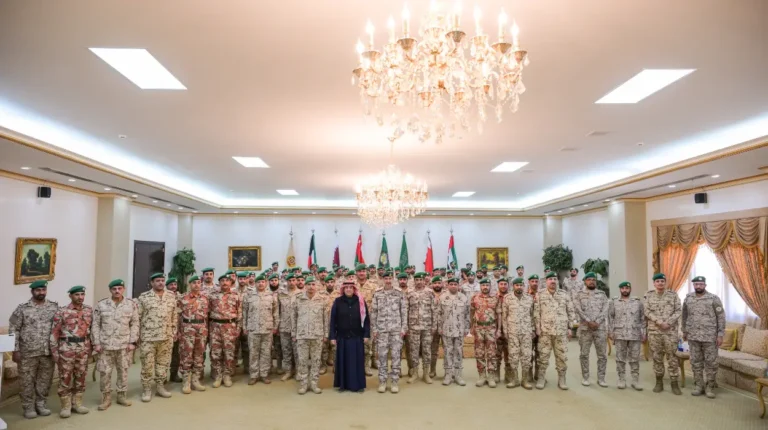
Security forces from all six Arab Gulf Cooperation Council (GCC) nations had carried out a series of counter-terrorism exercises, codenamed Arab Gulf Security 1. Hosted by Bahrain, the most undersized of the six Gulf Arab states, the country’s Ministry of Interior states the scenarios involve “invasion, rescue and the handling of insurgents”.
The GCC comprises Saudi Arabia, Kuwait, Bahrain, Qatar, the United Arab Emirates (UAE) and Oman and the organisers are expecting the drills will lead to a more coordinated technique for security in the region “The exercise transmits a message that the six GCC states help each other against any threat,” stated Bahrain’s Interior Minister, Lt-Gen Rashid Al-Khalifa.
In practice though, the Gulf Arab states have wildly divergent policies towards certain threats and while all are connected in their views on counter-terrorism, the level of danger varies widely from country to country. Saudi Arabia, the regional giant, currently meets the greatest threats. Its forces are waging a full-scale battle in neighbouring Yemen in support of the UN-recognised government there.
.
Saudi Arabia blames Iran for stoking sectarian tensions and following the cleric’s execution, an Iranian mob sacked the Saudi embassy in Tehran, flashing a rupture in diplomatic relations.
Bahrain is the only Gulf Arab state to have been indeed shaken by the so-called Arab Spring protests in 2011.
The Sunni monarchy has survived mass protests by the Shia majority, most of whom protested peacefully in approval of more democracy and human rights. The protests have repeatedly been marred by an extremely violent minority fighting pitched fights with police and planting homemade bombs indiscriminately.
The UAE has been the greatest contributor to the Saudi-led coalition fighting in Yemen, drawing on its battle experience in Afghanistan and Kosovo. Its government faces negligible unrest at home but has captured dozens of people accused of belonging to the Muslim Brotherhood, an Islamist movement which the administration sees as a direct challenge to its rule.
Oman has a markedly distinct foreign policy from its Gulf Arab neighbours, essentially commanding a neutral path. It could perhaps be defined as the “Switzerland of the Gulf”. When Iraq’s President Saddam Hussein was in authority and a local pariah, Oman kept the lines open to Baghdad. As connections between the Arab Gulf and Iran have deteriorated, Oman has stayed on good terms with Tehran. And as neighbouring Yemen has fallen into a catastrophic civil war Oman has preserved its neutrality, hosting peace talks in Muscat between both sides, so far without success