The move behind the Gulf Counterterrorism Rises starts with the decision of the United States in early 2026 to pull out of key multilateral platforms, such as the Global Counterterrorism Forum. This action is indicative of a larger realignment of U.S. foreign policy towards bilateral relationships and selective participation, minimizing its involvement in institutions that traditionally defined world counterterrorism standards.
Other related programs on the Global Community Engagement and Resilience Fund have also been affected by the withdrawal and have funded various initiatives at the grassroots level, to counter violent extremism. By distancing herself/ himself, Washington indicates the less-focus on preventive and community-based security priorities in favor of the more narrowly defined security priorities.
Erosion of U.S. agenda-setting influence
During more than ten years, the US had the key role in establishing agendas in the multilateral counterterrorism models. Its diplomatic influence, financial input and technical know-how contributed to the formation of strategies that were supportive of law enforcement alongside prevention and governance reforms.
That influence is diminished by the 2026 withdrawal. The lack of involvement by the U.S. in these forums could potentially lead to a reduction in the capacity of these forums in organising global responses, especially in areas that need long term funding and political support. Analysts observe that this change essentially redistributes power to other actors, such as regional blocs and up-and-coming powers.
Implications for prevention-focused strategies
Preventive counterterrorism operations tend to rely on the long term investment in community resiliency, education and economic development. The GCERF institute was created to meet these dimensions, as an addition to the conventional security methods.
The diminished U.S. involvement poses the issue of continuity. Experts caution that a reduction in such initiatives may leave the underlying causes of extremism unchecked that still exist in weak areas where there are governmental lapses and where any economic pressure can be felt.
Gulf states expand regional security frameworks and operational autonomy
The term Gulf Counterterrorism Rises not only reflects a reaction to U.S. withdrawal, but also the resurgence of a longer trend whereby Gulf states have sought to develop independent security capabilities. There has been an increasing trend of regional actors to come up with their own systems of coordination, intelligence sharing and operational planning.
These frameworks work in conjunction, and in other cases independently with the Western-led initiatives. The change towards the regional ownership of counterterrorism is an indication of both strategic and political ambition.
Evolution of GCC-led coordination mechanisms
The Gulf Cooperation Council has been playing a key role in the institutionalization of counterterrorism cooperation between its member states. The GCC has in recent years become more coordinated with external partners (such as NATO) and increased internal coordination of sharing intelligence and conducting joint operations.
Investments in infrastructure, such as surveillance systems and technologies to enhance border security, reflect a willingness to invest in the resilience of the region. Such initiatives signify a shift towards a more integrated and responsive security posture.
Role of military coalitions and joint exercises
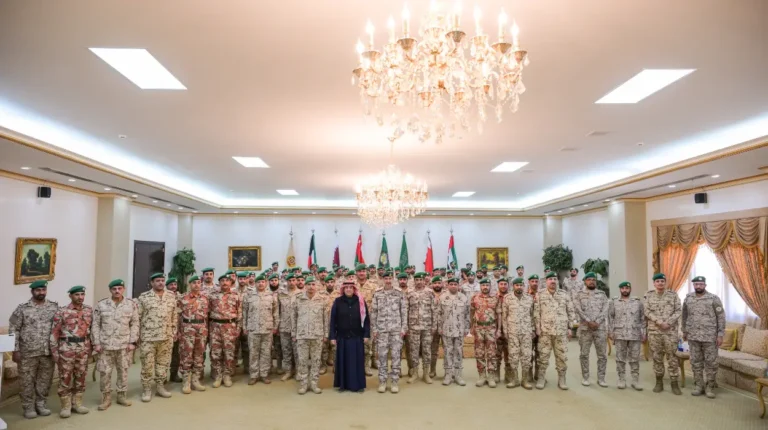
Cooperation in the military has also been enhanced in efforts like the Islamic Military Counter Terrorism Coalition. The coalition, based in Riyadh, helps member states to train together, strategize, and plan their operations in a state-centered approach to counterterrorism.
Workouts that are being undertaken throughout the Gulf region underscore the unification of regional leadership with the remnant Western assistance. As long as the U.S. troops still participate in some of their capacities, the planning and execution are all more reflective of Gulf priorities and views.
Transition from hybrid dependence to regional leadership
Although there is increased autonomy, the Gulf counterterrorism structures remain embedded in a hybrid system that integrates a regional initiative with external assistance. The exchange of intelligence, sophisticated technology, and the strategy of coordination are often still based on the partnership with Western actors.
The 2026 shift hastens a shift to a more regional leadership, although it does not completely eliminate dependency. Rather it forms a more complicated combination between autonomy and cooperation.
Reliance on external intelligence and technology
The Gulf states have invested heavily in security infrastructure, but are still dependent on external partners to supply some of their capabilities. High-tech surveillance systems, cyber intelligence and analytical tools are frequently a creation of or backed by the Western providers.
This interdependence highlights the interrelatedness of contemporary counterterrorism. Although regional actors are increasingly assuming more responsibility, they still exist in a global network of exchange of information and technology.
Diversification of strategic partnerships
The feeling of an unstable U.S. has led Gulf states to consider different partnerships. The interest in such countries as China and Russia is a larger step towards diversification of security relationships and minimization of exposure to changes of policy in Washington.
This diversification helps to create a more multipolar security system. As much as it improves flexibility, it also brings with itself new complexities in coordination and alignment of counterterrorism strategies.
Limits of interest-driven security and governance trade-offs
Although, as Gulf Counterterrorism Rises points out, the capacity to act is increasing in the region, it is also important to acknowledge the weaknesses of the approach that is largely driven by the interests of the states. The principles of rule-of-law, transparency and community participation, which are at the center of multilateral frameworks, are not necessarily central in regional security paradigms.
The lack of such a strong multilateral anchor provokes concerns about the long-term sustainability of counterterrorism activities and the equilibrium between security and governance.
Reduced emphasis on community-based prevention
Regional structures are more likely to focus on short-term security issues, including disruption of militant networks and securing borders. Although this method is effective in dealing with the short-term menace, it might not be effective in dealing with the underlying factors which facilitate the process of radicalization.
Analysts warn that unless there is a continued effort to invest in prevention the number of potential recruits to extremist outfits may continue to grow. The Global Terrorism Index has already shown an increase in the number of countries where militant activity is taking place, which confirms the necessity of comprehensive strategies.
Governance and accountability challenges
Multilateral institutions frequently offer devices of protection and responsibility, making certain that counterterrorist actions are sound in relation to worldwide norms. Without them, the regional initiatives might have a reduced number of constraints, which might influence transparency and consistency.
This is not always a compromising factor to effectiveness, but it transforms the character of government. The trade off between efficiency of operations and compliance with larger ideals is one of the focal points.
Strategic implications for global counterterrorism order
The advent of Gulf Counterterrorism Rises is a larger scale change of the global security context. With the United States reassessing its role, regional actors are assuming a new role of greater influence, redefining the conceptualization and implementation of counterterrorism.
This shift represents a shift towards a more decentralized and multipolar system, in which several centers-of-authority coexist and interact.
Impact on global coordination mechanisms
The reduction of U.S. participation in multilateral forums may weaken global coordination, particularly in areas requiring collective action. Differences in priorities and approaches among regional actors could complicate efforts to address transnational threats.
At the same time, regional initiatives may offer more tailored responses to local conditions, potentially increasing effectiveness in specific contexts. The challenge lies in integrating these approaches into a cohesive global framework.
Evolving balance between security and diplomacy
Counterterrorism has traditionally combined military, law enforcement, and diplomatic tools. The current shift places greater emphasis on security-driven approaches, with diplomacy playing a more limited role in certain contexts.
This evolution reflects changing strategic priorities but also raises questions about long-term stability. The interplay between immediate threat mitigation and broader political solutions remains a critical factor.
The trajectory of Gulf Counterterrorism Rises suggests that regional actors are increasingly capable of shaping their own security environments, yet the broader implications extend beyond the Gulf itself. As multilateral structures adapt to reduced U.S. involvement, the effectiveness of global counterterrorism will depend on how well these emerging regional frameworks can integrate prevention, governance, and coordination into a system that remains resilient in the face of evolving threats.