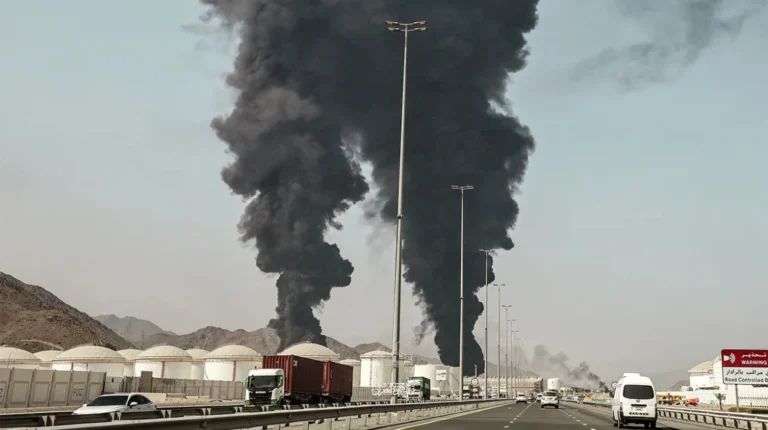
They’ve long competed behind the scenes, but on December 30, 2025, tensions between Saudi Arabia and the United Arab Emirates (UAE) erupted into direct military confrontation. Saudi warplanes targeted the Yemeni port city of Mukalla, striking a shipment of weapons reportedly destined for the Southern Transitional Council (STC), which aims to establish a separate state in southern Yemen.
The UAE insisted the weapons were meant for its own security forces, not the STC, but Saudi officials rejected this explanation, calling the shipment “extremely dangerous” and claiming they had previously warned Abu Dhabi against sending it.
This confrontation marks the first direct clash between the two Gulf powers, raising questions about the unity of the Saudi-led coalition in Yemen. Following the strikes, the UAE announced it would withdraw any remaining Emirati troops from the conflict.
Why did Saudi Arabia strike UAE shipments in Yemen?
Yemen’s Hadramout province, where the STC is active, shares a long land border with Saudi Arabia. Analysts say Riyadh cannot tolerate the area being controlled by a group not aligned with Saudi interests. Controlling the province is seen as a matter of strategic depth and border security. The strike highlights a growing rift between two Gulf allies who have historically coordinated on regional conflicts, from Yemen to Libya and Sudan.
Are Saudi Arabia and the UAE pursuing fundamentally different foreign policies?
Experts argue that the confrontation reflects deeper differences in strategic vision. Analysts say Saudi Arabia has little appetite for renewed military adventurism, focusing instead on stability, economic cooperation, and working through formal institutions like the United Nations.
In contrast, the UAE pursues a more flexible and opportunistic model, often leveraging non-state actors and informal networks to project influence across the region.
What is the UAE’s ‘axis of secessionists’?
Researchers describe UAE policy as building an “axis of secessionists”, supporting armed groups in Yemen, Libya, Sudan, and Somalia. These networks provide influence without direct reliance on formal government agreements.
Analysts explain that the UAE’s approach is networked and agile, relying on logistics, ports, media amplification, and corporate and financial channels rather than formal treaties. This strategy allows Abu Dhabi to reshape regional dynamics and bypass traditional power centers.
How have the countries clashed in other regional conflicts?
Saudi Arabia and the UAE have increasingly found themselves on opposite sides:
- In Sudan, Saudi Arabia backs the internationally recognized government, while the UAE has been accused of supporting the paramilitary Rapid Support Forces (RSF).
- When Israel recognized Somaliland, most Arab states protested, including Saudi Arabia; the UAE did not, reflecting its ties with Somaliland.
- In Syria, the UAE allegedly encouraged Druze separatist factions, while Saudi Arabia supports the central government.
These clashes reveal the growing diplomatic “Cold War” between the two Gulf powers.
Will tensions escalate beyond rhetoric and strikes?
So far, the conflict remains mostly symbolic. Social media exchanges between citizens of both countries have turned hostile, but experts see limited likelihood of further direct military confrontations.
Analysts say the Saudi strike in Yemen may have been a warning to the UAE over its support for non-state actors, but there is no desire for permanent rupture. The UAE is expected to tighten procedures, reduce visibility, and manage blowback, but its core strategy of leveraging non-state networks is unlikely to change.
Has the UAE’s strategy cost it reputationally?
While the UAE has gained geopolitical access and influence, the political and reputational costs are significant. Its support for Sudan’s RSF, which has been accused of massacres and atrocities, has drawn international criticism, highlighting the risks of backing armed non-state actors.
What does this mean for the future of Gulf alliances?F
The Mukalla incident underscores the fragility of Gulf coordination and raises questions about how Saudi Arabia and the UAE will manage conflicts of interest in Yemen and beyond. Observers predict that both countries will double down on separate policy pathways, with Yemen serving as a key testing ground for their competing visions.