Proxy conflicts increasingly define security realities across the Middle East, where state actors channel influence through militias and armed groups rather than direct military confrontation. These arrangements allow governments to pursue strategic objectives while maintaining a degree of political distance from battlefield outcomes. Analysts examining regional trends note that Proxy Dynamics have transformed militant organizations into instruments of foreign policy, blending ideological militancy with state-level planning.
Throughout 2025, several developments highlighted how these relationships intensified. Attacks linked to Hezbollah along Israel’s northern frontier and drone operations by Yemen’s Houthi movement targeting maritime routes illustrated how proxy actors can project power far beyond their immediate territories. The broader environment shows conflicts evolving into interconnected theaters rather than isolated crises.
Strategic Competition Between Regional Power Blocs
Rival alliances influence the structure of proxy warfare across the region. Iran, Syria, and aligned militias form one network that challenges Israeli and Gulf state interests, while Saudi Arabia, the United Arab Emirates, and other partners back opposing forces in various conflicts. These competing blocs shape local conflicts in ways that extend beyond domestic grievances.
Security observers suggest that such competition fuels a cycle in which armed groups become embedded in national strategies. Governments increasingly treat proxy groups as tools capable of applying pressure without triggering full-scale interstate war.
2025 Developments Highlighting Escalation Patterns
Events during 2025 revealed a noticeable shift toward more coordinated proxy actions. Drone technology, cyber capabilities, and advanced missile systems appeared more frequently in militia arsenals. Intelligence assessments indicated that many of these capabilities were introduced through external sponsorship networks rather than local production.
Regional analysts described the pattern as evidence that proxy warfare is becoming more technologically sophisticated. Militias are no longer confined to guerrilla tactics; instead, they operate with capabilities once limited to formal state militaries.
Iran’s Expanding Sponsorship Network
Iran remains central to discussions of Proxy Dynamics in the Middle East. Through military advisors, financial assistance, and training programs, Tehran maintains relationships with armed organizations across Iraq, Syria, Lebanon, and Yemen. These connections are often framed domestically as part of a broader deterrence strategy designed to counter perceived threats from regional rivals.
Observers frequently focus on the role of the Islamic Revolutionary Guard Corps, particularly the Quds Force, which coordinates external operations. Its influence has grown over time, creating a structured network that supports various militias operating across multiple conflict zones.
IRGC Quds Force Operational Structure
The Quds Force functions as a bridge between Iran’s strategic leadership and non-state partners. Through training programs and logistical coordination, it helps armed groups integrate advanced weapons systems into their operations. Reports released during 2025 suggested expanded advisory missions in Iraq and Syria, where Iranian personnel worked closely with local militias.
Military analysts often describe this structure as enabling rapid operational coordination. When conflicts intensify in one region, allied groups elsewhere can respond in ways that reinforce Tehran’s broader strategic objectives.
The Axis of Resistance Framework
Iran’s network of aligned groups is frequently referred to as the “Axis of Resistance.” This informal coalition links organizations such as Hezbollah in Lebanon, militias within Iraq’s Popular Mobilization Forces, and factions active in Syria. The concept reflects a shared ideological narrative but also a practical system for coordinating military activities.
Developments in 2025 demonstrated how these groups can operate simultaneously in multiple arenas. Coordinated drone launches and cross-border attacks suggested that communication channels among these organizations remain active despite international sanctions and surveillance efforts.
Sunni State Counterbalance Strategies
Opposing Iran’s network, several Sunni-majority states have developed their own strategies for supporting allied factions. Saudi Arabia and the United Arab Emirates have been particularly active in shaping regional security dynamics through partnerships with local forces in areas such as Yemen and parts of North Africa. These initiatives aim to counterbalance Tehran’s influence while protecting strategic interests.
The scale of these efforts varies depending on the conflict environment. In some cases, support takes the form of financial assistance and training, while in others it involves direct logistical backing or intelligence cooperation.
Saudi Arabia’s Regional Security Calculations
Saudi Arabia’s approach has evolved alongside broader economic and diplomatic reforms. Security cooperation with regional partners expanded in 2025 as Riyadh sought to stabilize areas affected by militant activity linked to Iranian-backed groups. Analysts note that these initiatives reflect a dual strategy combining military deterrence with political engagement.
Officials involved in regional discussions have suggested that countering proxy networks requires sustained coordination rather than isolated interventions. This perspective highlights the long-term nature of proxy competition in the Middle East.
UAE’s Expanding Security Partnerships
The United Arab Emirates has developed a reputation for forming targeted alliances with local actors capable of countering extremist movements. Its involvement in several conflict zones demonstrates how smaller states can exert influence through carefully selected partnerships.
Experts studying these relationships emphasize that such strategies reflect a broader shift toward coalition-based security arrangements. Rather than relying solely on traditional alliances, states increasingly work with a mix of formal militaries and local armed groups.
Syria As A Central Arena For Proxy Competition
Syria remains one of the most complex examples of Proxy Dynamics in action. Since the outbreak of its civil war, the country has become a focal point where multiple foreign actors support competing factions. This environment has created a dense network of militias with varying allegiances and objectives.
Government forces depend heavily on external support from Iran and Russia, while opposition groups receive assistance from different regional sponsors. The presence of these actors has transformed Syria into a testing ground for proxy strategies that may later appear in other conflicts.
Assad’s Reliance On Allied Militias
The Syrian government’s survival has been closely tied to partnerships with foreign-backed militias. Groups aligned with Iran, including units composed of fighters recruited from outside Syria, play significant roles in supporting government operations. Their presence has strengthened Damascus militarily but also intensified sectarian tensions within certain communities.
Observers argue that reliance on external militias reflects both strategic necessity and institutional weakness. The Syrian state’s limited capacity to rebuild its armed forces after years of conflict has made proxy partnerships a practical alternative.
Fragmented Militia Environment In Eastern Syria
Eastern Syria illustrates how competing proxies can operate within the same geographic space. Various militias backed by different sponsors maintain positions near energy infrastructure and strategic supply routes. This overlap sometimes leads to localized clashes even among groups that nominally share broader political objectives.
Security researchers studying the region emphasize that such fragmentation complicates efforts to restore centralized governance. Each militia tends to prioritize its sponsor’s interests, creating overlapping chains of command.
Yemen’s Conflict And Maritime Security Concerns
Yemen provides another example of how Proxy Dynamics influence broader regional stability. The Houthi movement, formally known as Ansar Allah, has developed military capabilities that extend beyond domestic conflict. Missile launches and drone attacks targeting shipping lanes in the Red Sea drew significant international attention throughout 2025.
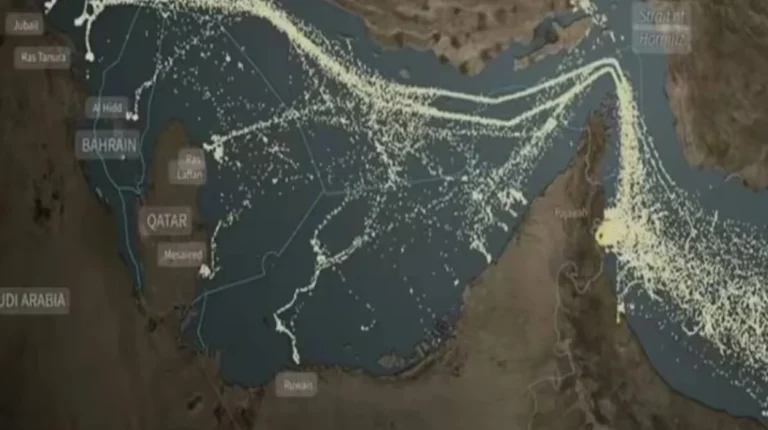
These operations highlight how proxy groups can affect global trade routes. Maritime security analysts warn that disruptions in strategic waterways may have economic implications far beyond the Middle East.
Regional And International Responses
International naval patrols increased during 2025 to safeguard commercial shipping. Several countries deployed additional vessels to monitor potential threats along critical maritime corridors. These measures illustrate how localized conflicts can evolve into international security challenges.
Experts analyzing the situation note that the persistence of proxy warfare complicates diplomatic solutions. Even when ceasefire agreements emerge, external sponsors may continue to support allied groups, prolonging instability.
Iraq’s Militia Integration Into State Structures
Iraq represents a unique case where militias linked to foreign sponsors have been integrated into official security frameworks. The Popular Mobilization Forces, established during the fight against extremist groups, now operate as a recognized part of Iraq’s defense system. However, some factions within the organization maintain close ties with external actors.
Political analysts argue that this arrangement creates a dual system of authority. While the Iraqi government formally oversees these groups, their connections to foreign sponsors influence strategic decisions and regional alignments.
Political Influence And Security Challenges
Militia leaders have gained significant political influence, holding positions in parliament and government institutions. This integration complicates international efforts to classify certain groups solely as external proxies. It also raises questions about how state authority evolves in environments shaped by prolonged conflict.
Researchers studying governance trends emphasize that militia integration reflects both necessity and compromise. In fragile states, absorbing armed groups into formal structures may reduce immediate violence but can also entrench external influence.
Global Implications Of Expanding Proxy Networks
Proxy warfare in the Middle East increasingly intersects with global security concerns. Intelligence agencies have reported attempts by certain networks to extend operations beyond the region, including financial activities linked to overseas plots or logistical support structures. These developments suggest that Proxy Dynamics are not confined to regional conflicts but form part of broader geopolitical competition.
International organizations monitoring financial flows noted in 2025 that illicit funding channels have become more sophisticated, often using digital platforms and cross-border smuggling routes. Efforts to regulate these networks face challenges because they operate across multiple jurisdictions and involve both state and non-state participants.
As technological innovation continues to influence warfare, proxy groups may gain access to advanced tools such as autonomous drones, cyber operations, and information campaigns designed to shape public perception. These capabilities could further blur the distinction between traditional military operations and irregular conflict.
The trajectory of Middle East security increasingly revolves around how governments manage alliances with non-state actors. Proxy Dynamics have evolved from temporary wartime arrangements into enduring strategic frameworks that shape regional politics. Whether future diplomatic initiatives or emerging technologies alter this balance remains uncertain, yet the continuing transformation of proxy warfare suggests that the region’s conflicts will remain interconnected and deeply influenced by the interests of distant sponsors.