America’s top counter-terrorism official, Joe Kent, director of the US National Counter-terrorism Centre (NCTC), spent several days in Baghdad to oversee and support the transfer of ISIS detainees from north-east Syria to Iraqi prisons. The move comes amid heightened security concerns as the Syrian Democratic Forces (SDF) lose territory to Damascus, raising the risk of prison breaks and the resurgence of ISIS networks.
Kent said his department is “providing direct support, identifying high-value ISIS prisoners to ensure the worst of the worst are transferred securely and face justice.” Officials view the operation as critical to preventing senior ISIS operatives from regrouping or fleeing to other conflict zones.
How Many ISIS Prisoners Are at Risk?
The operation began with the transfer of 150 fighters from Hasakah to a secure facility in Iraq, but CENTCOM has indicated that up to 7,000 detainees could eventually be moved. Intelligence assessments suggest roughly 10,000 ISIS members are imprisoned across Syria, including thousands of foreign nationals whose countries have largely refused to repatriate them.
Iraqi Prime Minister Mohammed Shia Al Sudani called on governments worldwide to repatriate their citizens, warning that long-term detention without accountability fuels radicalization and strains Iraq’s security infrastructure.
Where Will the Detainees Be Held?
Iraq confirmed it will house the detainees at several facilities:
- Nasiriyah Prison in Dhi Qar province
- Karkh Prison near Baghdad International Airport
- Smaller numbers in facilities in Sulaymaniyah within the Kurdistan Region
Officials say the use of multiple locations aims to prevent overcrowding and mitigate the risk of coordinated attacks aimed at freeing prisoners.
What Are the Immediate Security Threats?
Iraqi security forces announced on Tuesday that they foiled a suicide bombing attempt by an ISIS militant in Anbar province. Authorities reported that the suspect carried an explosives-laden belt and was arrested following intense surveillance and tracking. While the militant’s nationality and intended target were not disclosed, Anbar remains a historic hotspot for ISIS activity and insurgent routes.
Why Is This Operation Politically Sensitive?
For years, the SDF guarded ISIS prisons with US support. As Damascus regains control of SDF-held territory, the timing and coordination of detainee transfers have raised questions. Security analysts warn that any misstep could allow ISIS prisoners to escape and reconstitute cells in Syria, Iraq, or neighboring countries.
Before traveling to Baghdad, Kent met with US Special Envoy for Iraq Mark Savaya and Director of National Intelligence Tulsi Gabbard, discussing the role of Iran-backed militias and related networks. US officials have emphasized an “urgent need to disarm Tehran-aligned groups,” warning that Iran-controlled factions could obstruct counter-terrorism efforts and destabilize Iraq.
How Is Iraq Managing ISIS Remnants?
Iraq continues to combat ISIS through regular military and intelligence operations, arresting or killing high-ranking field commanders, explosives experts, and logistics coordinators. Some operations extend across the border into Syria, highlighting ISIS’s transnational operational capacity.
While ISIS lost nearly all territory it held in 2014—including major cities in northern and western Iraq and swathes of Syria—the group remains capable of sporadic attacks, targeted assassinations, and sleeper-cell operations.
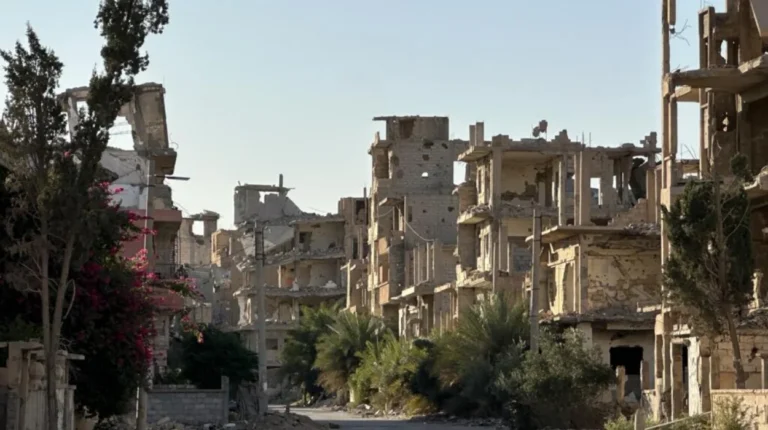
The 2014-2017 war against ISIS killed thousands, displaced hundreds of thousands, and destroyed entire towns and neighborhoods, including Mosul. Despite the territorial defeat of ISIS in 2017, sporadic attacks persist, and the safe detention of thousands of fighters in Syria and Iraq remains a critical factor for regional stability.
The current operation represents both a test of Iraqi-US cooperation and a broader strategic effort to contain ISIS resurgence while managing the complex influence of Iranian-backed militias in Iraq. Analysts suggest that failures in detainee management could rapidly undermine security gains and force a renewed US and coalition military presence in the region.