The airstrikes by Pakistan on eastern Afghanistan on 22 February 2026 had instantaneous conflicting reports on who was killed and the reason. Islamabad also claimed that fighter jets had attacked seven militant compounds which were claimed to be associated with Tehreek-e-Taliban Pakistan (TTP) and Islamic State Khorasan Province (ISKP). In several hours, authorities said that 70-80 militants were killed. Kabul responded that there were at least 18 civilians (cited including women and children) who were killed.
The split revealed an expanding border reality gap, which goes beyond the number of casualties. Its projects are radically different accounts of transnational militancy, sovereignty and revenge across the contentious Durand Line. To Pakistan, the strikes were a legal measure of self-defence due to fatal attacks in the country. To the Taliban powers of Afghanistan, they were an illegal attack on civilian society.
The conflict was developed in the context of the increased violence within Pakistan during Ramadan. The suicide attack in a Shia mosque in Islamabad claimed the lives of 31 worshippers and over 160 were injured and it was the worst attack on the capital in almost 20 years. Islamabad attributed that and other attacks in Bajaur and Bannu to operatives based in Afghanistan and this solidified its claim that it could no longer do nothing.
Pakistan’s militant toll claim under scrutiny
The official version of Islamabad has remained the same in terms of precision and targeting based on intelligence. But the lack of independently verifiable evidence has hampered the attempt to determine the veracity of its claims.
Intelligence claims without public disclosure
According to Geo News, Pakistani forces had attacked the hideouts of the TTP in Nangarhar, Paktika and Khost provinces, according to a report released by Deputy Interior Minister Talal Chaudhry. Information Minister Attaullah Tarar claimed the operation did not target civilians but command centres that were associated with the recent bombings.
Nonetheless, there have been no satellite photos, identification of war leaders or supporting third party accounts that have been published. Traditionally, the security establishment of Pakistan restricts the operational transparency by referring to the national security issues. This pattern has precedent. In past cross-border incidents, original militant casualty estimates were later overturned or could not be verified because of limited access.
The issue of credibility is intensified by the fact that media freedom is not very high in Afghanistan, and there are no impartial observers on the ground. Pakistan is still just asserting numbers unless confirmed otherwise thus creating the impression of a border truth gap.
Linking strikes to Ramadan attack surge
A steep rise in militant violence was justified by the Pakistani officials as the response to the airstrikes. This information was provided by security data that showed that over 500 people had been killed within Khyber Pakhtunkhwa in the previous month. The bombing of the Islamabad mosque by ISKP escalated the pressure on the government to show firm action.
In 2025, the Defence Minister Khawaja Asif had threatened that Pakistan will hunt down the TTP command anywhere they go unless Kabul is able to contain the cross-border operations. The 2026 strikes in February seem to represent that doctrine. The story of Islamabad has focused on deterrence making the operation appear as a preventive action to destroy the infrastructure of the operation before another attack can be launched.
Afghanistan’s civilian casualty counter-narrative
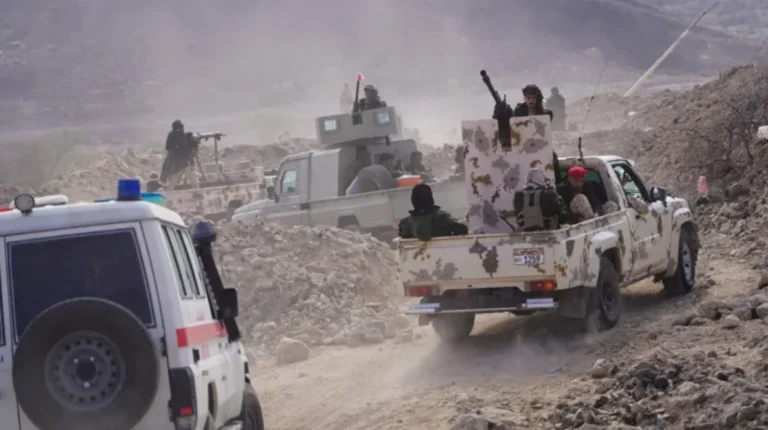
The story told by Kabul is very different as the strikes are shown as random and devastating to the local families. The Taliban authorities stated that residential compounds and madrassa were attacked, killing civilians.
Family tragedies and local testimonies
The local authorities in Bihsud district, Nangarhar, reported a house that was left in ruins. There were allegations by the survivors that the extant relatives had been buried under rubble. The provincial office of the Red Crescent in Nangarhar said that women and children’s bodies were recovered.
Taliban spokesmen in Paktika province quoted attacks on a religious school and a guesthouse. There were reports of numbers as high as 17 to 23 deaths in the affected districts with some also reported missing. These reports, not independent-verified either, offer a more humanistic story that is a sharp contrast to the militant scorecard of Islamabad.
The Taliban government has tried to exaggerate the pictures of casualty and bereaved family members, which supports its assertion that Pakistan attacked civilian infrastructures. By doing so, Kabul positions itself as a target of transnational aggression, instead of a shelter of rebels.
Sovereignty violation and diplomatic protest
The airstrikes were declared by the Defence Ministry of Afghanistan a flagrant assault against sovereignty and international law. Pakistan spokesperson Zabihullah Mujahid denied that the militant death toll was real and claimed that it was the civilians who were at the receiving end of the attack.
Kabul called on the charge d’affaires of Pakistan and threatened to retaliate. Although the Taliban government of Afghanistan is still not recognised by several states, it has been engaging in these acts to demonstrate its powers within and in the region. Rejections of TTP safe havens still do not leave its position, although Islamabad still refers to its intelligence that connects cross-border networks.
Origins of the border truth gap
The border truth gap is a result of structural circumstances that make the verification difficult and give rise to the competing accounts.
Verification barriers and restricted access
The mountainous nature of Eastern Afghanistan and poor infrastructure limit access to the media. The international journalists are not allowed to work freely in these regions, and the humanitarian organisations are subjected to logistical and political restrictions. The military of Pakistan does not allow foreign observers to follow operations and the Taliban authorities do not allow information flows through Afghanistan to be controlled in any way.
Disparities could be reduced through satellite imagery and other independent investigations, but neither has been publicly published. Without the joint data all governments depend on their sources. History demonstrates that the two sides exaggerated the losses on their opponent and downplayed the civilian casualties caused by their armies.
Propaganda in asymmetric conflict
In asymmetric wars, the numbers of casualties have strategic values. High death tolls of militants in the case of Pakistan is an operation success indicator and an assurance to a national population who are traumatised by years of constant bombings. To the Taliban government of Afghanistan, civilian fatalities are a way of gaining external victimisation and internal solidarity.
Such a dynamic is reflected in October 2025 confrontations along the border, with both governments giving conflicting casualty estimates after exchanging artillery fire. Mediation then, at the time, grappled to come to terms with figures and this highlighted the inability to bridge the gap of credibility.
2025 precedents shape current dynamics
The strikes of February 2026 were not an isolated case. They were after a tumultuous 2025 full of border delinquencies and shaky ceasefire agreements.
October ceasefire and fragile de-escalation
In October 2025, the killing of over 70 people on each side was reported by heavy fighting. Tensions were stabilised by a ceasefire brokered by Qatar and prisoner releases brokered by Saudi. However, beneath the conflict over militant sanctuaries and recognition of borders, there was still unresolved.
The later events in November 2025 such as Pakistani attacks in Khost following a bombing in Peshawar strengthened a cycle of revenge. The allegations during the period of civilian casualties were similar to the current conflict indicating that the border truth gap is a long-term phenomenon and not a transient event.
Mediation fatigue and strategic recalculation
In 2025, the regional mediators such as Qatar and Turkey tried to mediate dialogue. Although these measures decreased short-term enmities, they failed to generate a long-term system of intelligence-sharing or collaborative verification systems.
The February 2026 operation suggests diminishing confidence in diplomatic channels. Pakistan appears to have prioritised deterrence over prolonged negotiation, calculating that domestic security imperatives outweighed reputational risks. Afghanistan, facing economic isolation and limited international recognition, relies heavily on sovereignty narratives to consolidate legitimacy.
Implications for Durand Line stability
The 2,574-kilometre Durand Line remains one of South Asia’s most contested frontiers. Pakistan views the border as a conduit for insurgent infiltration, while Afghanistan historically disputes its legitimacy. These structural tensions magnify the impact of each incident.
The border truth gap complicates de-escalation because trust erodes with every conflicting claim. Without mutually accepted verification, each side interprets the other’s narrative as propaganda. Domestic political pressures further narrow space for compromise. Pakistani leaders face demands for decisive counterterrorism action, while Taliban authorities must avoid appearing submissive to external force.
Third-party verification mechanisms could reduce uncertainty, yet political will remains limited. International actors may encourage restraint, but neither Islamabad nor Kabul has demonstrated readiness to concede narrative ground. As long as casualty figures remain contested, so too will interpretations of legitimacy.
Future stability may hinge less on the raw numbers of those killed and more on the mechanisms used to establish truth. Whether through joint investigation, independent monitoring or renewed mediation, narrowing the border truth gap would require both sides to prioritise transparency over tactical messaging. Until then, each strike risks becoming not only a military event but a battle over credibility, shaping perceptions of sovereignty and security along one of the region’s most volatile frontiers.