Iran’s claim that it struck American military sites in Bahrain and Kuwait marks a sharp new phase in an already volatile confrontation, turning a maritime security crisis into a broader regional flashpoint.
This latest upsurge is a result of a series of US air raids on the territory of Iran following Iranian attacks on commercial ships in the strait of Hormuz, and the cycle of actions and reactions is pushing the situation toward a full-blown Gulf war. The importance of the developing standoff is not limited to the military activities, but is also tied to the very locations of these activities. The Gulf region is home to important US military facilities, while the strait of Hormuz is one of the most sensitive energy routes in the world. A prolonged standoff in these areas will inevitably become more than just a tactical response to the initial provocation.
How the crisis escalated
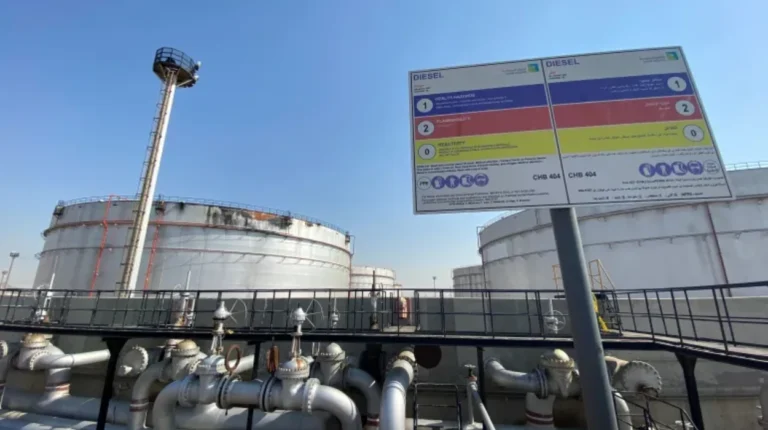
The current crisis seems to have started with allegations from the United States that Iran was responsible for attacks on commercial ships in the Strait of Hormuz. As per news reports, the United States had accused Iran of attacking three commercial ships in the Strait on Tuesday, a move that prompted the next round of military retaliation. This is important, since any attack on commercial ships in the Strait of Hormuz is not just a bilateral problem; it is automatically a question of international shipping and energy security. In retaliation, it has been reported that the United States conducted attacks on Iranian targets such as missile bases and command centers. The extent and duration of the attacks, which lasted several hours, show that the U.S. administration was responding to more than a symbolic act but to something much bigger.
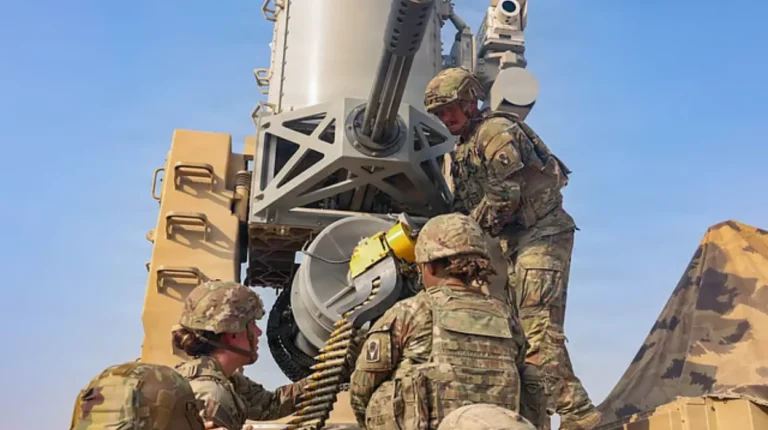
Iran then moved to the next stage of the cycle by claiming it targeted U.S. military facilities in Bahrain and Kuwait. That is the key development in the current story: the retaliation was no longer confined to Iranian territory or to the waters of the Strait, but was directed at U.S. military positions in the Gulf itself. That shift raises the stakes considerably, because it brings American forces in the region directly into the line of fire.
What the reports say
Different outlets have described the event from slightly different angles, but the central narrative is consistent. NBC reported that the United States said Tehran hit commercial ships in the Strait of Hormuz, while BBC said the U.S. military hit missile sites and command centers and Iran said it attacked U.S. bases. Other reports said Iran claimed strikes on American military sites in Bahrain and Kuwait after fresh U.S. attacks. The overlap among the reports points to a rapid, multi-front exchange in which both sides are presenting themselves as responding to provocation.
It is also significant to note that among the figures being reported, there may be claims and not facts verified independently. For instance, in one report, Iran was mentioned as claiming that it made “85 strikes” against U.S. military facilities in Bahrain and Kuwait, and such claim remains unverified. Numbers in such circumstances may function as a political signal rather than an accounting of events on the battlefield, and thus, they have to be taken with caution in any final article. Another claimed number is that the U.S. strike campaign comprised more than 80 targets in Iran. Should such numbers be true, it implies that the United States responded militarily in a massive way and not just as a punishment.
Why the Gulf matters
The selection of Bahrain and Kuwait for attack is extremely significant. Bahrain has played a vital role in the U.S. Navy deployment in the region, and Kuwait has been playing an important part in providing support for the United States forces. Such an attack or even a threat of attack is no less than a direct challenge to the whole U.S. military presence in the region. Another factor that increases the risk is the Strait of Hormuz. Any kind of disturbances in the area can lead to an immediate decline in shipping confidence regardless of any kind of physical damage inflicted on the ships moving in the area. This is because most of the oil shipments from the area pass through the Strait of Hormuz.
There is also a political dimension. Iran and the United States have a long history of messaging through force, and each side often seeks to frame the other as the aggressor. In this case, Washington is presenting its strikes as a response to attacks on shipping, while Tehran is presenting its moves as retaliation for U.S. attacks on Iranian territory. The result is a classic escalation loop in which both sides claim self-defense and both sides leave the other with limited room to de-escalate without appearing weak.
Statements and positions
The reported statements from both sides show how each is shaping the narrative. The U.S. position, as reflected in the reports, is that Iran attacked commercial ships and that American strikes followed as a response to that aggression. That framing is important because it casts Washington’s military action as defensive and limited, even if the scope of the strikes was broad.
Iran’s position, meanwhile, is that it acted in response to U.S. attacks and regional violations. One report quoted the Iranian foreign ministry as saying that violations of Iran’s Hormuz arrangements and Israeli strikes in Lebanon made the understanding ineffective. That statement is notable because it suggests Tehran is linking the Gulf crisis to a wider regional pattern, not just a single episode of retaliation.
A separate claim attributed to Iranian sources said the operation targeted multiple U.S. military facilities in Bahrain and Kuwait. Another report said Iran described the action as retaliation for fresh U.S. strikes. Together, those statements show that Tehran is trying to present itself as reacting to an ongoing chain of aggression, rather than initiating a new front on its own.
Strategic and political stakes
It is a highly dangerous crisis as it comes at the nexus of military, energy, and delicate diplomatic aspects. Even if the actual damage done by the recent strikes is minimal, the sense of escalation could put pressure on Gulf states, destabilize maritime insurance markets, and make it difficult to conduct diplomacy with world powers. It also increases the possibility of miscalculation leading to strikes outside the initial target theater. For Gulf states, the immediate consequences are very obvious. Both Bahrain and Kuwait are home to important U.S. military facilities, which means any attack within their proximity forces the military to act quickly in its defense. This can involve alerting air defense systems, temporary movement restrictions, and even intensified naval patrol operations.
The reports also mention renewed doubts about the ceasefire or understanding that had been intended to hold for a limited period. If that arrangement was already under strain, the latest exchange may have pushed it closer to collapse. Once both sides start citing the other’s violations as justification for renewed force, diplomatic space narrows quickly.
What remains unconfirmed
Although the reports are clear about the direction of the escalation, some details remain uncertain. The exact damage in Bahrain and Kuwait has not been independently established in the available reporting, and it is not clear whether the claimed strikes caused casualties or significant material losses. Likewise, the precise impact of the reported U.S. strikes inside Iran still needs independent confirmation beyond the initial claims.
This uncertainty is typical in the first hours of a military confrontation. Governments frequently announce claims before outside verification is possible, and early numbers are often revised later. For that reason, the most responsible framing is to identify each claim clearly and avoid overstating what has been confirmed.
The bigger picture, however, is one which already carries a lot of weight. There have been reports of commercial vessels being targeted in the Strait of Hormuz; the U.S. launched attacks on Iranian territory; and now Iran has claimed attacks on U.S. military installations in the Gulf. Without even the details being confirmed, the implications are clear: the standoff has expanded, and the threat of an escalation of hostilities is now far greater. This is not a situation that revolves around attacks alone. This is a growing standoff which now involves shipping, U.S. military installations in the Gulf, Iranian missiles, and the security of an area which is vital to the world economy.