Since 2020, 12 Coups in Ct Training have become an inseparable part of the politics and the security situation in Africa. In Mali and Burkina Faso, Niger, Guinea, Chad, Sudan and Gabon, one military leader after another has taken control in the various countries with most of them using the excuse of waning security conditions and jihadist growth.
The most notable point of agreement among a number of coup leaders is their previous involvement in Western-funded anti-terrorism training programs. The United States and France conducted training programs that aimed at building professional armies that would counter insurgent attacks. Rather, in various instances, those officers who were beneficiaries of such programs ended up attacking the civilian authorities.
Counterterrorism investment and political rupture convergences have led to a resurgence of thinking in policy spheres in 2025. Such analysts are increasingly discussing the problem of unintentional institutional blowback as opposed to coincidence.
Mali’s Sequential Coups
The current cycle started with the twin coups in 2020 and 2021 in Mali. The takeover was justified by colonel Assimi Goita who was a participant in U.S.-based training, citing chronic jihadist violence and state failures.
Militant activity escalated in central and northern Mali in the years that followed even though there was a promise of restored security. The military command shifted to Russian alliances, trimming French and U.S. troop activities.
Burkina Faso And Niger Transitions
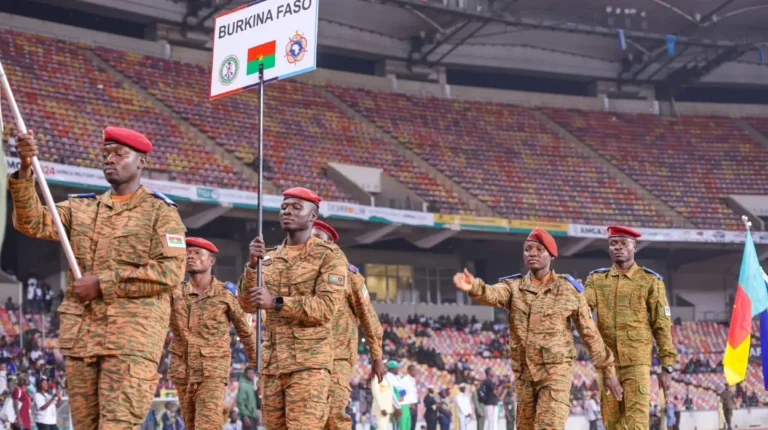
In 2022, two coups took place in Burkina Faso each headed by former officers who are deeply integrated into counterterrorism systems. The administration of Captain Ibrahim Traore was no longer close to France and tried to find other relations in defence.
In Niger, the coup that was staged by General Abdourahamane Tchiani in July 2023, whose training program overlapped with the U.S. ones, suspended American drone operations. The leadership presented the takeover as one that was needed to establish sovereignty and enhance security coordination.
Western Counterterrorism Investments And Their Limits
During the last ten years, western powers had made heavy investments in military capability-building in the Sahel. The U.S. International Military Education and Training program increased the number of officers exchanged, whereas the effort of France to deploy thousands of troops to assist the forces in the region was called the operation Barkhane.
There were tactical successes of these operations, such as the interruption of high profile militant leaders. Still structural stabilization was evasive. Jihadist networks transformed whereby, instead of territorial control, there were insurgency models that were disseminated.
Tactical Gains Versus Strategic Outcomes
The focus of counterterrorism partnerships was placed on elite training, rapid response units and the mechanisms of intelligence sharing. Nevertheless, these frequently worked side by side with feeble civilian structures and restricted judicial change.
Security experts have noted that the power balance between the home and the military can be changed by enhancing military capabilities but without accompanying political accountability. Empowered officers can consider themselves as custodians of national stability in weak states, especially where governments of civilians are performing dismally.
Governance And Civil-Military Tensions
The 2020s coups are not only an expression of insecurity but also the failures of governance. The citizen’s confidence in civilian leadership was damaged due to corruption and constant attacks.
The leaders of the military took advantage of the unpopularity, and they offered themselves as corrective powers. In a number of instances, there were warm receptions at the onset of the juntas by the people as it indicated how institutional fatigue had set in.
Jihadist Expansion After The Coups
One of the main questions that have been seen in 2025 is whether military takeovers enhanced better security outcomes. The evidence that is available indicates that violence either continued or intensified in most of the coup-stricken states.
An example is Burkina Faso where fatality still remains high in the rural provinces. Ethnic grievances and the lack of presence of the state are used by armed groups and kept their momentum in operation regardless of changes of leadership in Ouagadougou.
Territorial Control And Rural Vulnerability
The Juntas in some of the urban centers in Sahel rule major urban centers with insurgents still controlling the peripheral regions. This disintegrated control makes counterinsurgency difficult.
According to reports by regional monitoring bodies, militant groups are still involved in cross-border attacks where they attack security locations and civilian convoy attacks. The assurance of quick recovery of order has not been easy to fulfill.
Civilian Impact And Displacement
By mid-2025, figures on displacement in the central Sahel have exceeded ten million. Societies are exposed to food insecurity, poor access to health and broken education systems.
Leaderships headed by the military have the twin challenge of maintaining security campaigns and managing humanitarian disasters using a limited fiscal base.
Russian And Alternative Security Partnerships
With the Western interest restabilized, the new players increased their influence. The Africa Corps of Russia enhanced advisory activities in Mali and Burkina Faso which are usually connected to the mining rights and security assurances.
Such arrangements are local authorities presented in terms of pragmatism of alternatives to Western partnerships that are seen as conditional or ineffective.
Strategic Realignments In 2025
Regional organizations have had difficulties keeping up with consistent response. The collapse of the G5 Sahel and tension in ECOWAS indicates institutional vulnerability.
China has also become more active in diplomacy and focuses on the principles of non-interference and investment in infrastructure. Although it does not directly substitute Western counterterrorism programs, the increased influence of Beijing creates an overall strategic landscape.
Structural Drivers Behind The Blowback
The frequency with which the coups occur is an indication that training programs are not the real problems. The counterterrorism models were inclined to emphasize on kinetic activities and underestimate the governance restructuring, economic integration, and judicial responsibility.
When the security threats remained even after years of foreign aid, the parts of the military leadership saw it as the sign of incompetence by civilians and not the complexity of the system.
Institutional Incentives And Power Dynamics
Military discipline and technical skills can be developed through the development of professional military education. However, in politically weak environments, increased competence can also change internal orders.
The lack of proper civilian control allows military elites to gather strength of operation and political desire. This relationship makes it difficult to assume that professionalization will always be the panacea to democratic stability.
International Policy Reassessment
In 2025, Western policymakers have started to review the models of engagement. There is an increased focus on the governance standards, anti-corruption protection, and a more widespread institutional reform.
Multinational exercises like the African Lion are still going on although the dynamics of participation have changed as the states that were affected by the coup renegotiate the conditions of cooperation.
The changing situation proves that capacity-building is not capable of replacing political legitimacy. Although counterterrorism training was aimed at containing insurgency it also changed the internal power balance in such a manner that was hard to foresee.
It is yet unknown whether recalibrated partnerships can bring back the effectiveness of security as well as the governance by civilians. The armed forces empowerment and political accountability interaction currently become the focal point of the security crisis in Africa that poses complicated questions regarding the extent to which external aid impacts domestic power systems within the areas facing unending insurgency.