The 2,000 Troops by 2026 Reviving Regional Security West Africa Analysis begins with the February 2026 summit of the Economic Community of West African States in Freetown, Sierra Leone. Military chiefs gathered to operationalize a long-discussed standby force intended to respond swiftly to the accelerating spread of terrorism across the Sahel and into coastal states. The decision to move from concept to structured planning signals a strategic recalibration within the Economic Community of West African States.
The Freetown meeting concluded with the endorsement of Brigadier General Sheik Sulaiman Massaquoi of Sierra Leone as Chief of Staff for the standby arrangement. His mandate centers on validating troop pledges, harmonizing logistics frameworks, and aligning intelligence flows among member states. The timeline activation by the end of 2026 introduces both urgency and scrutiny, given the bloc’s mixed record on rapid deployment.
Escalating security pressures across the Sahel
West Africa’s security environment has deteriorated steadily since 2021, with the Sahel now accounting for a disproportionate share of global terrorism fatalities. The 2025 data cycle showed that attacks attributed to jihadist networks, including affiliates of the so-called Islamic State and al-Qaeda, expanded beyond Mali, Burkina Faso, and Niger into Benin and northern Togo.
Spillover toward coastal economies
The geographic shift is central to the current planning. Coastal states such as Côte d’Ivoire and Ghana, long considered buffers between Sahel instability and maritime trade corridors, have reported increased cross-border incursions. In 2025 alone, several coordinated assaults in northern Benin underscored the porous nature of regional frontiers.
Security analysts describe this as a “southward diffusion” of violence, driven by pressure on insurgents in core Sahel territories and the search for new logistical routes. The planned 2,000-troop force is intended to provide rapid reaction capability in precisely these transitional zones, where national armies often lack mobility and surveillance infrastructure.
The Alliance of Sahel States factor
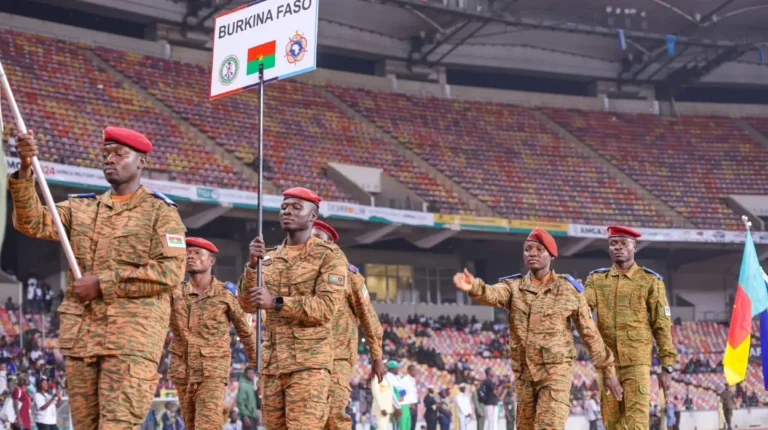
Complicating the security architecture is the emergence of the Alliance of Sahel States, formed by Mali, Burkina Faso, and Niger following their withdrawal from ECOWAS in 2024. Although political tensions persist, the Freetown summit signaled pragmatic engagement between blocs.
Military representatives acknowledged that extremist groups operate without regard to political alignments. As one official paraphrased during the closed-door sessions, coordination against a “borderless enemy” remains indispensable. The proposed standby force may function as a bridge mechanism, enabling intelligence-sharing even where formal diplomatic channels remain strained.
Operational design and force composition
The ECOWAS Standby Force concept dates back to the early 2000s, but funding constraints and political hesitation delayed full operationalization. The 2026 framework envisions a leaner, more deployable 2,000-strong contingent, emphasizing mobility and interoperability rather than sheer scale.
Leadership and national contributions
Nigeria and Senegal are expected to provide a substantial portion of combat-ready units, given their comparatively larger militaries. Smaller states will contribute specialized capabilities, including engineering and communications detachments. Brigadier General Massaquoi’s office is tasked with verifying that pledges translate into deployable assets rather than nominal commitments.
Past experiences have shaped this caution. In 2025, ECOWAS missions recorded only partial fulfillment of pledged troop numbers for certain operations, exposing gaps between political declarations and logistical realities. The new framework incorporates phased readiness checks to mitigate that risk.
Logistics and funding gaps
Financial sustainability remains a central challenge. ECOWAS officials estimate that at least $300 million will be required in 2026 to equip, transport, and sustain the force. External partners, including the European Union and the African Union, have signaled conditional support, particularly for training and counter-IED capabilities.
However, reliance on donor assistance raises questions about autonomy. Regional policymakers emphasize that the standby force must avoid overdependence on external airlift or surveillance platforms. Without indigenous aviation and medical evacuation assets, rapid deployment timelines could falter.
Lessons from previous interventions
Historical precedents inform the scaled 2,000-troop approach. The Economic Community of West African States Monitoring Group, known as Economic Community of West African States Monitoring Group, deployed thousands of personnel during the Liberian and Sierra Leonean civil wars. While effective in stabilizing capitals, those missions strained finances and exposed command coordination weaknesses.
More recently, joint operations under the Multinational Joint Task Force against Boko Haram demonstrated the value of coordinated regional offensives. In 2025, that task force reported significant disruption of insurgent camps in the Lake Chad Basin. These tactical lessons—rapid concentration of force, intelligence fusion, and synchronized border patrols—are being integrated into the 2026 standby blueprint.
Addressing command friction
One recurring obstacle has been divergent rules of engagement among member states. Differences in national doctrine can slow decision-making during crises. The Freetown discussions reportedly prioritized harmonized command protocols to prevent operational paralysis.
Quarterly simulation exercises scheduled throughout 2026 aim to test communication chains and deployment timelines. Officials describe these drills as essential credibility markers, particularly given skepticism from regional observers who recall delayed mobilizations in previous crises.
Political will and regional cohesion
The security initiative unfolds against a backdrop of political volatility. Military-led governments in parts of the Sahel have recalibrated foreign partnerships, reducing reliance on traditional Western allies. Meanwhile, ECOWAS has sought to balance sanctions mechanisms with engagement.
Sierra Leone’s President Julius Maada Bio, serving as ECOWAS chair during the summit, framed the standby force as a unifying security instrument rather than a political tool. He emphasized that terrorism threatens “collective prosperity and regional trade,” underscoring economic as well as humanitarian stakes.
Trade disruptions from cross-border attacks in 2025 reportedly cost billions in lost commerce and infrastructure damage. Stabilizing transit corridors between landlocked Sahel states and coastal ports has thus become both a security and economic imperative.
Readiness benchmarks entering 2026
Operational readiness metrics presented during the summit suggested that ECOWAS forces achieved approximately 85 percent effectiveness in recent simulation exercises. Yet capability gaps remain evident in air reconnaissance and casualty evacuation.
Training curricula for 2026 incorporate counter-IED lessons drawn from Sahel battlefields, where improvised explosive devices have been a leading cause of military fatalities. Intelligence-sharing protocols are also being updated to integrate digital surveillance and satellite data provided through African Union partnerships.
The ultimate viability of the 2,000-troop configuration will hinge on its agility. Security analysts note that extremist groups adapt quickly, fragmenting into smaller cells to evade conventional sweeps. A compact but mobile regional force may be better suited to such a fluid threat environment than larger, slower formations.
As deployment planning advances, the interplay between political cohesion, financial sustainability, and battlefield adaptability will determine whether this initiative becomes a durable pillar of West African security or another ambitious framework constrained by structural limitations. The coming year will reveal whether 2,000 troops can function not merely as a symbolic commitment, but as a credible deterrent capable of reshaping the trajectory of regional stability.