The reclassification of Mexican cartels as organized crime is emblematic of a broader shift in US security policy. The formalization of several cartels as Foreign Terrorist Organizations has reframed the notion of cartel terrorism from a purely criminal model to a more hybrid threat, with insurgency-like aspects. This shift allows the use of counterterrorism laws, broadening the arsenal of legal options to target financial and logistics networks.
This reframing took hold in 2015, when intelligence briefings began to label cartel factions as “territorial actors with profit incentives”. This term highlights a strategic shift, acknowledging that these groups operate not just within criminal hierarchies. Their territorial presence, paramilitary strategies and influence over governance has made the boundaries between criminality and political violence increasingly porous.
Legal Expansion Under Counterterrorism Authorities
The use of material-support laws has enabled prosecutors to successfully prosecute cases that would not typically be encompassed by criminal law. Attributability to designated groups has enabled prosecutors to hold financial supporters and arms dealers accountable. This strategy establishes a wider deterrent effect, as even indirect complicity is viewed as high risk.
However, concerns remain about the scope of these laws. Some contend that broad interpretations could have a negative impact on legitimate business, especially in areas where cartel activity co-exists with legitimate commerce. The balance between enforcement and economic stability is a key policy issue.
Strategic Messaging and International Implications
The terrorist designation of cartels is also a message to the international community. It signals a greater sense of urgency and places the issue in the context of international security. This framing facilitates engagement with partners more familiar with counter-terrorism than drug interdiction.
But the re-framing can gloss over the complexity of socio-economic factors. The rhetoric increases political will but does not automatically tackle the socio-economic factors that enable cartel growth, such as weak governance and economic inequality.
The Role of Firepower in cartel terror operations
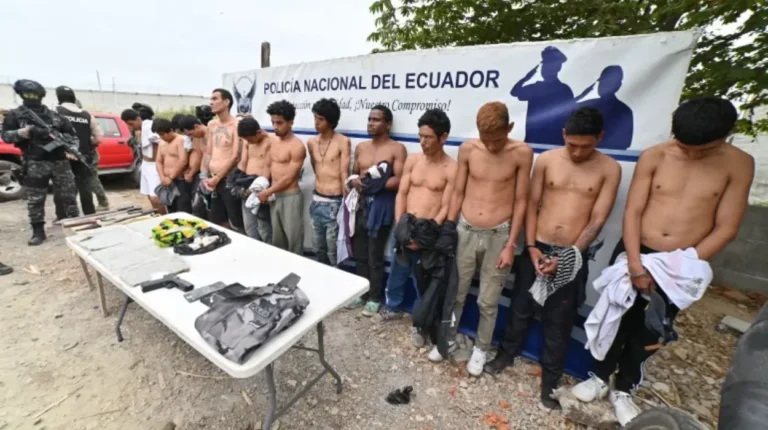
Cartels’ weaponry capabilities have evolved into a distinctive characteristic of their operations. The ongoing supply of weapons from the United States to Mexico has allowed cartels to shift from small-scale to large-scale, military-style assaults.
Evidence from 2025 case studies suggests many firearms found in Mexico are sourced from the U.S. These include semi-automatic rifles and high-caliber weapons that can penetrate armour. Access to these weapons has elevated the deadly nature and psychological effect of tactical operations.
Evolution of Weapon Systems
Cartels have responded to security measures with new weapon systems. The proliferation of rifles modelled after military weapons is a response to state security. There are multiple cases reported in 2015 where cartel forces have used weapons that can take down helicopters and fortified roadblocks, a tactic previously reserved for insurgents.
This has led Mexican authorities to increase their use of military tactics, such as the involvement of army units and advanced weaponry. This creates a scenario similar to an asymmetric warfare where adversaries are constantly adapting to the capabilities of the other.
Supply Chains and Regulatory Challenges
Borderless firearms trafficking makes it difficult to control. Weapons legally obtained in the United States can be re-routed via middlemen, obscuring tracking efforts. This dual-use system underscores the need for more than unilaterally-focused regulatory measures.
Post-2025, strategies have been pursued to combat these issues, including heightened focus on tracing and intelligence coordination. However, the networked structure of trafficking continues to pose challenges, enabling the continued acquisition of sophisticated weaponry by cartel terror units.
Territorial Control and Operational Transformation
The designation of cartels and the acquisition of heavier weapons have played a role in cartel territorialization. In 2025, security reports suggested the presence of cartel-affiliated groups with varying degrees of control over much of Mexico. Here, government structures are often replaced or complemented by cartel control.
This allows cartels to operate with an organisation that goes beyond simple violence. Roadblocks, patrols and administration are increasingly apparent, revealing a trend towards quasi-government. This presence is made possible through economic and arms support.
Paramilitary Structures and Local Governance
Paramilitary structures are evident in cartel groups. Squads can be assigned specific functions, such as intelligence, security and logistics. This structure improves efficiency and facilitates coordination of activities across geographic areas.
Residents often find themselves living in a world where state and cartel forces coexist. In some instances, cartels offer services or maintain law and order, thereby cementing their position. This presents challenges for re-establishing state authority, as responses need to tackle both security and governance deficits.
Impact on Civilian Security
Cartel territorial growth has profound effects on civilians. Heightened violence, displacement, and economic instability are common issues. Employing heavier weapons in urban settings exacerbates these impacts, with implications for long-term peace.
Civil society groups have noted that in order for security operations to be effective, the underlying social factors that have enabled cartel control must be addressed. The balance between police actions and community resilience is a pivotal element in future trends.
Policy Coordination at the Bilateral Level
The US-Mexico relationship is crucial to fight cartel terrorism. Efforts started in 2015 seek to improve intelligence, law enforcement and legal coordination. These aim to combat all aspects of cartel activity, from guns to money.
There are challenges with implementation. Resource and political considerations, as well as institutional differences have impeded efforts. The US and Mexico have domestic concerns, but a shared goal of addressing threats to border security.
Enforcement and Institutional Capacity
Capacity building is key to policy success. In the US, law enforcement agencies with firearms control responsibilities have competing priorities. In Mexico, police agencies face corruption, lack of resources, and fear of reprisals.
Capacity building has involved training, equipment, and interagency agreements. These have led to some improvements, but the problem remains large and requires long-term investment.
Balancing Security and Civil Liberties
The implementation of counterterrorism measures raises further concerns about civil liberties. Broad powers for surveillance and enforcement need to be weighed against civil liberties. This is especially important in situations where legal definitions of support or association can be broadly applied.
Trust in authorities is vital to policy success. Transparency and accountability measures can allay fears and promote collaboration with the community.
Strategic Outlook for cartel terror operations
The future of cartel terror operations will be shaped by the interplay between legal, police and socio-economic factors. The events of 2015 and early 2016 show that although legal innovations can change some elements of cartel operations, this does not necessarily translate into holistic solutions.
The persistence of firearms will be pivotal. Unless these dynamics are tackled, enforcement may struggle to have a sustainable effect. On the other hand, the use of counterterrorism measures brings new complexities that may affect legal considerations and operational approaches.
As the government assesses the impact of these measures, attention turns to integration. Marriage of enforcement and socio-economic programs may provide a more viable solution. However, the challenge is complex, and suggests that success will be measured in steps, in response to changing circumstances north and south of the border.
The overlap of legal categorisation and material resources raises an important question about the future of security policy: whether reclassifying threats can change their course, or whether long-term change must begin with a fundamental shift in the conditions that allow these activities to flourish.