While talks between the two states continue in Washington DC, the situation back in Lebanon is telling an entirely different story. As Israel’s military aggression against Hezbollah targets in Lebanon remains unabated, President Trump claims to have ensured that both parties would agree to a ceasefire. The contrast between the ongoing diplomacy at a higher level and continued military action on the battlefield has made the situation more uncertain, with Day 95 of the Iran war underway with no resolution in sight.
This is probably one of the most hazardous diplomatic contradictions seen in Middle Eastern history in recent times. While American diplomats hail the achievements in the discussions, the Israeli air strikes destroy southern Lebanon while Hezbollah rockets bombard northern Israel. The contradiction between what is being claimed diplomatically and what is going on in the battle field has raised some doubts over the genuineness of the peace process.
Trump’s Claim of De-escalation Versus Actual Combat
President Trump’s diplomatic offensive centers on a bold assertion that he brokered an understanding between Israel and Hezbollah. Speaking to reporters, Trump declared
“all shooting will stop” in Lebanon,
framing his intervention as a decisive breakthrough that would prevent a wider regional war. He emphasized that talks with Tehran were ongoing and that he hadpersuaded both Israel and Hezbollah to halt attacks following what he described as a
“very good call with Hezbollah.”
Yet, what is happening on the ground provides evidence to the contrary. Israeli Defense Forces persist with their airstrike operations in Lebanon and even carried out air strikes against southern neighborhoods of Beirut controlled by Hezbollah. At the same time, Hezbollah also continues with its rocket attacks within Israel, but now they have intensified right after the statement was made by the President of the United States. It can be seen that there is no agreement between words and actions of the parties.
Iran’s response further complicates the picture. Tehran has publicly stated it
“hasn’t yet replied to the US’s peace plan because of distrust,”
signaling deep skepticism about American diplomatic guarantees. This distrust appears well-founded, as Israeli military operations have not only continued but intensified during the negotiation window, suggesting that Israel sees military pressure as complementary to, rather than incompatible with, diplomacy.
Israel’s Unwavering Military Stance
The Israeli prime minister Netanyahu has been resolute in his stand against Hezbollah, indicating that military operations would not be halted unless Hezbollah completely stops attacking northern Israel. The Israeli military is determined to maintain their offensive strategy because it believes it would make a critical point in the negotiation process; hence, the military would not stop operations unless there is reciprocation by Hezbollah.
According to statements from the Israeli Defense Ministry, attacks on the southern suburbs of Beirut are likely to continue unless Hezbollah stops attacking. Therefore, this condition makes it clear that the Israeli government cannot cease fire until Hezbollah ceases attacking, which the Israeli government claims it has been doing from civilian territory. Israel claims that Hezbollah started a new series of overnight attacks, prompting the latest strikes.
In this respect, the Israelis find themselves opposing the rhetoric of de-escalation from the side of Trump who seeks an immediate cessation of violence. However, in the view of the Israeli officials, a continued military pressure on the Hezbollah forces is the only way to make them submit. The contrast of positions creates a strange picture of America advocating for peace while Israel carries out bombings.
Hezbollah’s Resistance to Direct Negotiation
Hezbollah’s strategy for dealing with the situation is consistent with its ideological stance against direct relations with Israel. Notably, Hezbollah was missing at the groundbreaking meeting on April 14, 2026, between the Israeli and Lebanese ambassadors that took place in Washington. These were the first high-level negotiations between the two countries in decades, with Hezbollah sticking to its principle of negotiating through mediators.
Even though Trump declared that he had succeeded in bringing Hezbollah to an agreement on the ceasefire, the militant organization continued launching rocket attacks into the northern parts of Israel. It seems that while engaging in back-channel communication with U.S. officials, Hezbollah failed to agree on a truce. It appears that Hezbollah is trying to use this diplomatic opportunity to launch attacks against the State of Israel.
This dual-track approach has frustrated US officials who hoped Trump’s personal intervention would yield immediate results. Hezbollah’s continued attacks while negotiations proceed signals that the group views the talks as a tactical opportunity rather than a genuine path to peace, further undermining Trump’s assertion that he has secured a definitive commitment to stop fighting.
Iran’s Growing Distrust and Threat to Withdraw from Talks
The involvement of Iran in the situation has grown more and more essential as time passes by. The Iranian statement of “distrust” towards the US plan for peace is considered an important diplomatic barrier because Iran continues to be the major sponsor of Hezbollah. It is important for Iran to agree with the plan fully in order to ensure its success.
Even more worrying, representatives from the country have hinted at their possible exit from negotiations due to the growing Israeli attacks on Lebanon. This move should not be taken lightly because such a step would render all attempts towards peace impossible. Iran believes the bombings carried out by Israel show that the United States cannot be trusted.
The timing of Iran’s distrust is particularly damaging. With fighting surging in Lebanon precisely when talks are supposed to be yielding results, Iran’s hesitation undermines the entire diplomatic framework Trump has built. Iranian officials have made clear that they will not engage in text exchanges or substantive negotiations if Israel strikes southern Beirut, essentially drawing a red line that Israel has already tested multiple times.
Historical Context: The April 2026 Washington Talks
In order to grasp the present deadlock, it is important to consider the past diplomacy that led to the present deadlock. In particular, on April 14, 2026, Israel and Lebanese ambassadors had unprecedented talks in Washington, which was their first official contact after 1983. Despite the promising beginning, these negotiations did not yield any concrete results in terms of achieving a ceasefire agreement.
At the very start of negotiations, it became clear to American diplomats that “more time would be needed” before some form of ceasefire could be achieved because fighting had not stopped yet. Indeed, another round of talks was planned for April 23, 2026, during which Lebanon and Israel were to negotiate the prolongation of the Israel-Hezbollah ceasefire, which kept being violated.
The failure of those earlier negotiations to produce tangible results has cast a shadow over Trump’s current efforts. Critics argue that the same fundamental disagreements remain unresolved: Israel demands complete cessation of Hezbollah attacks before halting its own operations, while Hezbollah and its Iranian backers refuse to make such concessions without guarantees of Israeli withdrawal from Lebanese territory.
Casualty Toll and Humanitarian Crisis
Human losses from this persistent warfare have been substantial. In one instance, a large-scale shelling in mid-April 2026 resulted in the loss of 357 lives and 1,223 people wounded in one day, making it one of the bloodiest days since the start of the warfare. The above statistics are based on reports of official sources, but independent observers say that the real death toll could be much higher.
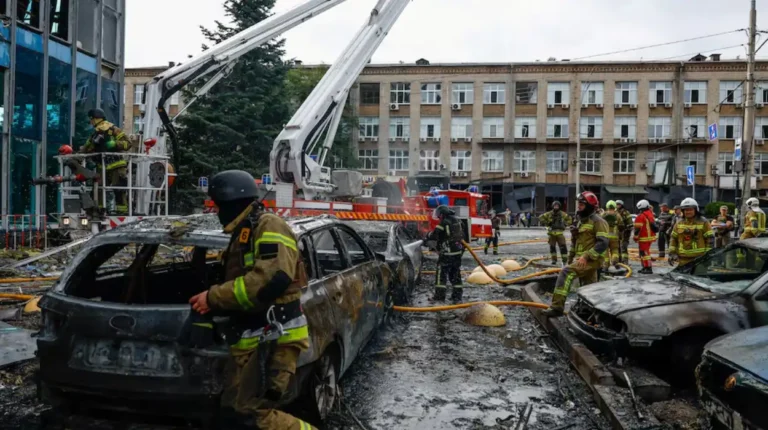
This has been worsened by the continued attacks that began on June 2, 2026, without any signs of ceasing. Many buildings, including residential houses, hospitals, and even electrical stations, in southern Lebanon have suffered severe damage. There has been a rapid deterioration of living conditions in Lebanon, with thousands of Lebanese civilians forced out of their homes due to shortage of food and water.
Israel has faced international criticism for its bombing campaign, with human rights organizations questioning whether the scale of destruction violates international humanitarian law. The Israeli government defends its actions as necessary self-defense against Hezbollah’s use of civilian areas for military operations, but the civilian death toll continues to raise serious legal and ethical questions.
Regional Implications and Risk of Wider War
The persistence of Israel Lebanon fighting despite diplomatic efforts raises the specter of a wider regional conflagration. If Iran withdraws from negotiations in response to continued Israeli strikes, the conflict could expand beyond the Israel-Hezbollah front to include direct Iranian military involvement. Such an escalation would have catastrophic consequences for the entire Middle East, potentially drawing in regional powers like Syria, Iraq, and Yemen’s Houthi rebels.
Oil markets have already shown sensitivity to the uncertainty, with prices fluctuating based on news of diplomatic progress or military escalation. The Strait of Hormuz, through which a significant portion of the world’s oil passes, remains a potential flashpoint if Iran decides to use its leverage there to pressure the United States and its allies.
The risk of miscalculation remains high. With both Israel and Hezbollah continuing attacks while negotiations proceed, the possibility of an incident that spirals out of control—such as a major Israeli strike causing mass casualties or a Hezbollah rocket hitting a populated Israeli area—remains ever-present.