Russia’s expanding drone campaign against Ukraine is increasingly extending beyond the immediate destruction caused by individual strikes. The latest attack on Kyiv, in which a Russian drone struck a residential building in the central Pechersk district and killed a 14-year-old boy while injuring at least seven people, highlights the continuing difficulty Ukraine faces in protecting its major population centres from sustained aerial attacks. Ukrainian officials also reported casualties and damage elsewhere, while Russia said its overnight strikes targeted Ukrainian defence-industry facilities, logistics centres and military-related vessels.
The significance of the latest attack lies not only in the civilian casualties. It comes amid a broader pattern of increasingly frequent Russian air operations against Kyiv and other Ukrainian regions. Reuters has reported that Russia has been using faster, high-flying drones in near-constant barrages around the capital, creating a persistent challenge for Ukrainian air-defence systems.
The result is a conflict in which the pressure on Ukraine is being measured not only by territory gained or lost, but also by the ability of its air-defence network, infrastructure and economy to withstand repeated attacks.
A Sustained Test for Kyiv’s Air Defence
The latest strike demonstrates one of the central problems created by Russia’s expanding drone campaign: defending a large urban area against repeated waves of relatively inexpensive aerial systems requires significant resources and continuous readiness.
Kyiv has faced repeated attacks in recent weeks. Earlier in September, Russian drones struck the capital for several consecutive days, damaging residential and university buildings and disrupting normal activity across the city. Reuters reported at the time that the city was struggling to intercept waves of jet-powered drones.
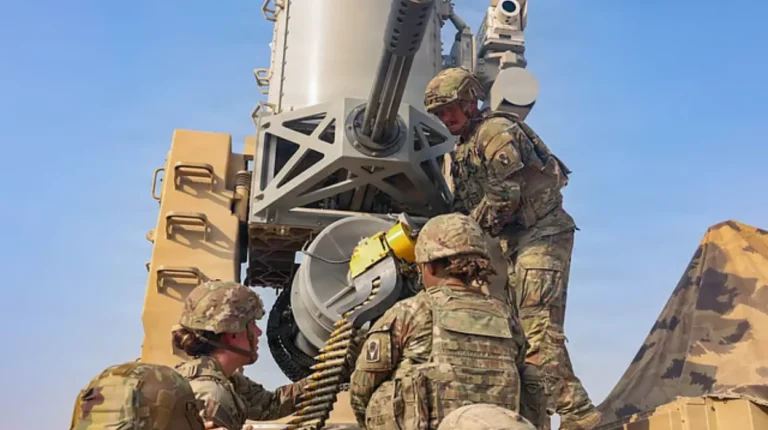
The challenge is therefore broader than whether a particular drone can be intercepted. Ukraine must maintain an integrated defence network capable of responding to attacks arriving in large numbers, while preserving expensive air-defence interceptors and other capabilities for more sophisticated threats.
This creates an asymmetric problem. Russia can continue to use large numbers of drones to impose pressure on Ukrainian defences, while Ukraine has to decide how to allocate finite defensive resources across major cities, military facilities, energy infrastructure, logistics hubs and industrial sites.
The repeated attacks on Kyiv indicate that Russia’s air campaign is also intended to sustain pressure over time rather than depend solely on individual high-impact strikes.
Why the Location Matters
The strike on a residential building in Pechersk carries significance because of Kyiv’s role as Ukraine’s political and administrative centre.
An attack reaching central Kyiv demonstrates that even areas far from the principal ground front remain exposed to the consequences of the war. That has implications for civilian confidence, government operations, emergency services and the wider functioning of the capital.
Russia maintains that its strikes are directed at military and strategic targets and denies deliberately targeting civilians. Ukrainian authorities, meanwhile, continue to report civilian casualties and damage to residential and civilian infrastructure from Russian attacks.
The competing descriptions of the campaign form part of the wider information dimension of the war. Each side presents its air operations through a different strategic narrative, while the physical consequences of attacks are being experienced directly by Ukrainian communities.
For Kyiv, the continuing challenge is to demonstrate that its air-defence network can protect the capital while also maintaining enough capacity to defend other strategically important locations.
The Economic Front Is Becoming More Important
The latest attacks also need to be considered alongside growing pressure on Ukraine’s industrial base.
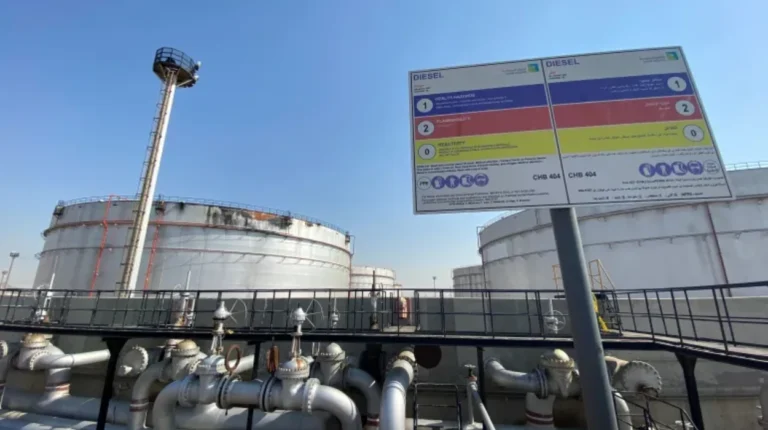
On September 25, ArcelorMittal announced that it was shutting production at its steel plant in Kryvyi Rih after four strikes in five weeks caused extensive damage and killed five workers. The company said safe and sustainable operations were no longer possible. Reuters reported that the plant’s shutdown represents another major setback for Ukraine’s steel sector, which previously accounted for a significant share of the country’s exports.
This development changes the way the air campaign should be assessed.
The strategic effect of repeated strikes is not limited to buildings destroyed or people injured. If attacks make major industrial facilities too dangerous to operate, they can affect production, exports, tax revenues, employment, logistics and the government’s ability to finance the war.
Reuters reported that intensified Russian air strikes have increasingly hit businesses, logistics networks, Black Sea port facilities and civilian infrastructure. The resulting economic pressure is contributing to reduced tax revenue and a widening budget challenge for Kyiv as it continues financing military operations.
This suggests that Russia’s air campaign is placing pressure on two interconnected systems: Ukraine’s physical security and its economic capacity to sustain prolonged resistance.
Industrial Targets Add a Second Layer to the Campaign
Russia’s stated justification for the latest overnight operation was that its forces targeted Ukrainian defence-industry facilities, logistics centres and vessels used by Ukraine’s armed forces.
Whether individual strikes achieve their stated military objectives is difficult to establish independently in the immediate aftermath. However, the targeting pattern indicates the importance Moscow places on disrupting Ukraine’s military-industrial and logistical networks.
Ukraine’s ability to continue receiving, producing, transporting and maintaining military equipment depends heavily on infrastructure extending well beyond the battlefield.
Factories, warehouses, rail connections, ports, energy supplies and communications systems all form part of the military-support architecture. Attacks against those systems can therefore have effects that accumulate gradually rather than becoming immediately visible.
At the same time, Ukraine has increasingly conducted its own long-range strikes against targets inside Russia, including defence and energy facilities. Reuters reported that Kyiv has sought to impose costs on Russia’s war effort and undermine revenues supporting Moscow’s campaign.
The conflict is consequently developing as an increasingly interconnected contest between two national infrastructure systems.
The Pressure on Ukraine’s War Economy
The closure of a major steel plant illustrates one of the most difficult problems facing Kyiv.
Ukraine must simultaneously maintain military expenditure, repair damaged infrastructure, support displaced populations and preserve enough economic activity to generate government revenue.
Industrial disruption complicates each of these objectives.
The steel sector has historically been important to Ukraine’s export economy, meaning prolonged interruptions can affect foreign-exchange earnings as well as domestic employment and tax receipts. Reuters reported that ArcelorMittal expected to take an impairment charge of around $1 billion following the shutdown.
This demonstrates how the consequences of aerial warfare can extend beyond the immediate battlefield.
A factory does not necessarily need to be permanently destroyed to become strategically ineffective. Repeated attacks can make continuous operations commercially or physically unsustainable, particularly when workers face repeated danger and critical infrastructure requires constant repair.
That creates a form of economic attrition.
Air Defence Remains a Strategic Requirement
For Ukraine, strengthening air defence therefore has implications extending beyond civilian protection.
Effective air defence helps preserve industrial production, transport networks, government facilities, energy infrastructure and military logistics. Every successful interception can potentially prevent disruption that would otherwise require expensive repairs or prolonged shutdowns.
But maintaining that protection requires ammunition, equipment, personnel and financial resources.
This makes Western military assistance particularly important to Ukraine’s ability to sustain the defensive effort. Earlier Russian attacks on Kyiv have already highlighted concerns over Ukraine’s supply of interceptors.
The strategic problem is one of sustainability. Ukraine needs enough defensive capacity to protect major population centres and infrastructure while avoiding an imbalance in which repeated drone waves consume defensive resources faster than partners can replenish them.
Russia, meanwhile, has an incentive to continue developing and deploying systems that complicate interception and force Ukraine to expend valuable defensive resources.
A War of Attrition Beyond the Front Line
The latest attack reinforces how the Russia-Ukraine war is increasingly being fought across multiple dimensions.
The ground front remains central, but air attacks can influence the war without directly changing territorial control. Repeated strikes can affect industrial production, public confidence, logistics, infrastructure and government finances.
This creates a form of strategic pressure that accumulates over time.
The closure of the ArcelorMittal plant is particularly significant in this respect. It demonstrates that the consequences of repeated attacks can eventually reach decisions about whether major companies can continue operating in wartime conditions.
For Russia, sustained attacks against infrastructure and industry offer a means of imposing costs away from the battlefield. For Ukraine, preserving economic activity becomes part of maintaining national resilience and continuing the military effort.
The Road Ahead for Ukraine’s Defence
The immediate priority for Ukraine will remain protecting its cities and critical infrastructure from further waves of drones and missiles. But the longer-term challenge is more complex.
Kyiv will need to maintain sufficient air-defence capacity while protecting the industrial and logistical networks required to sustain the country’s economy and military. International support will remain important not only for replacing defensive systems but also for helping Ukraine maintain the infrastructure that repeated attacks put under pressure.
For Russia, the continued use of drones provides a way to maintain aerial pressure across a large geographic area while simultaneously targeting military and economic infrastructure. The effectiveness of that strategy will depend partly on whether Ukraine can continue adapting its air-defence network and preserving its industrial base.
The September 25 attacks therefore represent more than another episode in the continuing aerial campaign. The strike on a residential building in central Kyiv illustrates the human cost of the campaign, while the simultaneous pressure on Ukrainian industry demonstrates its broader strategic dimension.
The central question is increasingly whether Ukraine can protect the systems that allow the country to function while sustaining a prolonged war under persistent aerial pressure. As Russia continues its attacks and Ukraine expands its own long-range campaign, the contest is becoming one not only of weapons and territory, but also of air-defence capacity, industrial resilience, logistics and economic endurance.