The early morning hours of June 18, 2026, witnessed Ukraine’s drones attacking an important oil refinery in the southeast part of Moscow, resulting in huge fires and interfering with flight activities around the area, thus making the attack the biggest to ever be launched against Moscow using unmanned aerial vehicles in the four years since the beginning of the full-scale war. This attack against the Moscow Oil Refinery situated in the Kapotnya District, nine miles away from the Kremlin, signals a breakthrough in Kyiv’s capability for long-range strikes in the ongoing war.
This was the second time in one week that the same location had been hit – the Moscow refinery had been targeted just two days before on June 16. The boldness with which Ukraine has begun to target Russian energy installations within its own territory is evident, and has led to an increasing belief in its capability to do so successfully. As the mayor of Moscow and Russian officials tried to control the situation, the Ukrainian president came out to justify their actions.
The Scale and Mechanics of the Assault
The operation was carried out by Ukraine’s Alpha Special Operations Center alongside other units from the Defense Forces, according to the Security Service of Ukraine (SBU), which revealed detailed information about the massive attack on Moscow. The drones employed in the assault included FP-1, Liutyi, and Shahed-type unmanned aerial systems, working in coordinated waves to overwhelm Russian air defense networks.
The authorities of Russia noted that air defense forces destroyed almost 200 drones approaching Moscow, while the Defense Ministry claimed that more than 1,000 drones were shot down, jammed, or intercepted in different Russian territories throughout one night. On the other hand, the Al Jazeera news agency mentioned a smaller number and noted that, according to the Defense Ministry of Russia, 555 Ukrainian drones were shot down in different territories of Russia. This discrepancy can be explained by the fact that both sides are engaging in information warfare and provide data that confirms their own interpretation of events.
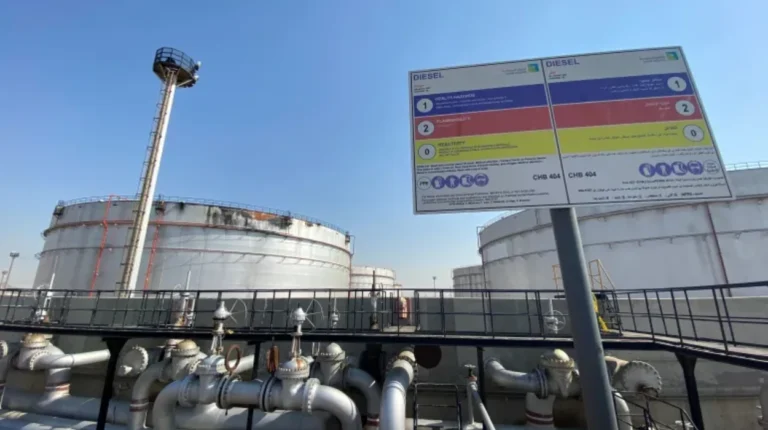
Despite all the efforts that had been made to secure their air defenses, Ukrainian drones succeeded in breaking through Moscow’s defense and attacked the infrastructure in the oil refinery. According to reports issued by the SBU, the attacks on the oil refinery occurred on the tank farm, main oil refining equipment, and the diesel fuel hydrotreating equipment, causing not less than five fires to break out in the oil refinery. Footages from the attack in Russia were shown through Russian media houses.
Infrastructure Damage and Economic Impact
The Moscow Oil Refinery is operated by Gazprom Neft, a company under government ownership since 2011, and it is one of the key energy companies in Russia, as it can refine more than 11 million tonnes to 12 million tonnes of crude oil per year, which is approximately 245,000 to 250,000 barrels per day. The Ukraine General Staff claims that the refinery refines more than 12 million tonnes per year and is the main supplier of fuels in the Moscow region, responsible for 35-40% of all fuel on Moscow’s roads.
The strike damaged the refinery’s key refining unit, which represents 53% of the plant’s total operational capacity, according to industry sources. This catastrophic damage to a single unit has effectively shut down the majority of the facility’s production capability. Reuters reported that the Ukrainian drone attack started a fire at the refinery and that two industry sources confirmed the facility had halted operations entirely.
The plant refined 11.6 million tons of oil in 2024, producing 2.9 million tons of gasoline and 3.2 million tons of diesel oil, thereby ensuring that the factory is essential to Moscow’s fuel supply. There are about 2,200 people working at the plant, and hence the damage will have serious financial repercussions both for the employees of the refinery and the fuel needs of the entire Moscow area. This incident happens just when Russia is already experiencing fuel shortages due to attacks on its energy sources.
Human Toll and Civilian Impact
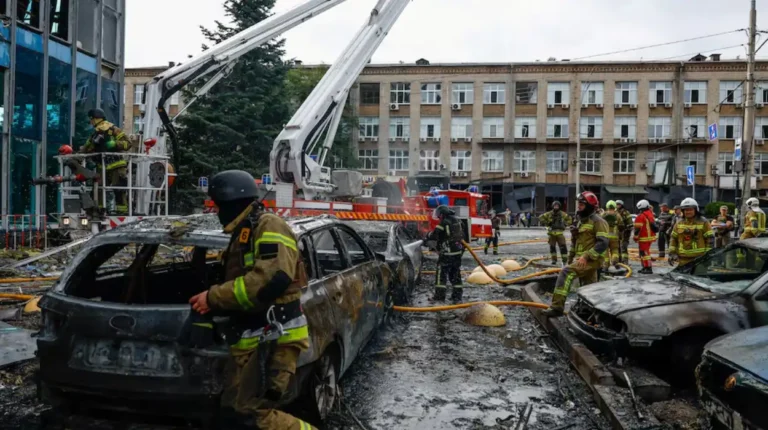
Consequences of the attacks led to many civilians being injured, where the governor of the Moscow region, Yoroby, confirmed that the strike from the drone injured 16 civilians within the Moscow region. Other reports also indicated that a total of 17 civilians were injured, with two children requiring treatment for their injuries. These injuries occurred when debris from the explosion impacted neighboring residential and commercial structures.
Moscow Mayor Sergey Sobyanin acknowledged the severity of the situation, stating that
“air defense forces are continuing to counter a significant assault”
and that
“a number of drones succeeded in reaching the Moscow oil refinery”.
The mayor also confirmed that a shopping center in the vicinity sustained minor damage from falling debris, though he emphasized that emergency services were working to contain the situation.
It is important to note that air traffic also suffered a blow as commercial flights were grounded in the city due to the attack. The disruptions in the air traffic make the whole situation more complicated because of the way the strike managed to affect different spheres of infrastructure in Moscow at the same time. The strikes carried out against the Gukovo oil depot in the Rostov region of Russia claimed at least one life amid the attack carried out by Ukrainian soldiers.
Ukraine’s Strategic Rationale and Official Statements
President Volodymyr Zelenskyy emerged on Thursday to provide the Ukrainian government’s official position on the strike, framing it as a direct and justified response to Russia’s recent attacks on Ukrainian territory.
“If Ukraine burns, so will Moscow,”
Zelenskyy said in a statement that quickly circulated across international media outlets. The Ukrainian president emphasized that Kyiv will respond to all Russian attacks and that the morning strike on Moscow’s refinery was “entirely justified response” to Russia’s attack on the UNESCO-protected Kyiv-Pechersk Lavra cathedral.
Last night, our long-range sanctions once again reached the Moscow region – for the second time this week, the Moscow oil refinery was hit. Targets were also struck in the Rostov region and in temporarily occupied territories of Ukraine. This is a fully justified response to… pic.twitter.com/NhFl4FlT9L
— Volodymyr Zelenskyy / Володимир Зеленський (@ZelenskyyUa) June 18, 2026
Zelenskyy further elaborated on Ukraine’s position, stating that
“if Putin wishes to continue war — we will not sit quietly, we will respond”
to Russian aggression. In a post on X, the former Twitter platform, Zelenskyy shared video footage of the massive fire at the Moscow refinery and called the strike
“fully justified response to Russian attacks on our cities”
while urging Russia to pursue diplomacy instead of continuing the conflict.
Strategic context was further supplied by the Security Service of Ukraine, which indicated that the Moscow Oil Refinery is actually a military facility associated with Russia that delivers oil products to the Russian army. As per the Ukraine General Staff, the annual production capability of over 12 million metric tons of oil is used in support of military actions of Russia, thus becoming an appropriate target of attacks under the Ukrainian doctrine of attacking infrastructure facilities sustaining the enemy war effort.
Ukraine’s unmanned aerial systems forces commander, Robert Brovdi, also called Magyar, verified the attack and emphasized the advanced technologies of drones used by Ukraine. On June 16, following the first strike on the refinery, Zelenskyy had already thanked the branches of Ukraine’s defense forces that successfully struck the Moscow facility, noting that
“Moscow Oblast felt reach of Ukraine’s long-range capabilities”
and that the oil refinery was hit at a distance of 500 kilometers.
Russia’s Response and Political Context
Russian authorities framed the incident as the largest-scale attack on their capital since the war began, with Moscow Region officials expressing frustration over the inability of air defense systems to prevent all drones from reaching their targets. The incident occurred during a sensitive political moment, as President Vladimir Putin was hosting a three-day Russia-ASEAN summit in Kazan, drawing international attention to the attack’s timing and symbolic significance.
Sobyanin, Moscow’s mayor, confirmed that the emergency services were engaged in efforts to put out the fires while the air defense units kept performing counter-offensive actions. The reports by the Russian Defense Ministry on the interception of 957 drones nationwide were viewed as a sign of effective work performed by the Russian air defense units despite the destruction at the refinery.
Russian propagandists expressed outrage over the drone strike on Moscow, with some figures calling for harsh measures against Muscovites who might be perceived as sympathetic to Ukraine, though such rhetoric has not been translated into official policy. The incident has intensified domestic pressure on Russian authorities to demonstrate their ability to protect the capital from future attacks.