The arrest of 209 individuals in an extensive anti-terrorism operation conducted by the Turkish government before the upcoming NATO meeting in Ankara demonstrates the way in which security, politics, and diplomacy have begun to merge in Ankara. The arrests took place just weeks prior to the arrival of the leaders of NATO in the city, and the operation shows the resolve of the Turkish government to avoid disturbances and their historical tendency for extensive security operations prior to major diplomatic events.
This is no accident. Ankara is gearing up for the 7-8 July NATO summit amid tightened security measures, and the arrests have been made just two weeks prior to the summit, around 22-23 June. Meanwhile, there are temporary restrictions put in place by Turkish authorities regarding public assemblies, further increasing the number of security measures ahead of the summit.
Security drive before the summit
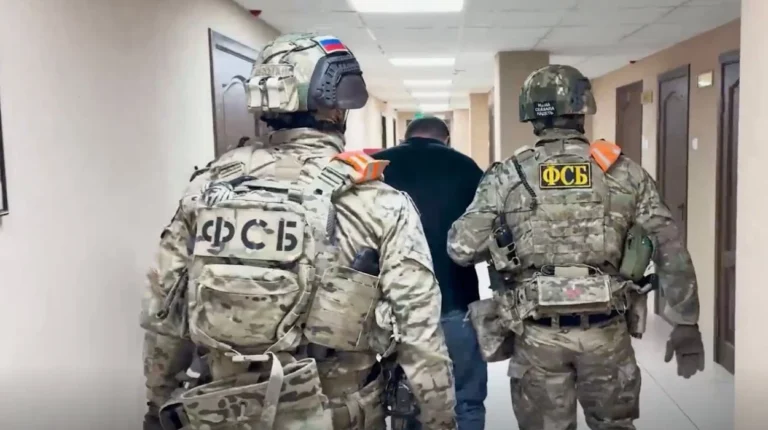
The prosecution claims that the operation was conducted against those who had connections with Islamic State group and some banned left-wing groups. Reuters mentioned that 209 suspects had been arrested in anti-terror operations in Ankara, whereas the Office of the Ankara Prosecutor claimed that 241 arrest warrants have been issued against the suspects. This implies that 32 suspects are still at large or are yet to be arrested.
This is not a regular security sweep against terror. This is happening prior to one of the most high-profile diplomatic occasions that Turkey will play host to this year, and the Turkish government seems determined to leave no room for any form of disturbance or infiltration. From the way the authorities have characterized the mission, it seems to be both preventive and strategic.
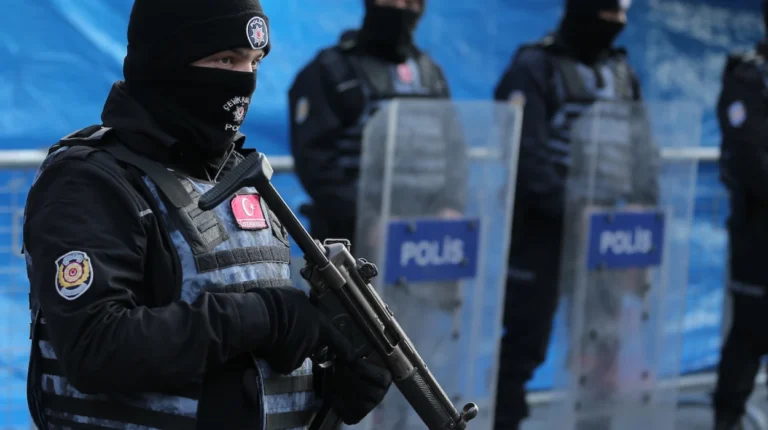
The security posture also extends well beyond arrests. Reports in Turkish and international media describe a large-scale security plan that includes tens of thousands of personnel, advanced surveillance, and specialized units. One report said Ankara planned to deploy 70,000 security personnel, including 55,000 police and gendarmerie, for the summit. Another report said roughly 40,000 security personnel could be involved, alongside missile-defence systems, drones, anti-drone capabilities, and F-16s.
Who was detained
The prosecutor’s office said the detentions were connected to both jihadist and far-left networks. Coverage indicated that the authorities were pursuing suspects linked to the Islamic State and several organizations Turkey classifies as terrorist groups, including TKP/ML, TKIP, MLKP, DHKP/C, and other left-wing formations.
Some sources went further to point out that most of the detainees were suspected members of far-left groups. According to The New Arab, 185 out of the detainees were suspected to belong to different far-left organizations while others were thought to be associated with activities of Islamic State groups. This is important since it means that the operation was not confined to one particular ideology but rather covered all the security streams at once.
DW reported that the Ankara prosecutor’s office said 209 people were detained and 32 others remained at large. The Hindu and Reuters similarly reported that the detentions were part of a broader crackdown ahead of the summit. Together, the coverage points to an operation that was carefully timed, widely coordinated, and likely designed to pre-empt both actual violence and the political embarrassment of any security lapse during the NATO gathering.
Public order restrictions
The arrests were accompanied by restrictions on public activity in the capital. Reuters reported that Ankara imposed limits on demonstrations and other public gatherings, and DW noted a ban on public assemblies tied to the summit security environment. The governor’s office said the measures were necessary to maintain order and ensure the summit could proceed safely.
The significance of these prohibitions is political because they indicate that the security measure is not limited to those individuals believed to be members of militant groups. Through limiting gatherings and demonstrations, they also reduce the potential danger of protests that might highlight weaknesses or present a political scene in the neighborhood of the meeting venue. In effect, this is an order that allows the state wide discretion over space and expression in the city.
As per the report by Reuters, the ban would apply during the period of 13 days beginning on 28 June through to 10 July. This is indicative of the fact that the authorities consider this event as a security zone rather than a diplomatic meet. This is also indicative of the usual practice followed by Turkey, whereby it front loads security, restricts public space, and avoids escalation into big events.
Official framing
Turkish authorities have presented the operation as a necessary and lawful counterterror measure. The prosecutor’s office is the central official source cited in the reporting, and the language used emphasizes suspects, warrants, and operational coordination rather than political targeting. The message from Ankara is clear: this is about neutralizing threats ahead of a high-risk international summit.
The broader narrative of the state is one of assurance. By taking such steps, the officials are essentially conveying to their NATO partners and guests that Ankara has the capability to provide security in Istanbul to the maximum degree possible. The deployment of personnel, air defence measures, and bans on assembly contribute to this aspect of the operation. Hence, the operation is not just one of ensuring safety but also of proving capabilities. Yet another reason for which this operation may be subjected to criticism is because of its scope. Whenever a government arrests more than 200 suspects in various networks during a high-profile pre-summit period, questions do arise about whether the operation is targeting the threat alone or whether there is an element of suppression of dissent involved in the matter. This is all the more true in the context of Turkey, given the strong anti-terrorism laws of that country.
Wider summit context
It is important to consider the implications of the summit itself as well. It is not enough that Ankara will be hosting a significant alliance gathering; it is hosting one while there are existing fears over security in Europe and the region. This situation means that even small disruptions have a great deal of diplomatic import, which accounts for the aggressive action being taken prior to the summit. The details of summit security provide an indication of just how extensive the preparations for the summit actually are. Some of the reports indicate a significant number of police and gendarmerie forces, as well as the potential use of drones, anti-drone technologies, and even air cover.
This approach is consistent with how states handle high-profile international summits, but Turkey’s version appears particularly intense because of the country’s domestic security landscape and the political sensitivity of holding a NATO summit in its capital. The blend of counterterror operations, assembly bans, and large-scale force deployment signals that the government sees the summit as both a diplomatic opportunity and a potential security liability.
Reporting significance
For news reporting, the key facts are straightforward but important. Turkish authorities detained 209 people, prosecutors issued warrants for 241 suspects, and 32 remained at large in the initial reporting. The detainees were described as linked to Islamic State and multiple far-left groups, while Ankara introduced restrictions on public gatherings and expanded security for the NATO summit.
The story also reveals the state’s preferred method of crisis prevention: cast the net widely, act early, and lock down the city before the summit begins. That approach may reassure NATO partners, but it also reinforces concerns about civil liberties, public space, and the use of anti-terror powers in politically sensitive moments.
The reason why this development is particularly significant is because of how it combines the aspect of security with image management. Turkey is making a statement to its allies that they have the capability to organize a large summit without security issues and also send an internal message that chaos will not be condoned. These arrests, the banning and the security measures are all done for these reasons. The counter-terrorist operation carried out before the NATO summit should be seen as a preemptive measure undertaken by the government in order to ensure there is no embarrassing situation or violence in one of the most significant diplomatic summits of the year. The arrest of 209 people, the issuance of 241 warrants, the linkages with Islamic State and far-left movements and the ban on public rallies all indicate a heavily securitized environment in Ankara.
At the same time, the operation illustrates how summit security in Turkey can quickly expand into a broad exercise of state power. The scale of the deployment, the political sensitivity of the timing, and the diversity of alleged targets all make this more than a routine police action. It is a snapshot of how Ankara intends to manage risk: decisively, visibly, and with little room for public uncertainty.