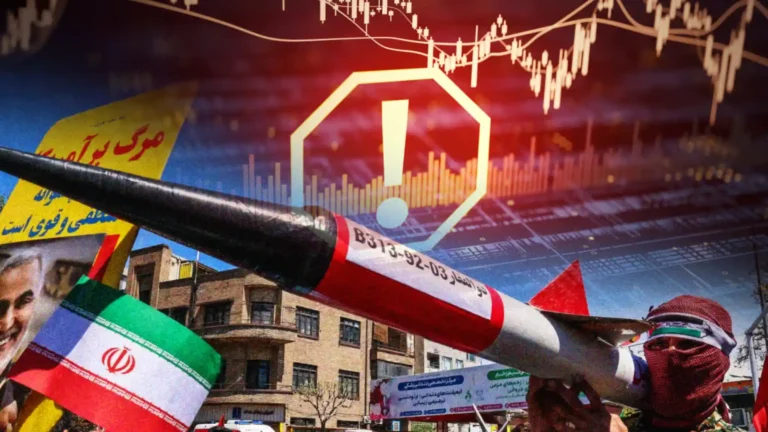
Discussion on definitions and their relations – policy considerations Terrorism and extremism are words that are frequently used in the mass media, in politics, and in the realm of security, but they are not synonymous. Though they have a very close association, terrorism has more specific definitions in the sense that it is a consequence of extreme ideology in contrast to extremism that can be more of a belief system that does not adhere to mainstream ideology but does not have a direct nexus in every case that results in violent activities.
What Is Extremism?
At its core, extremism involves holding ideas, beliefs, or ideologies that are far outside the accepted mainstream of a given society—especially those that oppose fundamental values such as democracy, the rule of law, individual liberty, and tolerance of diverse beliefs and identities.
A Broad Spectrum of Beliefs
Violence is not implied in extremism, but extremism is simply the measure of how far an ideology is from what is considered to be mainstream or acceptable. Those who are considered extremist may have issues with compromise, democracy, or pluralism. They may also have inflexible views of the world that allow little to no deviation in ideology from their own.
Religious extremism, political extremism, racial extremism, and social extremism are some examples. For example, calling for one religious belief to be imposed on all people in the country or for a political structure to be abolished without a replacement may be labeled as extremism although there is no violence.
Extremism as an Ideological Root
In contrast to a criminal act, extremism is usually labeled a belief. This belief may set the ideological foundations for more radical actions, such as violence, but it is not necessarily a form of terrorist activism. This is the reason why it is sometimes differentiated into general and violent extremism, the second form encompassing the intention to employ violence in pursuing the goals of extremism.
What Is Terrorism?
Terrorism can be a particular tactic or technique, usually with the intention of intimidation, coercion, or influencing people or a government, which in this case might be for ideological or religious aims, commonly using or threatening violence.
Despite the fact that no universally accepted definition has been established globally, many sources concentrate their definitions upon the employment of violence against civilians for instilling fear and pressing for political modifications. Terrorism researcher Alex P. Schmid has established the following definition:
“An anxiety-inspiring method of repeated violent action … whereby the direct targets of violence are generally chosen randomly … and serve as message generators … to manipulate targets through intimidation, coercion, or propaganda.”
This highlights three core features:
- Violence or threat of violence
- Political or ideological motive
- Intended psychological impact on audiences beyond immediate victims
Terrorism in Practice
Terrorist attacks are usually:
- Criminal in nature and universally condemned
- Committed by non-state actors (though the concept of “state terrorism” exists in academic debates)
- Designed to create fear, insecurity, and disruption
- Targeted at civilians or symbolic institutions
- Aimed at gaining attention or coercing policy change
Examples range from bombings and hostage crises to mass shootings and cyberterrorism.
Key Differences Between Extremism and Terrorism
While related, extremism and terrorism differ in scope, form, and consequence.
1. Belief vs. Action
- Extremism refers to ideas, ideologies, or attitudes that are outside mainstream norms. Violent or non-violent forms both qualify.
- Terrorism is specifically about actions or tactics—namely the use of violence or intimidation to achieve goals.
This means not all extremists are terrorists—but all terrorists typically have extremist motivations that justify, in their view, the use of violence.
2. Violence as a Defining Element
Extremism does not necessarily have to involve violence-think extreme political rhetoric or radical advocacy, for example. Terrorism necessarily involves violence or the threat of violence against non-combatants with the intention of generating fear. Thus, the extremist might be one who loudly denounces democratic principles but does nothing violent. The terrorist commits or plots the violent act.
3. Social and Legal Perceptions
- Extremism is often seen as ideological deviance and may be legally protected under freedom of speech if non-violent.
- Terrorism is criminal behavior across most jurisdictions. It draws severe legal penalties because it involves violence and harm.
This distinction matters in national security policy and civil liberties debates.
4. Policy and Countermeasures
- Counter-extremism focuses on ideological prevention, community engagement, education, and deradicalization (often referred to as Preventing Violent Extremism, PVE, or Countering Violent Extremism, CVE).
- Counter-terrorism involves law enforcement, intelligence, military, and policing actions to stop violent acts and dismantle terrorist networks.
Modern security strategies typically integrate both, recognizing that one informs and supports the other.
The Relationship Between Extremism and Terrorism
Despite their differences, extremism and terrorism are conceptually linked.
A Continuum of Radicalization
Many analysts view extremism and terrorism on a spectrum or continuum:
- Extreme beliefs (ideological rejection of norms)
- Radicalization (increasing commitment and isolation)
- Violent extremism (willingness to use violence)
- Terrorism (actual violent action)
This continuum model helps explain how beliefs can translate into behavior, allowing policymakers to intervene early.
Not All Extremists Become Terrorists
Ideologies are supplied by extremism, although few radicals resort to the use of terror. Some radicals may be involved in activism, movements, andoratory, all within the bounds of the law. At the same time, people may resort to terror without necessarily being ideologues. In this case, violence may stem from opportunistic or personal complaints and the need for publicity.
Challenges in Defining and Distinguishing the Two
One of the central debates in academia and policy is how to define terrorism and extremism consistently.
Lack of Universal Definitions
At present, a universally accepted definition of terrorism does not exist; instead, a number of alternatives and focal points vary according to various national administrations, courts, and researchers, such as targeting, actors, and motivations.
Less formalized in legal terms is the concept of extremism, and in most cases, it is a word that is more descriptive than legal in nature.
Such definitions might differ from one social norm, political structure, or legal framework. What is viewed as extreme behavior for one society might or might not pass for legitimate dissent for another.
Practical Implications: Policy, Security, and Society
Understanding the difference between terrorism and extremism is critical for effective policy.
Law Enforcement vs. Social Prevention
- Counter-terrorism demands tactical responses: surveillance, disruption of plots, arrests, and prosecution of violent actors.
- Counter-extremism requires long-term strategies such as education, dialogue, online counter-narratives, and community empowerment.
Modern strategies increasingly combine both approaches—for example, national CVE policies that prevent radicalization before terrorism occurs.
Protecting Rights and Security
A balanced approach must protect civil liberties while safeguarding societies from violence. Over-broad labeling of dissent as extremism can undermine democratic norms, just as underestimating the threat of radicalization can lead to violence.