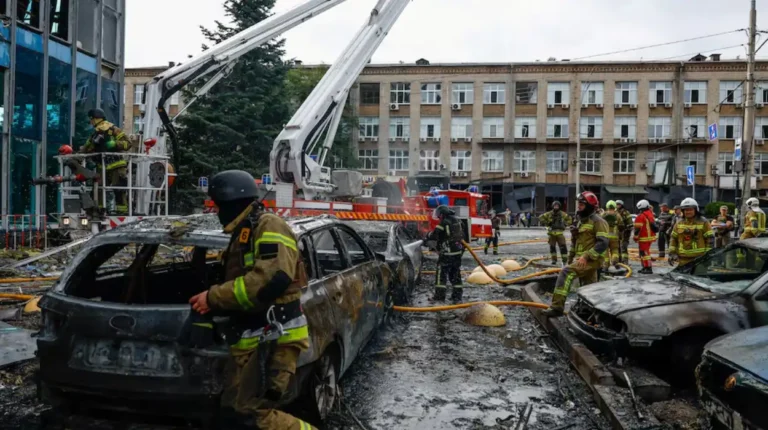
Attacks on Russian oil refineries using drones by Ukraine have become one of the most impactful points of pressure in the war as energy infrastructure gets turned into a battlefield. In the course of recent months, several strikes led to ignition of fires in these places, temporary disruption of their work, and caused doubts that Russia may experience serious fuel shortages during the summer because of those strikes, particularly in the territories near refinery and distribution centers.
The main significance of such attacks is not only about the effect that was caused by each particular strike, but rather about the impact of such attacks repeated again and again. It is much easier to extinguish fire in the refinery or start repair works there than to recover from the constant disruptions caused by such strikes. That is why experts call this tactic not just retaliatory actions but an attempt to disrupt war economy of Russia.
Why refineries matter
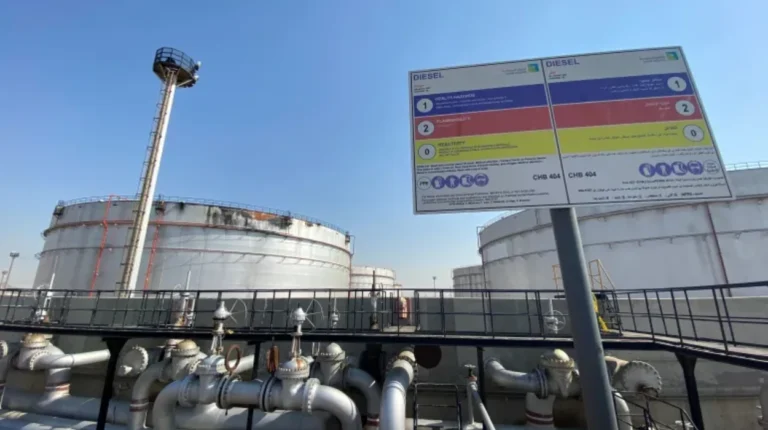
The refineries play a key role in the provision of fuel for Russian consumers, including civilian, agricultural, industrial and military sectors. This means that any limitation of their activity will be felt both in the market and on the battlefield. In the context of the Russian Federation – a huge country – the main issue will be not national production in general but its regional concentration. If several refining facilities in a particular region are shut down, there may be a shortage in that region even if the country produces a lot of fuel in general. It is this regional specificity that makes the strikes of Ukrainian drones so dangerous. The strikes do not necessarily lead to total destruction of the refining sector, but can be the source of temporary limitations, planned repairs, fires and other kinds of disruption in production or transportation. This explains why Ukrainian attacks have led to an atmosphere of uncertainty in Russia.
A campaign of pressure
Ukraine’s general logic regarding attacks on oil refineries is simple enough: the Russian military uses fuel, and the Russian economy remains dependent on energy infrastructure. In the case of attacking oil refineries, it is much more difficult for Moscow to ignore the cost incurred as opposed to when it comes to damage done to isolated military equipment. These attacks cause Russia to reallocate air defenses and repair and emergency crews to safeguard the infrastructure. Another aspect to consider here is psychological: oil refineries are highly valued targets which when under attack attract attention immediately. Regardless of whether actual damage done was small, this is an effective way to demonstrate vulnerability of the target that goes beyond the location.
Reported fuel shortages
One of the most concerning outcomes of continuous attacks is the appearance of localized shortages of fuel and price pressure. Some Russian regions have seen their gas stations run out of gas due to strikes and disruptions at the refineries and oil facilities. Such an outcome is significant since it demonstrates the fact that the situation is no longer about infrastructure being under fire but rather begins to affect ordinary lives of citizens. However, these kinds of shortages do not imply that there is a crisis in the country. Russia has a huge energy sector and thus, it can manage to redirect supplies, tap into reserves or repair the damage quickly. However, localized shortages are a politically sensitive topic especially if they happen in the summer holiday period when demand for fuel grows. This seasonal feature is probably one of the reasons why the notion “summer fuel crisis” has become popular.
Russian official response
The Russian authorities normally attempt to paint a picture where such attacks are controllable and limited in nature. In the aftermath of such incidents, it is normal for the Russian authorities to argue that the air defense managed to intercept drones, that fires were promptly brought under control, and that the refineries continued operations after repair. However, it is obvious why the Russian authorities want to do so, since it will help to calm down the people and ensure the protection by the state. On the other hand, the more frequent such incidents become, the harder it becomes to dismiss them.
Ukrainian stance
Kyiv’s position is that striking Russian energy infrastructure is part of legitimate wartime pressure against a state sustaining an invasion. Ukrainian officials and supporters of the campaign argue that refineries are not random economic targets, but essential nodes in Russia’s ability to move fuel, support its military, and maintain wartime capacity. In that framing, the attacks are a form of strategic interdiction rather than simple destruction.
This stance is reinforced by the broader reality of the war, where both sides have increasingly targeted each other’s energy systems. Ukraine has faced sustained attacks on its own power grid and industrial infrastructure, and its drone strategy is often presented as a response that shifts the costs back onto Russia. The message is that if Russia can damage Ukraine’s energy base, Ukraine can and will hit Russia’s fuel lifeline in return.
What the strikes reveal
In addition to the lessons drawn from the refinery attacks, there is another aspect of modern warfare that emerges from this conflict: the role of infrastructure as the front line. In previous wars, the logistics behind the combat itself was always secondary to movement and control of terrain by soldiers. However, in this current war, industrial processes, energy centers, and transportation routes play a significant part in defining the capacity to continue combat. Finally, the attack shows the growing importance of long-range drones in the context of asymmetric warfare. Such weapons are relatively cheap, can be deployed from far away, and require a much greater effort to defend against them. Even when they fail, the necessity to protect a large number of possible targets takes more out of Russia’s forces.
Economic and political pressure
The economic effect of these attacks should not be measured only by the number of refineries hit. A refinery fire, temporary shutdown, and output loss can cause a chain reaction: transport constraints, regional fuel rationing, higher wholesale prices, and public concern about shortages. Even if the national system remains intact, the perception of instability can itself become a burden.
Politically, that matters because fuel shortages are visible. Consumers notice them immediately at gas stations, and regional governments are then forced to answer uncomfortable questions. If the problem spreads, it can create friction between local authorities and the center, especially if people believe the state is not preventing recurring attacks on critical infrastructure.
Limits of the damage
It is vital to acknowledge the limitations of the campaign. Not all strikes cause the same degree of destruction, and some refineries can be quite resilient. Most can be fixed quickly, and Russia can sometimes transfer its operations. This means that the campaign might be more successful when used to put constant pressure on Russia than as a decisive blow. This is why the narrative must be considered an attrition story. The Ukrainian forces are not aiming at winning the fuel war overnight; they are attempting to make the costs of the Russian operation too high, to constantly have to repair the refineries, to have uncertainty in supply, and to have Russia on defense.