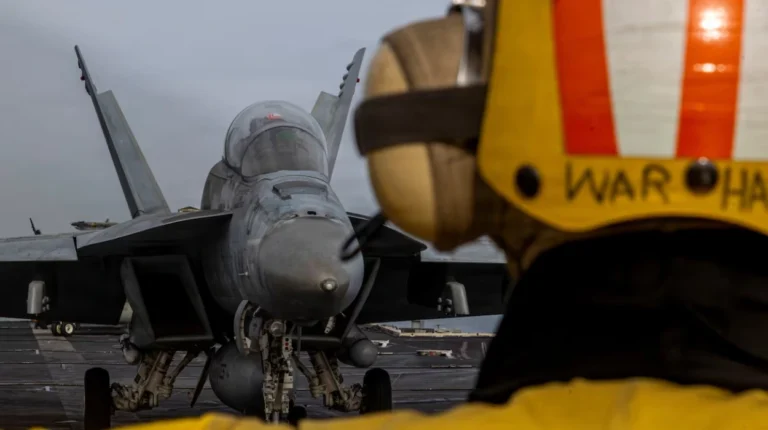
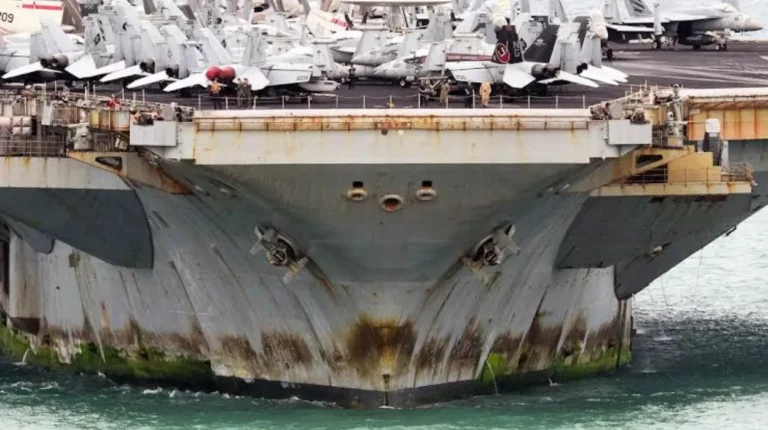
Japan’s latest defence white paper shows a government preparing for a much tougher regional security environment, while also trying to recast military expansion as a driver of economic strength. The report presents the country’s accelerating defence build-up not simply as a response to threats from China, Russia and North Korea, but as part of a broader national strategy to reinforce deterrence, modernise industry and strengthen its global partnership.
The message from Tokyo is unmistakable: Japan no longer sees its security challenge as a narrow military issue. It is now framing defence as a matter of economic resilience, industrial policy and strategic survival, especially as the military cooperation among its three powerful neighbours becomes more visible and more coordinated.
A harsher regional reality
According to Japan, the security environment which surrounds Japan is now more threatening than ever before since the end of World War II. For the annual report, China, North Korea and Russia remain the primary sources of threats, as they note that the military cooperation of the three countries is making the security balance in the East Asian region more unstable. In other words, according to the terminology used in the white paper, the situation is worsening rather than remaining constant. According to Japan, China is conducting its military activities near Japan in an aggressive manner, whereas North Korea is developing its missile and nuclear programs, and Russia is becoming increasingly associated with China in a manner which is not viewed positively by Tokyo.
China at the centre of concern
China remains the dominant concern in Japan’s strategic thinking. The latest report says Beijing’s actions are “unprecedented” in scale and reach, and Tokyo views Chinese military activity as a challenge extending beyond Japan’s immediate waters to a much broader regional arc.
This kind of language points to an overarching change in the approach of Japan over the last few years. In previous security statements, Japan viewed China as the “greatest strategic challenge,” and it has been evolving from a reactive defence approach to a proactive deterrence policy. It is evident that Japan currently views China as the key player driving changes in its defence planning, rather than one player within a regional rivalry. This feeling of urgency is further supported by the amount of work done by Japan in readiness for military action. Japan’s air force has scrambled planes 595 times over the year ending on March 31, 2026, including 366 scrambles due to Chinese planes. Despite this being a reduction from the 704 scrambles made in the previous year, it indicates the frequency at which Japan finds itself having to counter the Chinese air activity.
North Korea and Russia widen the threat picture
North Korea continues to be yet another factor behind Japan’s buildup in defence. According to the Tokyo government, the missile capability of the North Korean regime is clearly evident from the several launches that have taken place over Japan’s skies, which has made Japan understand the gravity of the situation. This can also be understood from the use of words in earlier strategic papers where Japan had referred to North Korea as being “an even more grave and imminent threat than ever before.” On the other hand, Russia is now high up on Japan’s security agenda, after the Ukrainian crisis and the strengthening of relations between Beijing and Moscow. According to the white paper, Russia is “a strong security concern” for Japan due to its military posturing in the disputed areas north of Japan and its “doubling down on strategic coordination with China.”
What is striking in the latest assessment is the way Tokyo now presents these threats as linked rather than separate. The concern is not just that China, North Korea and Russia each pose risks independently, but that their growing coordination creates a more dangerous and less predictable security environment for Japan.
Defence spending climbs sharply
There have been equally dramatic policy measures in place. Japan has already raised its defence expenditure to above 9 trillion yen for the current fiscal year, which has broken this record for the first time ever. The overall five-year plan for defence expenditure is 43 trillion yen, which translates to around US$273 billion, aiming at raising defence expenditure to 2 per cent of GDP by 2027. This marks a historic move on behalf of a nation, which has long been restricted due to post-war constraints and a self-imposed constraint of spending not more than 1 per cent of its GDP on defence. The new target has effectively brought Japan on par with the standard NATO level of defence expenditure despite the fact that Japan is not a NATO nation. The more significant thing is that this has been done as a strategic move on part of Japan.
The latest strategy emphasizes counterstrike capability, longer-range missiles, cyber warfare, space systems and domestic defence production. These are not simply upgrades to existing systems; they represent a structural change in how Japan wants to deter threats. Rather than relying only on interception, Japan is seeking the ability to threaten enemy bases if its survival is endangered.
Counterstrike capability and military transformation
One of the most significant components in Japan’s new security policy is that of counterstrike capability. In this context, the Self-Defence Forces have the authority to strike the bases of the enemy if there is anticipation or actuality of an attack on Japan. It is a significant change in Japan’s pacifist posture after World War II since its security policy was based on self-defence and not offensive capabilities. The concrete implications of this change are also becoming apparent as Japan prepares to deploy long-range missiles developed abroad such as the Tomahawk cruise missile as well as develop hypersonic missiles and surface to ship missiles.
Tokyo argues these changes are essential because conventional missile interception alone is no longer enough. The approved defence strategy says Japan’s current systems cannot fully deal with the evolving threat picture, especially when adversaries may seek to overwhelm defences through saturation, speed or coordinated launches. That helps explain why Japan is shifting from a “defence-only” mindset toward one built around deterrence, resilience and credible retaliation.
Industry, allies and a broader strategy
Japan is also tying the expansion of its military capabilities to its economic strategy. Increasingly, the government has begun using defence production to bolster the domestic industrial base and make it resilient. In that sense, the expansion of the country’s capabilities is not only about military capability but building a defence industry that would allow Japan to be strategically autonomous. Additionally, Japan is expanding its circle of partners. The white paper notes that there are new security partnerships with the US, Australia, the Philippines and South Korea, as well as diplomacy with other countries that share the same mindset.
Japan has also relaxed rules on arms exports, another major break from its postwar caution. That decision matters because it opens the door to a more active role in global defence supply chains and may help Japan strengthen its own defence industry while giving it more leverage with partners.
What the shift means
Japan’s military build-up is best understood as a response to two parallel pressures. The first is the hard reality of regional threats, especially from China, North Korea and Russia. The second is the political and strategic choice to move Japan out of a strictly passive defence posture and toward a more assertive model of national security.
That transformation is still unfolding, but the direction is already unmistakable. Japan is rearming, rethinking deterrence and widening the role of defence in national policy. The language of urgency in the latest white paper shows that Tokyo believes it no longer has the luxury of delay.
For Japan, the challenge now is not only whether it can build the necessary military power, but whether it can do so while maintaining public support, managing constitutional sensitivities and avoiding a dangerous regional arms spiral. The answer will shape East Asia’s security balance for years to come.