The annual joint Ulchi Freedom Shield (UFS) exercises conducted by the United States and South Korea were supposed to serve as one of the key pillars of deterrence in Korea, an 11-day exhibition of readiness concluding on August 27, 2026. However, the exercises became the first real test of the new Trump administration’s alliance management strategy in Asia. Just before the start of the joint exercise, President Donald Trump instructed the Pentagon to “substantially reduce” the joint exercises due to cost considerations, “my very good relationship with [the] gentleman of Korea,” and South Korea’s refusal to join the effort against Iran.
Midway through the week, it was confirmed that the joint U.S.-South Korea exercises that were to be cut off would end on August 21 and even part of the field training will be reduced. What happened was not just an alteration in the schedule of military exercises but also revealed the differences between the two allies’ approaches towards the definition of the mission of their alliance and balancing deterrence and diplomacy, as well as how pragmatic calculations may supersede the longstanding strategic tradition. In ten years of reporting on security and diplomacy in East Asia, it is hard to recall another occasion that demonstrated such volatility of events that come to the surface when alliance management is the matter of personal diplomacy.
The order that upended a planned exercise
On Sunday, August 16, 2026, President Trump posted on Truth Social that he had instructed Defense Secretary Pete Hegseth to
“substantially reduce the Joint Military Exercises!”
with South Korea. He framed the drills as “not only costly” and as sending a “totally inappropriate and hostile” signal to North Korea, which he described as “unthreatening and respectful” during his presidency. The post came just hours before UFS was set to begin, catching many in Seoul and Washington off guard.
Trump tied the decision directly to his frustration with South Korean President Lee Jae Myung’s refusal to join U.S. actions against Iran.
“I recently asked the President of South Korea if they would like to join us in our efforts toward the denuclearization of the Islamic Republic of Iran, and they said, ‘No thanks!’”
Trump wrote, adding,
“Therefore, and based on the fact that it is too late to cancel, I have instructed Secretary of War, Pete Hegseth, to substantially reduce the Joint Military Exercises!”
The language was unmistakably transactional: security cooperation as leverage in an unrelated geopolitical contest.
Despite the order, the exercises began on Monday as scheduled, involving about 18,000 South Korean personnel alongside U.S. Forces Korea. But within 48 hours, both sides were negotiating the contours of a compromise. On Wednesday, South Korea’s Defense Ministry announced that the two allies
“have agreed, at the request of the U.S. side, to make some adjustments to the duration and scale of the exercise,”
with UFS now ending on August 21 instead of August 27. Some combined field training elements would also be conducted on a reduced scale, with specifics still being worked out.
Deterrence by drill: what UFS is meant to do
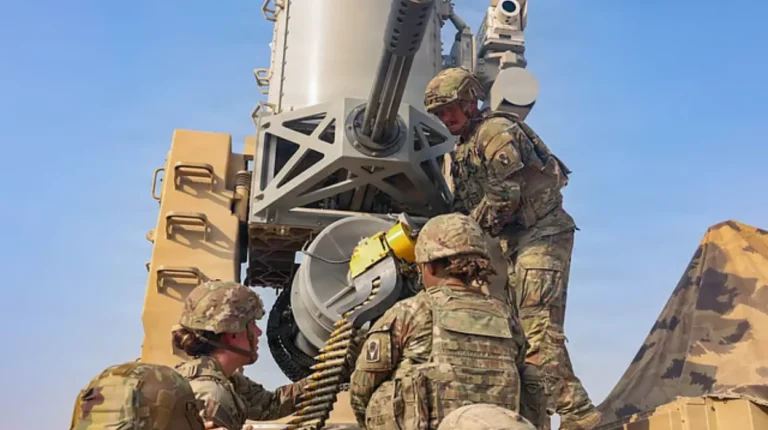
UFS is not merely a routine; it is the annual event through which the U.S.-ROK Combined Forces Command conducts a test of its capacity to detect, deter, and defend against a North Korean attack through realistic scenarios. In recent years, UFS has included computer-assisted command post exercises along with selected live-fire and field exercises such as precision targeting, wet gap crossing, and rapid equipment distribution. While moving towards the simulation approach has helped ease some political tensions, the basic objective still is the same; namely to ensure that in case of a crisis, the two armies can act as one.
Shortening the duration of the exercise by almost a week along with field training decreases the time required for scenario drills, verification of command and control linkages, and incorporation of new capabilities. It also signals something else – whether intentional or unintentional – about the strength of U.S. commitment to Pyongyang, Tokyo, and Beijing. For South Korea, which always faces the threat of artillery and missile attacks from North Korea, the predictability of UFS becomes as important as the content of the exercise itself.
Trump’s rationale: cost, diplomacy, and the Iran linkage
Trump’s public rationale for cutting the drills rested on three pillars. First, cost. He has long portrayed large-scale exercises as wasteful, arguing that they drain resources without commensurate security returns. Second, diplomacy with North Korea. He claimed the drills send a “totally inappropriate and hostile” signal to Kim Jong Un, whom he described as “unthreatening and respectful” while he has been president. Third, and most controversially, the Iran linkage. By explicitly tying the reduction to Seoul’s refusal to join U.S. actions against Iran, Trump reframed the alliance as a menu of services rather than a strategic partnership grounded in shared interests.
To reporters, Trump insisted he was not sacrificing allies’ security, saying he was “actually making it much safer.” He suggested that Kim had responded positively to his outreach, though he offered no details. This narrative echoes his first-term playbook: suspend or scale back war games as a goodwill gesture, claim diplomatic breakthroughs, and present himself as the indispensable dealmaker. The risk, as many analysts warned then and now, is that concessions are made unilaterally without reciprocal constraints on North Korea’s nuclear and missile programs.
Seoul’s response: reassurance, recalibration, and quiet alarm
South Korea’s response was marked by restrained diplomacy tinged with strategic concern. In response to Trump’s comments, the presidential office said it was examining his remarks, adding hopes that their “friendly relationship” would enable a “meaningful dialogue” towards achieving peace on the peninsula. Concerning Iran, it mentioned that Seoul was deliberating how much its military contribution to a possible strike on Iran would be as well as Seoul’s military readiness and legal process.
All these remarks were made in order to not create any rift with Washington yet retain some flexibility for Seoul’s response. Speaking at a cabinet meeting on August 18, President Lee Jae Myung stressed the importance of strengthening “national security when the alliance is solid.” Lee’s government has also aimed at enhancing South Korea’s national defense and eventual return of wartime OPCON from the US to South Korea. The suspension of the joint drills has sharpened this dispute, as some legislators and experts believe that South Korea needs to speed up its efforts to be ready for contingency without being vulnerable to Washington’s political decisions.
The Defense Ministry’s statement on August 19 struck a pragmatic tone. It confirmed the early end to UFS “at the request of the U.S. side” and said the two sides would “discuss and implement various measures to achieve the objectives of the UFS exercise and maintain a robust combined defense posture.” Behind the bureaucratic language lies a clear message: Seoul will adapt, but it will also work to ensure that the alliance’s core functions are preserved even as the political temperature fluctuates.
North Korea’s calculus: opportunity and ambiguity
Pyongyang has not issued a direct, detailed response specifically to Trump’s drill-cutting order in the immediate reports, but state media commentary reiterated its standard line that U.S.–ROK drills are a “rehearsal for an aggressive war” and warned that its
“exercise of the right to self-defense will continue to completely neutralize the enemies’ military threat.”
In the days before the drills, North Korea fired two short-range ballistic missiles, part of its typical pattern of weapons testing around major exercises.
For Kim Jong Un, the reduction of UFS presents both opportunity and ambiguity. On one hand, it validates his long-standing complaint that joint drills are provocative and justifies his military buildup as defensive. On the other, it raises questions about the credibility of U.S. deterrence and the cohesion of the alliance. If Trump’s outreach yields no tangible constraints on North Korea’s nuclear program, Kim gains diplomatic space without paying a price. If, however, the reduction is seen as a sign of U.S. unreliability, it could embolden further testing or coercion, betting that Washington’s attention will shift elsewhere.
The broader alliance question: reliability versus flexibility
The episode also highlights a more fundamental challenge facing the U.S.-ROK alliance: the trade-off between reliability and flexibility. Reliability implies predictability in commitment, constant joint military drills, and clear red lines to discourage aggression. On the other hand, flexibility implies the capacity to adjust to changing political circumstances, explore diplomatic opportunities, and not escalate needlessly.
On paper, the two concepts can go together. In reality, however, a unilateral exercise of flexibility can end up damaging the reliability of an alliance. The U.S. president’s decision comes from a perception in which alliances are tools of leverage rather than pillars of international stability. It may be seen as pragmatic in some quarters. To countries whose security depends on America, however, such an approach will create uncertainties. The current question, then, is whether the move is a one-off modification in the context of Iranian and North Korean diplomacy or an example of how to manage alliances in the future.