Andy Burnham arrived in Kyiv on Monday for his first overseas visit as British prime minister, carrying a political and industrial pledge designed to reshape Britain’s military support for Ukraine. The central announcement is that London will allow European missile manufacturer MBDA to release classified information on British-made components used in the SCALP long-range cruise missile, enabling France and Ukraine to move towards local assembly of the weapon.
The decision represents a more substantial act than simply providing an arms transfer. Rather than just transferring the missiles ready-made from British arsenals, the Burnham government will transfer some technical know-how necessary for producing a similar weapon by Ukraine on its own soil. The decision will enable Kyiv to have more control over its resources, build up its defense industry, and become less reliant on unreliable foreign reserves. However, at the same time, the decision comes with great potential threats. First, it involves highly classified military technology, second, it can put Ukrainian production sites at risk of Russian military attacks, and third, it can escalate Russia’s claims about Britain being an active participant in the conflict. The consequences will vary based on what kind of information is transferred and on how fast the production process starts.
A first foreign trip with strategic weight
Burnham’s visit takes place on Ukraine’s Independence Day and is intended to demonstrate that Britain’s support remains firm under its new government. His office said the prime minister would reaffirm London’s “unwavering commitment” to Ukraine and meet President Volodymyr Zelenskyy in Kyiv. The symbolism is deliberate. Burnham is using his first international trip to place Ukraine at the centre of Britain’s foreign and security policy. The visit also comes days after Moscow warned that British support for Ukrainian deep-strike operations would have “consequences.”
The British prime minister has responded by presenting support for Ukraine not only as a matter of solidarity but as a matter of British and European security.
“After all, Ukraine’s security is our security,”
Burnham said, according to the British government. He also declared,
“Russia should be in no doubt of our resolve. We will not back down until there is a just and lasting peace.”
The use of such language is designed to assure Kyiv, deter Moscow and convey to the European allies that Britain will still remain a leading player in the organization of military and political support for Ukraine. The timing has also put Burnham together with French President Emmanuel Macron and German Chancellor Friedrich Merz in a meeting of the Coalition of the Willing. The coalition consists of about 35 nations and is concerned with the defence of Ukraine and the arrangement of its security for the future.
What the “blueprints” actually mean
The characterization of the agreement as the transfer of “blueprints” should be qualified. Available public information suggests that Britain has agreed to allow MBDA to declassify information related to UK components used in SCALP, but has not committed itself to releasing all information about the whole design of the missile. This difference is essential because SCALP is a joint Anglo-French weapon system developed and manufactured by MBDA and containing technology from both nations. The missile is known as SCALP in the French forces and as Storm Shadow in the British armed forces. Information relevant to the French version has already been shared, whereas the Ukrainian ability to assemble the missile is partly dependent on the British consent to declassify information about UK components.
Thus, the decision eliminates one of the barriers in the process of creating a weapon: the barrier related to intellectual property and classification issues. It can lead to French and Ukrainian engineers’ movement from general agreements to practical assembling of the missile. Nonetheless, the declassification of information per se does not mean an operational factory producing missiles. Ukraine will need special equipment, premises for its operation, skilled workforce, components, testing facility, protected transportation routes and financial resources. Moreover, the final product should correspond to certain safety and military requirements. No production target or investment amounts, delivery plans or any particular locations have been disclosed yet. Thus, it is premature to speak about quantities of missiles to be manufactured and the moment of the first assembly.
The weapon at the centre
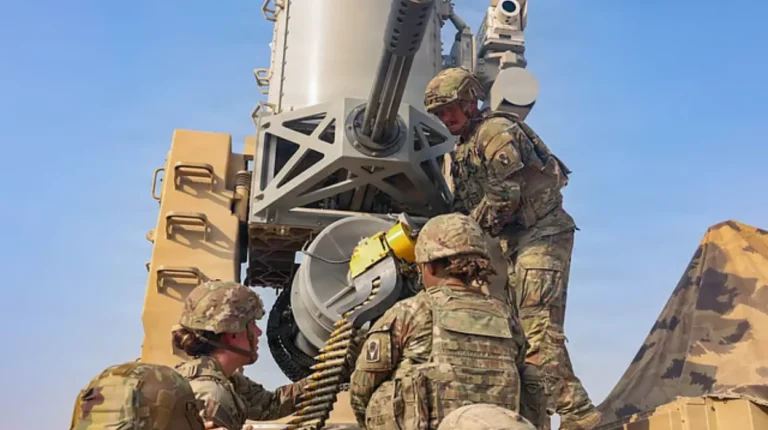
Storm Shadow and SCALP are both air-launched, conventionally-armed cruise missiles capable of precision strikes against high-priority targets deep into enemy-held territory. According to the manufacturer MBDA, Storm Shadow is a missile with a range exceeding 250 kilometres. There are also publicly available estimates that vary from the aforementioned number based on the version of the missile, export limitations, and configurations. The current range estimate of Storm Shadow stands at about 150 miles or 241 kilometres. Among the publicly stated characteristics of the missile are length (around 5.1 metres), and weight (about 1,300 kilograms). Open-sourced defence references identify the missile’s warhead as a multi-stage penetrator system called BROACH which allows the destruction of hardened or protected targets, although technical data regarding it remains classified. What is important is not only the distance which the missile can cover.
It is designed for launch by aircraft and low-altitude navigation which allows it to reach the defended target while avoiding some kinds of detection. Based on its characteristics, Storm Shadow is capable of attacks against command centers, ammo depots, logistics sites, airports and other stationary facilities. Ukraine has received Storm Shadow missiles from Great Britain in 2023 becoming the first recipient of Western-made long-range strike weapons in the current stage of the conflict. Later on, French-supplied SCALP missiles became available to Ukraine as well. Those missiles allowed Ukraine to attack targets which were out of reach for most of their artillery and missiles arsenal. Production of those weapons domestically would increase their availability.
Why local assembly matters
The war has exposed the limitations of relying on foreign stockpiles. Western countries must balance support for Ukraine against their own military readiness, while missile production is complex, expensive and slow compared with the consumption rate during a major conflict.
This could be solved by implementing a Ukrainian assembly line, which would enable Kyiv to restore its arsenal with some weapons close to the theater of operations and would make it less dependent on resupplying them through the arsenals of Britain and France. Ukraine has already made significant investments in long-range drones, cruise missiles, and other precision systems. Ukrainian politicians have already talked about the development of weapons that can hit a target 2,000 kilometers away.
At the same time, Ukrainian defense companies have announced the manufacture of long-range strike systems and an enormous amount of drones. This means that the SCALP deal could be just one element of the broader Ukrainian policy. The latter consists of combining foreign Western technology with domestic development, production, and use. Cooperation of this kind may help Ukraine to achieve independence and diversity of its long-range strike forces. According to the British government, the agreement could be seen as an additional component of the Project Brakestop, which is the British effort to develop cheap advanced long-range strike weapons for Ukraine. This indicates that London is looking not only at arms supplies but at the creation of a Ukrainian ecosystem of precision strikes.
Britain’s broader military commitment
The missile announcement forms part of a wider British package. According to Downing Street, the UK has committed £25 billion in support for Ukraine, including £16 billion in military
assistance and £5.6 billion in non-military support.
London has also promised to share information on “Stone Cloak,” an already proven system of electronic jamming. This tablet-sized device can be fitted to drones, and it is designed to disrupt the air defence systems of Russia as the drones head toward their targets. These tools, together, target various layers of warfare. Long-range missiles ensure precision strikes, drones add weight and flexibility, while electronic warfare is used to neutralize defenses that protect Russian targets. This shows how the type of assistance provided by the West has changed. Before, assistance was geared mostly towards the provision of existing weapons. Now, Britain, along with other allies, is helping Ukraine build up capabilities to manufacture its own weapons. There are two objectives behind this policy: to enable Ukraine to keep fighting and, at the same time, give European defense companies the much-needed experience from a war where weapons get tested and refined.
Moscow’s warnings and escalation risks
Russia has already accused Britain of escalating the conflict. The latest tensions followed reports that British-made drones were used in Ukrainian strikes inside Russia. Moscow’s embassy in London said the reports confirmed that
“London is deliberately opting for an escalation of the Ukraine crisis.”
It also warned that
“London’s actions will inevitably carry consequences for which it will have to answer.”
In addition, the embassy noted that the more involved Britain became, the more expensive it would become. It remains unclear whether Moscow means that Britain should expect diplomatic, cyber warfare, or attacks on its national interests and other measures. Supporting the local production could be perceived by Russia as more dangerous than providing Ukraine with several foreign-made missiles. Stockpiles of missiles can be exhausted while a production line makes it possible to produce weapons on an ongoing basis. In this situation, Russia may try to attack the places where the production of such weapons takes place or transport systems used. However, decentralization makes it difficult to monitor and control the quality of production and can raise prices.
Another aspect which is as significant as the military one is a political aspect. By providing Ukraine with access to confidential data, the United Kingdom will become involved in Ukraine’s military and defense industry plans more deeply. Russia will be able to claim that the UK is not only providing weapons to Ukraine but is designing and maintaining its offensive capacity. London insists that Ukraine needs to defend itself from Russia’s illegal aggression. Thus, Britain should provide Ukraine with all necessary instruments to protect itself. Burnham’s statement that Britain is going to support Ukraine “100%” shows that commitment politically.
“Britain is 100% behind you today and for as long as it takes,”
he said in his letter to the people of Ukraine on the occasion of the country’s Independence Day.
The limits of the announcement
The political message is immediate, but the military outcome will take time. A cruise missile contains propulsion, navigation, guidance, control, warhead and electronic-protection systems that must operate together with high reliability. Manufacturing even one component domestically does not amount to producing the complete system.
Ukraine also faces the constant threat of Russian strikes against industrial infrastructure. Any missile-production project would require hardened or dispersed facilities, secure communications and protection from espionage and sabotage.
There are also legal and operational questions. Britain and France may impose conditions on how the technology is used, including restrictions related to export, target selection and the deployment of locally assembled weapons. The transfer of classified information could involve continuing British oversight, rather than a completely independent Ukrainian production programme.
The issue of range is also politically sensitive. Storm Shadow and SCALP export versions are generally associated with ranges of more than 250 kilometres, but the specific capabilities available to Ukraine may be restricted by the supplying countries. Domestic assembly could eventually give Kyiv greater autonomy, but it would not automatically remove existing political or technical limitations.