The 2026 FIFA World Cup is now in the United States with plans to hold over 78 games in 11 different locations in just 39 days. However, the fun and games have a serious side in one of the most complicated security efforts ever attempted in America for any sports event. There are two main threats cited by the FBI in its threat assessments: hostile drones that can cause mass casualties and lone wolf terrorists who leave no trace of their activities before attacking. Millions of foreign tourists are expected to descend on American cities, and federal authorities are teaming up with more than 400 other police forces in private security groups to ensure that stadiums and open venues are protected.
FBI Director Kash Patel has made no pretense about the severity of the situation.
“Outside of major nation-state adversaries like China, Russia, Iran, and North Korea, lone-wolf threats pose the greatest concern to national security,”
Patel stated during a briefing on May 27, 2026, revealing the FBI’s top security concerns ahead of the World Cup.
The analysis centers on isolated extremists working independently of one another and therefore makes agencies rethink their previous intelligence strategies, which were based on identifying patterns of communication among terrorist cells.
The drone threat presents a different but equally terrifying challenge. Patel explained that drones
“vary wildly in size and can be easily operated by a pilot far from the target location,”
making them ideal weapons for terrorists seeking to cause spectacular damage during a globally televised event. Security officials have raised alarms about the possibility of terrorists deploying
“swarms of suicide drones capable of causing mass casualties live on global television,”
according to a counter-drone task force deployment announcement from the FBI on June 2.
Counter-Drone Task Force: Technology and Human Training Combined
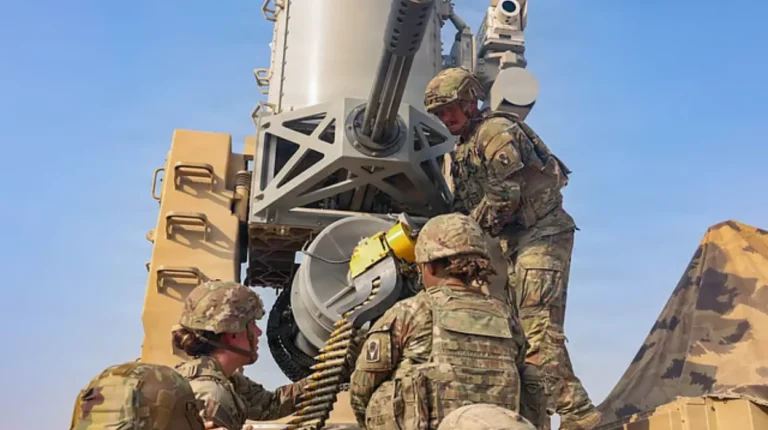
The FBI is combating the challenge presented by the use of drones by adopting a unique program for dealing with the problem. Sixty specially trained state and local police officers will be dispatched at various sites of the World Cup tournament where the drones are likely to appear to spot and disable any threatening unmanned flying object from entering the airspace of the stadia. The police officers have been trained in the use of technology capable of disabling the drones.
The Federal Aviation Administration has established a strict no-drone zone covering 3 nautical miles radius around each stadium, extending up to 3,000 feet above match venues on match days. This FAA mandate creates a legal framework that makes flying drones near World Cup events “both illegal and dangerous,” according to FBI Boston’s public warning issued on June 11, the day the World Cup kicked off. The combination of federal regulation and localized enforcement creates multiple layers of protection against drone attacks.
While DHS will be mostly in charge of handling counter-drone operations at the World Cup, the FBI will play the lead role in three out of the 11 cities involved in the event. These cities include Los Angeles, Miami, and New York City. The FBI will supervise the counter-drone operations in these cities, while the local law enforcement agencies will provide assistance in all other cities.
The technology deployed by FBI officers mirrors systems used in active combat zones. Agents and police are trained to detect and disable drones
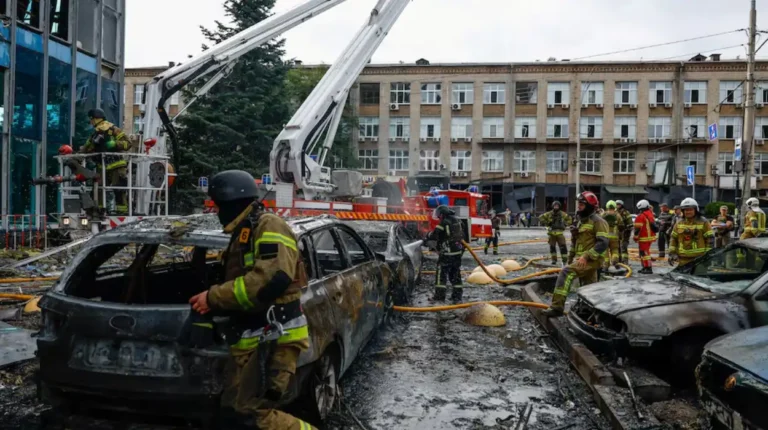
“similar to those causing devastation in Ukraine,”
according to the FBI’s counter-drone task force announcement. This comparison to real-world combat situations underscores the military-grade nature of the threat and the seriousness with which federal authorities are treating drone security.
Lone-Wolf Threat: The Invisible Danger That Defies Traditional Intelligence
While drones present a visible and technologically detectable threat, lone-wolf attackers represent what security officials call the invisible danger. FBI Houston division has shifted its focus specifically toward lone-wolf actors, recognizing that these individuals
“don’t leave traces before their potential attack,”
making traditional intelligence-gathering methods ineffective. This characteristic forces law enforcement to rely on community policing, behavioral analysis, and public vigilance rather than communication interception or network mapping.
US security chief Markwayne Mullin acknowledged this dual threat picture on June 11, stating that the tournament will be “very secure” but said “lone wolf” attacks remain a concern, especially in public areas outside stadium boundaries.
This statement is an indication that despite the security arrangements and measures taken to secure stadiums and prevent lone-wolf attacks from occurring at these locations, such attacks may easily occur in open spaces where there are no physical measures to protect them against an attack.
The FBI’s training programs indicate that lone-wolf attackers are individuals who act independently without the help of any other terrorists in terms of planning and communicating. They plan their actions without any prior communication with the terrorist group. Thus, they cannot be monitored in any way using any communication-based tracking methods for terrorists.
FBI Atlanta Special Agent Shaun Matthews emphasized the agency’s readiness when he said they are
“highly trained and prepared to respond and deploy at a moment’s notice to any type of threat,”
according to a May 28 news report. This statement reflects the FBI’s commitment to maintaining rapid response capabilities across all 11 host cities, ensuring that when an incident occurs, trained personnel can arrive within minutes to contain the situation.
Security Architecture: Four Hundred Agencies Working Under Federal Coordination
The security plan for the World Cup in 2026 entails a level of cooperation unprecedented in its magnitude. More than 400 agencies in addition to the federal authorities and various private security companies will have to be coordinated to provide security around the stadiums, public places, and transport infrastructure. The operation is one of the most extensive security arrangements in the US history and surpasses even the Olympic Games in terms of the number of agencies involved.
In addition to countering drones and assessing the danger posed by the lone wolves, the FBI plays an essential role in coordinating the flow of intelligence between all agencies engaged in the operation. This allows for quick identification and reporting of possible threats that may not seem significant enough at the local level. It is essential to note that a threat can only become visible by taking into consideration other sources of information.
Training has been underway for weeks before the tournament began, with FBI agents and local police receiving specialized instruction in counter-terrorism, crowd control, emergency medical response, and rapid deployment tactics. The FBI’s counter-drone task force announced that training was “already underway” less than four weeks before the tournament started, according to a May 14 report. This preparation timeline ensured that officers were fully trained and positioned before the first match kicked off on June 11.
Local police in cities like Houston are deploying their own drones during World Cup matches to monitor crowds and detect suspicious activity from above. Houston police announced on June 2 that
“the world’s largest sporting event will bring increased attention from law enforcement this month,”
reflecting the heightened security posture across all 11 host cities. This local-level drone deployment complements federal counter-drone efforts by creating additional surveillance coverage.
Global Television and Mass Casualties: Why the World Cup Is a Terrorist Target
The authorities have found that the World Cup poses to be a great target for terrorists because of the large numbers of people involved and the television coverage that the event gets from around the world. The number of people in addition to the media coverage makes it a perfect example of what terrorism analysts describe as a “high-impact, low-complexity” target. If the act is successfully carried out, it will attract immediate international media attention, inflict mass casualties, and harm the US’ reputation as a safe host country for such events.
Drones make for ideal weapons since they are operated at a distance, deliver explosive payloads, and are hard to detect.
The FBI counter-drone task fore announced deployment amid fears that terrorists could be planning
“a spectacular attack on US soil,”
according to a June 2 report. The word “spectacular” in this context refers to attacks designed to maximize media impact and psychological terror, not just physical damage.
Another factor that contributes to the danger associated with the World Cup is the livestreaming of the matches on television. The concern for the authorities is that terror groups may organize their attacks using drones to coincide with live televised matches to achieve maximum viewership. Such a tactic will ensure that the fear generated by the attack will be widespread.
FBI Director Patel’s warning about drones “causing devastation in Ukraine” connects the World Cup threat to real-world combat experiences where drones have been used to attack civilian populations, military installations, and infrastructure. The Ukraine war has demonstrated that drone technology is now accessible to non-state actors and can be used effectively by small groups with minimal training. This democratization of drone technology has fundamentally changed the terrorism landscape.