The situation in the Middle East region has reached an extremely unstable stage where missiles were launched by Iran targeting US forces in the Gulf region for two successive nights, while at the same time announcing the closure of the Strait of Hormuz. This move has been declared from June 9-10, 2026, marking a major escalation of tension between the United States and Iran following the temporary ceasefire reached in April 2026 by the two countries. The situation, which started as a local conflict over nuclear facilities, has now turned into a global issue.
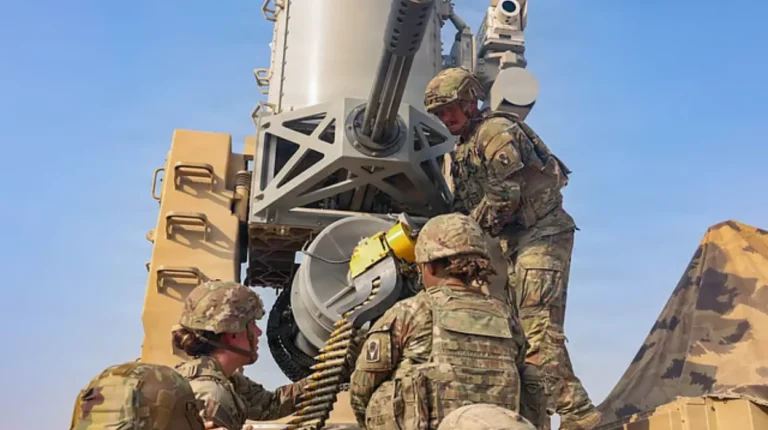
The Islamic Revolutionary Guard Corps (IRGC) executed a two-wave operational strike using heavy missiles and drones, targeting at least 21 US installations across Jordan, Kuwait, Bahrain, and other Gulf locations. This unprecedented coordinated attack demonstrates Iran’s growing military capability and its willingness to directly challenge American interests in the region. The timing of these strikes, occurring on the second night of retaliation, signals that Iran is not merely issuing warnings but is prepared for sustained military engagement.
The Military Strike Details
The IRGC source from Iran verified that the naval and aerospace branch of the military operated together on various fronts during the attack. This saw missiles being shot at different locations all at once for a multi-front attack which overburdened the defenses. Based on the reports from the state-owned Nour News of Iran, the plan was to show Iran’s ability to launch attacks anywhere in the Gulf region.
The attacks hit key installations for the US military, such as air force bases, command stations, and supply depots which aid in the deployment of US forces to the Middle Eastern theater. All of the Gulf nations which are home to US bases, namely the UAE, Qatar, and Bahrain, all reported having sustained an attack. Such widespread attacks indicate that Iran was well informed on the distribution of US forces in the region.
The fact that there were two waves shows that there was an element of planning involved here. It seems as though the first wave attacked the early warning defenses, while the second wave hit the main military installations. It is interesting to note that this strategy is similar to those used today in modern warfare by developed nations; Iran has truly come into its own in terms of military might.
The Hormuz Closure Declaration
In a dramatic parallel announcement, Iran declared the immediate closure of the Strait of Hormuz to all vessels, including oil tankers and commercial ships. The IRGC source issued a stark warning:
“Effective immediately, due to insecurity in the region, the Strait of Hormuz is declared closed to all vessels, including oil tankers and commercial ships”
[IRGC source]. This declaration represents one of the most significant geopolitical threats in recent decades, as the strait serves as a critical chokepoint for global energy supplies.
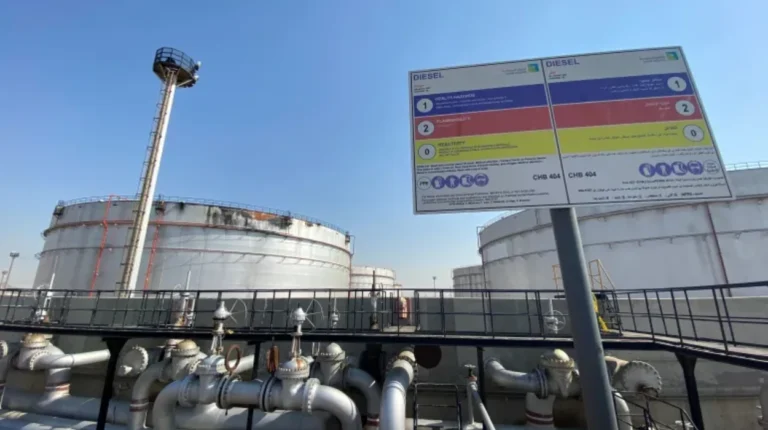
The strategic significance of the Strait of Hormuz cannot be underestimated because roughly 20% of all oil consumed in the world flows through it every day. Thus, the statement that the Iranians closed the strait is rather demonstrative as it shows that Iran has the capability to interfere with global energy trade whenever it sees fit. Yet, the facts prove that the closure of the strait was just rhetoric because, according to CNN, commercial vessels continued to move across it even after the announcement of its closure.
The IRGC reinforced their position with an additional warning:
“Approaching the strait will be considered hostile, and offending vessel will be targeted”
[IRGC source]. This contradiction between declaration and enforcement suggests Iran may be using the closure primarily as a psychological and political tool rather than implementing a complete blockade.
The closure announcement came Thursday, June 10, 2026, following the United States’ launch of a new wave of strikes on targets inside Iran. Iranian top joint military command coordinated this announcement with the missile strikes, creating a comprehensive show of force thatCombined military action with economic warfare threats.
The Retaliation Context
In order to understand why Iran has initiated such strikes, one must consider the wider picture of new hostilities breaking out between the two nations. Under the presidency of Donald Trump for his second term, there were American strikes conducted against key targets in Iran within the Strait of Hormuz. The strike was an important escalation against Iran that previous US administrations had not undertaken against the nation.
These strikes were carried out despite the fact that there had been a ceasefire agreement between the two sides in April 2026. Therefore, this counter-attack by Iran is even more significant considering its timing. According to the IRGC, the fact that these airstrikes are being conducted constitutes an attack on a huge scale since it marks one of the largest confrontations since the signing of the ceasefire agreement.
According to new reports, over 3,400 Iranians have lost their lives in this war. This number of causalities will definitely have made it all the more imperative for the Iranian authorities to take counter measures to deal with any future American aggression.
Regional and Global Implications
Geographically, it can be seen that the strikes were aimed at bases located throughout the Gulf region. By hitting the US bases in Jordan, Kuwait, Bahrain, UAE, and Qatar, Iran essentially put all of the Gulf region within the arena of this conflict. In doing so, many countries are forced to face the problem of having US military troops deployed within their borders, which are attacked by Iran.
Those states that were more or less neutral between the two powers are now forced to decide whether to continue their alliance with the USA or be economically and politically vulnerable because of the military presence of America which was directly targeted by Iran.
The international market for energy becomes nervous when faced with threats to the Strait of Hormuz. Oil prices are most probably skyrocketing after Iran has shut down its water routes since there are likely to be interruptions in the energy market. In case the closure is not completely actualized, its declaration would nonetheless impact the market and pricing of oil. Countries dependent on energy are affected by these possibilities of price hikes.
The United States under President Trump now has to decide how to react to this crisis. The attack has challenged the might of the US and its standing in the region. Depending on how it acts, the reaction might lead to more strikes or to negotiations. However, judging from the threats made by the President towards Iran, the strikes might be preferred.
The Ceasebreaker Breakdown
What seems to be more likely is that the ceasefire between the United States and Iran was never meant to last long and was nothing but a brief respite from the war. Given how fast both parties went back to fighting, it becomes clear that all of the major issues at stake – including the Iranian nuclear program and the American military presence in the area – remained unresolved.
The failure of the ceasefire means that diplomacy did not succeed in resolving the conflict between the two nations. By conducting its military operation against several neighboring countries, Iran proved its readiness to use military force to attain its political goals. Such an approach goes against international norms concerning armed conflicts.
Future Outlook and Strategic Considerations
The course of this dispute is still unpredictable, but some outcomes can be considered probable. If the strikes by the Iranians against US facilities are not ceased, then the response by Americans may get bigger, thus involving more countries and causing regional wars. However, taking into account the considerable losses on both sides, it may become possible to start diplomatic negotiations, although at the moment there are no reasons for such actions.
The fact that Iran is capable of conducting simultaneous multi-point attacks on US military installations proves that the country has achieved a certain level of military progress. This may play a crucial role during further negotiations as Iran has a weapon of some kind to apply to American military. The closure of the strait of Hormuz, although declarative, may serve as a tool of economic warfare for Iran against global states.
The human cost of this conflict will likely continue mounting. With over 3,400 Iranians already killed and American forces now under direct attack, casualties on both sides will increase unless diplomatic interventions succeed. Regional nations hosting US bases face the risk of their territories becoming battlegrounds, with potential consequences for their populations and infrastructure.
This confrontation represents a critical moment in Middle East geopolitics. The decisions made by Washington and Tehran over the coming days and weeks will determine whether this conflict remains limited or expands into a broader regional war with global consequences. The world watches nervously as two powerful nations engage in what could become the defining conflict of the decade.