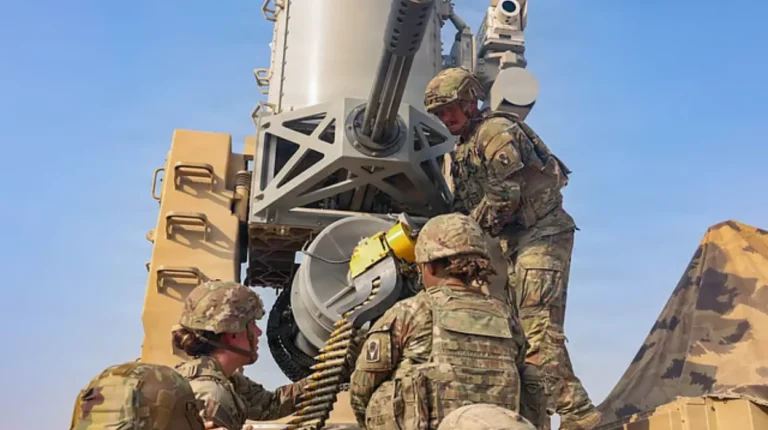
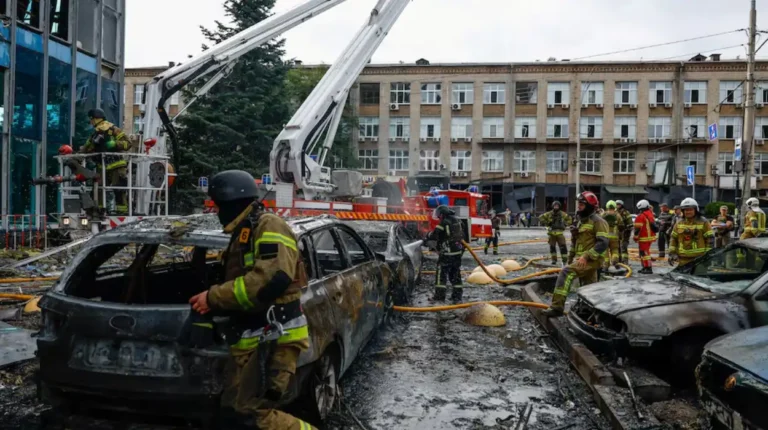
Nigerian security forces have rescued 308 people abducted in separate attacks in Kwara and Niger states, in an operation the government has described as the country’s largest single-day rescue mission conducted by joint security forces.
President Bola Ahmed Tinubu welcomed the operation on August 5, 2026, saying the recovery of the victims demonstrated stronger coordination among Nigeria’s military, police and intelligence institutions. The victims were found in a forest area inside Kainji Lake National Park, near New Bussa in Niger State.
As per the statement of the Presidency of Nigeria, the victims released comprised 163 victims who had been abducted in Woro Community of Kaiama Local Government Area of Kwara State and 145 others who had been kidnapped from the communities of Niger State. This effort was orchestrated by the National Counter-Terrorism Centre and comprised of efforts by the Armed Forces of Nigeria, the Department of State Services, and the Nigeria Police Force.
This development marks a significant operational success for the security apparatus of Nigeria that has come under criticism for years owing to mass kidnappings, delayed military response and the operations of armed groups across state borders. However, this successful rescue operation also reveals the extent of the country’s insecurity as hundreds of people were held in captivity for months in a forest environment.
What the figures reveal
The overall figure of 308 rescued victims is the key statistic, but the distribution reveals more about the rescue operation and the larger crisis. In total, 163 victims were from Woro, which had been targeted by one of the most violent attacks in Kwara State this year. Meanwhile, the other 145 victims were abducted from various communities in the adjacent Niger State. The cluster of the victims in the Kainji Lake National Park region suggests that the kidnappers were able to transport their hostages between local-government and state borders. However, information on the age, gender and physical health of the rescued individuals has not yet been shared by the Nigerian government. Moreover, the Nigerian government has not provided any information about whether there were children, senior citizens or people with disabilities among the kidnapped people.
The authorities have said the victims were taken to Wawa Cantonment, where they would receive first aid, medical screening and essential treatment before being transferred to their respective state governments. The victims are then expected to be reunited with their families and receive additional support.
The presidency has not announced how many kidnappers were killed or arrested. It has also not said whether security forces seized weapons, camps, communication equipment or ransom records. No official account has clarified whether the rescue involved direct combat, negotiations, surveillance or a combination of intelligence and ground operations.
Link to the Woro attack
The recovery of 163 Woro residents appears to be connected to a major attack on the community in early February. Nigerian authorities and local reports said armed attackers stormed Woro and nearby settlements, killing at least 170 people, burning homes and abducting women and children.
According to Reuters, President Tinubu sent a battalion of the Nigerian army to the Kaiama district following the attack, while an intensified security operation was ordered for the area. As per local news reports, the Woro attack was a well-organised attack, which involved many gunmen. The attackers were not clearly identified in most accounts of the incident. The significance of this attack lies in the fact that it revealed how the security problem in Nigeria has spread beyond those states like Borno, Zamfara, Katsina, or Kaduna, which were previously the focus of global concern.
Kwara State is situated in the central-northern part of Nigeria, while Kainji Lake National Park is in the region where the forest cover and other conditions are ideal for such groups. In addition, some Nigerian media outlets and officials have associated the attack at Woro with the activities of jihadist militant groups such as Boko Haram and others who operate alongside them. Nevertheless, the Nigerian government has yet to confirm officially that the whole group of 308 individuals was captured by one specific group. Kidnapping in Nigeria involves various groups such as insurgent groups, criminal groups, and others known as bandits.
That distinction matters. Boko Haram and Islamic State West Africa Province generally pursue ideological and territorial objectives, while many bandit groups abduct civilians primarily for ransom, extortion and financial gain. In some areas, however, the boundaries between criminal and militant activity are blurred. Criminal groups may cooperate with jihadists, while insurgents may use kidnapping to finance operations or impose control over local populations.
Government presents intelligence success
The Tinubu administration has portrayed the rescue as evidence that inter-agency cooperation is improving. The National Counter-Terrorism Centre coordinated the mission, while military, police and intelligence personnel contributed to locating and recovering the victims.
“The successful execution of this intelligence-led operation demonstrates the growing efficiency and collaboration among our security services,”
President Bola Ahmed Tinubu said.
He added:
“I commend our gallant men and women in uniform for their bravery and unwavering commitment to safeguarding Nigerian lives.”
In addition, the statement by the president specifically focuses on intelligence-driven operations rather than purely military operations. This kind of statement demonstrates the shift in the counterinsurgency approach whereby security agencies should be able to gather intelligence on the camps, the route through which supplies are transported, informants and communications networks before conducting rescue operations.
In addition, Tinubu instructed security agencies and other stakeholders to put measures in place for an effective warning system and to enhance the ability of rapid responses. This indicates that prevention of such abduction attacks is equally as significant as rescue after the kidnapping of individuals. It is thus clear that the government is taking two approaches with regards to this operation. The first one is that of portraying it as a success and also as a coordinated effort among different institutions.
Nigeria’s wider kidnapping crisis
The rescue comes against the backdrop of a prolonged national security emergency. Nigeria is confronting several overlapping conflicts: jihadist insurgency in the northeast, banditry and kidnapping in the northwest, communal violence in the Middle Belt, separatist-related insecurity in the southeast and criminal violence in parts of the south.
Human Rights Watch, citing an assessment by SBM Intelligence, reported that 2,938 people were kidnapped in northwestern Nigeria between July 2024 and June 2025. The figure represented more than 60 percent of reported kidnapping incidents nationwide during that period.
Another study revealed that the scale of criminal violence has gone beyond the usual insurgent activities. Statistics provided by BBC Pidgin based on Armed Conflict Location & Event Data project show hundreds of deaths resulting from criminal gangs along with more than 1,000 kidnappings which occurred over the timeframe that included 2025 and 2026. Moreover, these statistics also indicated that the number of kidnapping cases committed by criminal gangs was much higher compared to militant organizations. It is quite obvious that this information reveals why the release of 308 people can be considered politically useful yet strategically insufficient. Of course, it represents an important humanitarian operation, but it does not mean that the criminals who kidnapped these people have been taken down. In case the criminal network is not disrupted, some other towns can become victims. It seems that the government understands this risk and that is why it focuses on early warning and community intelligence.
The humanitarian dimension
For the survivors, the operation ends a period of captivity but not necessarily the consequences of abduction. People held for months in forests may suffer from malnutrition, dehydration, untreated injuries, disease and severe psychological trauma. Women and children may face additional risks, including sexual violence, forced labour, forced marriage and family separation.
The initial medical evaluation of the situation at Wawa Cantonment is hence crucial. However, humanitarian organizations and state actors will also need to offer long-term support, which will include counseling services, shelter, identification, tracing and protection against stigmatization. It is also important to determine whether there are other survivors whose location has not been established yet.
In similar kidnappings that occurred in Nigeria before, the number of victims provided by the government has sometimes varied due to the emergence of other missing individuals after reports from their families. An open list of those who have been rescued will make it easier for the families to verify their status. Reintegration into society will also prove to be quite challenging for the people of Woro, where the abduction occurred after a mass casualty incident. The returning victims will need much more than just transportation and medical attention.
Security success, but not yet a turning point
The operation strengthens the government’s argument that joint intelligence and coordinated deployments can produce results. It also gives security agencies a rare opportunity to obtain information from more than 300 survivors about the kidnappers’ routes, camp locations, supply chains, weapons and communications.
That intelligence could assist future operations in Kainji Lake National Park and surrounding areas. It could also help authorities determine whether the kidnappers were linked to the Woro attack, other attacks in Kwara and Niger states or wider networks operating across north-central Nigeria.
Nevertheless, the operation should not be treated as proof that Nigeria’s insecurity is under control. The victims had reportedly been in captivity for approximately six months, suggesting that armed groups had time to move, conceal and guard a very large number of people. The rescue also came after the deaths of at least 170 people in the Woro assault, underscoring the human cost of delayed prevention.
The absence of publicly announced arrests is another unresolved issue. If the kidnappers escaped, the immediate rescue may not have produced a decisive security gain. If suspects were arrested, authorities will need to disclose their identities, affiliations and charges while ensuring that any prosecutions meet due-process standards.