Taiwan’s annual Han Kuang military drills have begun at a moment of intensified pressure from China, and this year’s exercise is being framed as one of the island’s most realistic preparations yet for blockade and invasion scenarios. For Taipei, the message is clear: Taiwan wants to show that it can defend itself, sustain operations under attack, and keep government and society functioning even if Beijing escalates beyond routine military intimidation.
A drill built for realism
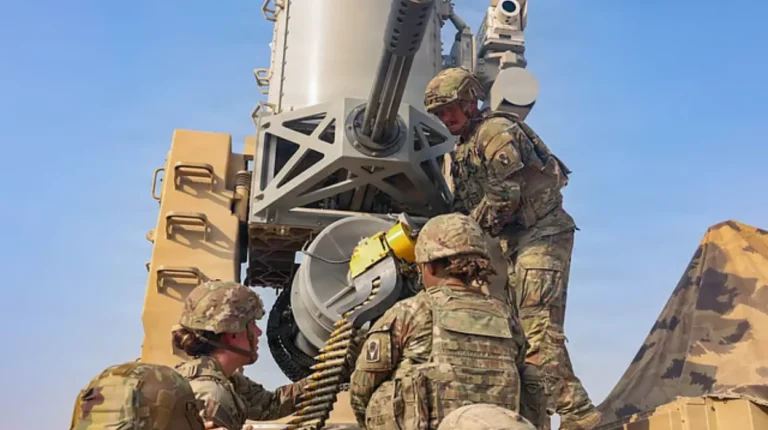
Han Kuang is no mere spectacle. It is Taiwan’s foremost war-game exercise, which takes place every year since 1984 and aims at simulating how the country would behave in the case of any attempt by China to invade or besiege Taiwan. This year’s live-firing part lasts 10 days and nine nights, between August 5 and 14, whereas the first part took place on a computer table in April during 14 days.
Thus, this exercise has become much broader in comparison to the previous years. This year’s Han Kuang 2026 drill is conducted against the backdrop of the country’s fear that the next crisis might not start with the invasion of Taiwan, but with some kind of blockage, cyber attack, communications breakdown, or attempts to cut supply lines. According to Reuters, the military will rehearse the transfer of a big ammunition stockpile in the war time, civilian factories’ mobilization, and escort exercises off Taiwan’s Pacific coast since the planners have a fear that China might rehearse its cutting of Taiwan’s Pacific supply lines from allies.
What Taiwan is testing
The most crucial development in this year’s Han Kuang drill is that Taiwan is no longer following its traditional rigid command and control system but is heading towards battlefield agility. According to senior defense officials, this drill is aimed at seeing if the commanders are able to “fight on the fly” in case of enemy maneuvers deviating from what is expected by them, and if subordinates are capable of taking quick decisions without waiting for orders from superiors. As per Reuters, this is going to be the first time when Taiwan would follow the U.S. style “backbrief” system, where subordinates brief the commanders about the mission to ensure their comprehension of it. This is not just a minor change in the procedures. The defense planners in Taiwan have clearly shown that a modern war in the Taiwan Strait would be too fast, too dispersed, and too chaotic for slow centralized decision-making.
Civilian resilience under pressure
Taiwan is also trying to stress-test the civilian side of defense. For the first time, authorities will deliberately slow mobile internet speeds during air raid drills to see how people would communicate if bandwidth became scarce. Reuters said the slowdown will be brief, but the symbolism is important: Taipei is trying to prepare civilians for a future in which communications disruption is part of the opening phase of a conflict.
The drills also include air raid exercises, temporary communications restrictions, and broader resilience testing across local government and industry. Officials have said the effort extends beyond the military to how the state would continue operating during cascading crises, from earthquakes to a Chinese invasion. That approach reflects Taiwan’s increasingly “whole-of-society” defense model, which treats resilience, logistics, and public calm as elements of national security rather than civilian afterthoughts.
Numbers, timing and scope
Han Kuang this year is substantial in size by any standard. According to available reports, the number of troops taking part exceeds 20,000, including some 5,000 reserves. Focus Taiwan reported that two units of brigade size, in northern and southern Taiwan, were mobilized for testing reserve summoning and pre-battle preparation, while other sources say as many as 5,000 reservists will be involved.
Han Kuang is also extensive in its geographical coverage. Ten days of live firing will take place in several sites on the island, while naval and coast guard ships will conduct escort of supply ships under simulated blockade in waters east of Taiwan. This is important since any Chinese attempt to intimidate Taiwan will consist of a combination of all the above activities. globalnation.
China’s pressure campaign
These training maneuvers cannot be separated from the overall strategic context in which they occur. China considers Taiwan to be under its jurisdiction and has applied military pressure on Taiwan through flights by aircraft, unmanned aerial vehicles, warship patrols, and maneuvers close to the Taiwanese coast. To Taiwan, these acts cannot be considered as regular training exercises but as acts of “gray zone” coercion aimed at weakening Taiwan’s ability to defend itself and at normalizing the situation of permanent military pressure. For these reasons, Taiwan’s readiness exercises cannot be considered merely as training exercises but as a form of deterrence strategy intended to show China that any aggression towards Taiwan would be lengthy and costly and could have uncertain results.
Strategic meaning
The deeper significance of Han Kuang 2026 lies in the way it blends military, industrial, and civilian preparedness. Taiwan is testing the relocation of arms production, the mobilization of factories, supply escort missions, rapid communications adjustments, and command flexibility in one integrated scenario. That is a sophisticated response to the reality that modern war would likely begin with disruption rather than a clean battlefield front line.
The exercise also shows how Taiwan’s defense doctrine has evolved. Instead of preparing only for traditional amphibious assault, Taipei is planning for a package of threats that could include blockade, cyber pressure, infrastructure targeting, and the cutting of logistical lifelines. In that sense, Han Kuang is both a military rehearsal and a political statement: Taiwan is telling China, allies, and its own population that survival depends on readiness, dispersion, and resilience.
What the exercise reveals
The most important thing that one learns from this year’s drill is that Taiwan is not anymore viewing the scenario of invasion as something that could happen only theoretically. Rather, it is getting prepared to face the kind of shocks that would come in an event of crisis: such as communication breakdown, supplies disruption, delays in calling for the reserves and strains on the command systems. By practicing these failures beforehand, Taipei hopes to decrease the likelihood that a crisis might turn out to be strategically debilitating.
On the other hand, through conducting this drill, Taiwan’s vulnerability is also being emphasized. Taiwan is self-governing, dependent on maritime transportation routes and always faced with constant military threat by the much larger power. It is precisely this vulnerability that makes the Han Kuang drills so important.