The international system has entered an era of unprecedented geopolitical disruption, driven by what European security experts categorize as ‘wrecking-ball politics’ under the leadership of US President Donald Trump, as seen in the Munich Security Report 2026. The report indicates that, under Trump’s leadership, the international order, which was established decades ago, is under extreme stress.
Notably, security analysts contend that the world that emerged in the post-1945 era, marked by the principles of multilateralism, the cohesion of NATO, and U.S. leadership in global governance, faces the biggest challenge it has ever experienced. For instance, the Munich Security Report describes Trump as the “most influential political actor working to destroy the current global norms and systems” and thus one of the world’s foremost “demolition men” of the global order.
Europe’s Growing Alarm Over U.S. Strategic Realignment
This year’s Munich Security Conference, which opens amid heightened tensions with Russia and growing uncertainty about U.S. commitments to NATO, has taken on an unusually urgent tone. European officials and analysts are growing increasingly alarmed about Trump’s whipsawing security strategy, including provocative proposals to assert U.S. control over Greenland, a territory belonging to NATO ally Denmark.
The report observes that such a move by Trump represents a “sharp departure from the classic US approach to international relations, in which the United States has traditionally prioritized building alliances, collective defense, and rules-based international cooperation.” Instead, the “transactional nature of Trump’s diplomacy, with his emphasis on bilateral deals, trade barriers, and coercive pressure tactics, has prompted concerns of a divided world in which great powers vie for influence in spheres of interest.”
A Pattern of Disruptive Policies and Alliance Strain
The Munich Security Report points out that last year has been turbulent, with U.S.-European friction escalating to punitive tariffs, repeated threats to reduce U.S. military commitments in Europe, and statements perceived as sympathetic to Russia’s illegal invasion of Ukraine.
The controversial speech at last year’s conference by Vice President JD Vance did set the tone for the administration’s hostile stance, quickly accusing European leaders of failing to censor enough and charging that Europe’s deadliest threats came from within. Analysts contend such rhetoric has undermined transatlantic unity precisely when NATO is confronting its most grave security threat since the Cold War.
Transactional World Order and Rising Global Inequality
According to a report, Trump’s policies may hasten the beginning of a global system in which power politics and deals replace principles and international law. Authorities have expressed concerns that the changes may favor rich countries and rich people while overlooking developing countries.
Based on the public opinion surveys carried out, in the report, advanced economies appear to be becoming increasingly pessimistic. Majorities in France (60%), the UK (53%), and Germany (51%) believe that the current policy direction will leave the next generation worse off. Even in the US, 45% of the respondents share this view, which is related to increasing public concerns towards stagnating economies, increasing inequalities, and declining living standards.
Global Public Opinion Turns Against Trump’s Policies
The report, however, through its poll results, shows that there is skepticism about Trump’s ability to lead in the world. The poll’s results showed that people in the U.S., Canada, France, Germany, Italy, Japan, the U.K., Brazil, and South Africa moderately or strongly disagreed that the policies of Trump are good for the world. This, therefore, shows that there has been a major fall in global perception of U.S. leadership, as witnessed in the Iraq War or in the first term of Trump.
According to previous Pew Research Center surveys, the percentage of approval for U.S. leadership across the globe decreased significantly, from more than 60% throughout Obama’s presidency to less than 40% by Trump’s first year as president, with a greater decline recorded in Europe than anywhere else, and experts claim that the second term for Mr. Trump is causing this trend to worsen and potentially fragment Western unity further.
A Conference Without Trump Amid Global Uncertainty
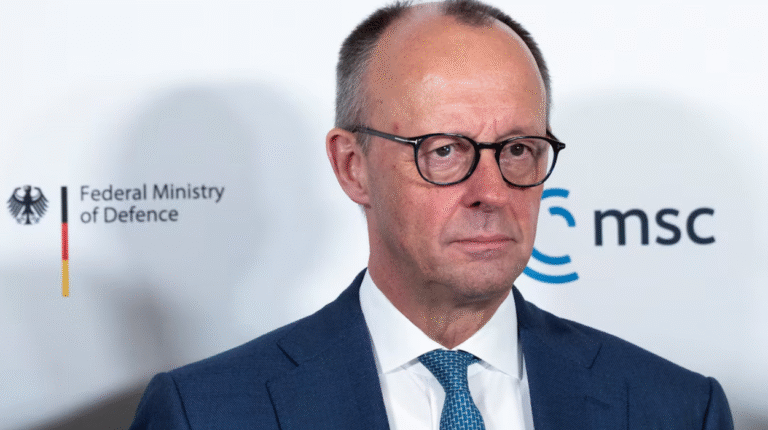
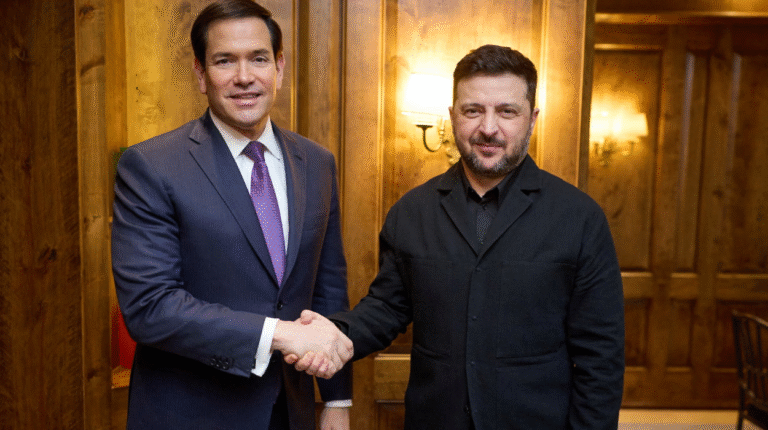
However, despite the degree of concentration given to Trump’s role in the report, it must be understood that the U.S. President, Trump, will not be attending the conference. On the other hand, the conference will be represented by the U.S. Secretary of State, Senator Marco Rubio, as well as over 50 Congressmen. Commenting on the U.S. President’s decision, it must be remarked that his absence showcases the widening gap between the U.S. and its European allies during an era of extreme geopolitical instability.
More than 50 heads of state and government are expected to take part in the conference, and the topics for discussion may include the future of NATO, the war in Ukraine, the implications of U.S.-China rivalry, and the specter of a divided world.
Experts Warn of a Historical Turning Point
Experts on the issue, as quoted in the report, believe that the world is seeing an historic inflection point of the sort it has seen with the dissolution of the League of Nations in the 1930s or the end of détente in the Cold War. They emphasize that, if the US continues to step back from the world stage, the ability of global governance institutions such as the UN, NATO, and the WTO to function effectively would be diminished.
From the report by the Munich Security Report, there are valid concerns that the leadership of Donald Trump may bring a new order to global politics, and such an emergence may bring about a new era of power politics, rivalries, and a weakening of norms, a sharp departure from the collaborative environment that has brought stability to the globe since 1945.