President Donald Trump’s declaration that he intends to make the Strait of Hormuz a U.S. territory has transformed an already dangerous confrontation with Iran into a far broader dispute over sovereignty, international law and control of one of the world’s most important energy routes.
Speaking at an event on Long Island on Friday, Trump said that after the United States defeated Iran, he would move to claim the strategic waterway for America.
“After we finish defeating Iran, which is being very badly defeated — pretty soon I’ll be declaring the Hormuz Strait a territory of the United States,”
Trump said.
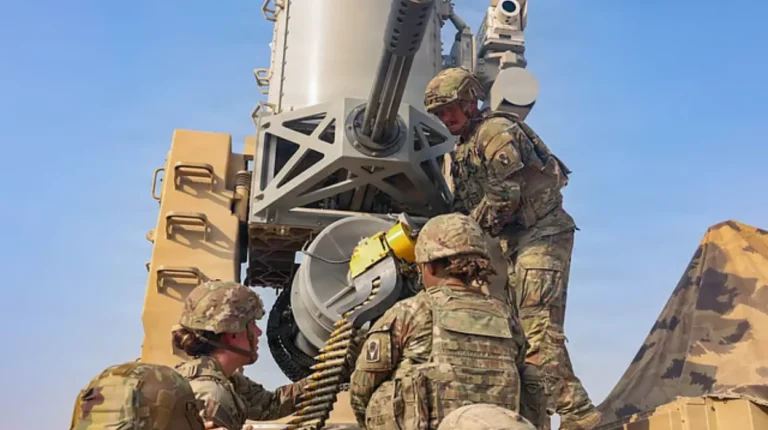
The statement followed his earlier assertion that Washington had “total control” over the strait. Trump has also described the American naval blockade affecting Iranian ports as a “wall of steel,” signalling that the United States views its military presence not merely as a temporary operation, but as an instrument capable of determining who and what can pass through the waterway.
Iran immediately rejected the claim. Deputy Foreign Minister Kazem Gharibabadi said the American president was expressing a fantasy rather than announcing a realistic political or legal plan.
“The Strait of Hormuz has been Iranian, is Iranian, and will remain Iranian,”
Gharibabadi said. He added that the passage could be
“closed and opened only under Iran’s command.”
His response was deliberately absolute.
“The Strait of Hormuz cannot be seized by tweet, nor by aircraft carrier, nor by issuing an order, nor by an election speech,”
Gharibabadi wrote. The wording captured Tehran’s central argument: military capability may enable a country to disrupt shipping, but it cannot automatically create lawful sovereignty.
یکبار برای همیشه واقعیت را بپذیرید: تا اینجا، شکست های راهبردی و سنگینی خوردید؛ تنگه هرمز ایرانی بوده، هست و خواهد بود؛ این تنگه فقط ذیل فرمان ایران بسته و باز خواهد شد و مادامی که واقعیت شکست را نپذیرید و دست از اوهام پردازی برندارید، ایران به إعمال محاصره ادامه خواهد داد.(۲)
— Gharibabadi (@Gharibabadi) August 14, 2026
A claim with no clear legal pathway
There is one immediate and fundamental obstacle to the US president’s proposal – the fact that the United States does not own the Strait of Hormuz and a presidential proclamation will not be able to change territorial ownership from one state to another. The Strait of Hormuz divides Iran to the north and Oman to the south. The latter controls the strategically important peninsula of Musandam. Also, the nearby country is the United Arab Emirates. Iran and Oman have shared jurisdiction in the area of the strait and therefore the president’s proposal to make it US property is politically impossible within the current situation.
The distinction between the military control and the sovereignty should be clear. While the navy can patrol the strait, protect ships, create exclusion zones, and even try to introduce a blockade in the area, none of the actions by itself will make the strait the territory of the country. The sovereignty presupposes the recognition of the legal grounds, the signing of the agreement, treaty, or transfer of the territory accepted by all the parties involved.
The unilaterally adopted American decision will not satisfy these criteria and will most likely be perceived by Iran and Oman as the act of annexation. This issue is additionally defined by the law of the sea. Under the international straits of transit passage vessels and aircraft have the right to proceed through the strait without interruption and delay between the two parts of water masses.
That distinction places both Washington and Tehran under scrutiny. The United States argues that naval power can secure freedom of navigation and prevent Iran from blocking a major global trade route. Iran argues that its geographic position and military capability give it decisive authority over the waterway. Neither argument, however, automatically establishes exclusive sovereignty over the entire strait.
Why Hormuz matters to the world economy
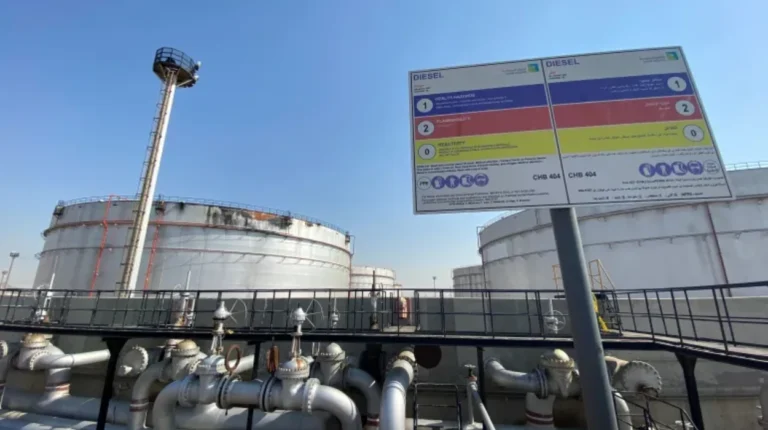
The Strait of Hormuz is small but economically significant. It joins the Persian Gulf with the Gulf of Oman and the Arabian Sea, being the main waterway exit for oil and gas products from several Gulf states. According to the International Energy Agency, approximately 20 million barrels of oil passed through the strait daily in 2025. This was about one-fourth of all seaborne oil trade in the world. The strait also carried about 19% of liquefied natural gas (LNG) trade in the world, with 112 billion cubic meters of LNG transported. In 2024, according to the U.S. Energy Information Administration, 84% of crude oil and condensate and 83% of LNG going through the strait were exported to Asian markets. China, India, Japan and South Korea together accounted for about 69% of crude-oil and condensate transportation through the strait.
These numbers clarify why this dispute is not limited only to the U.S. and Iran. Any significant disruption will impact the cost of fuel, electricity, shipping insurance, industrial output and inflation in Asia and beyond. Qatar and the United Arab Emirates are especially vulnerable. More than 93% of Qatar’s LNG exports and more than 96% of the UAE’s LNG exports travel through the Hormuz. Overall, these shipments represent nearly one-fifth of the global LNG trade.
Pakistan and Bangladesh also face serious risks. The IEA has estimated that almost two-thirds of their LNG supplies came through Hormuz in 2025. Gas-fired electricity accounts for approximately half of Bangladesh’s electricity generation and about one-quarter of Pakistan’s. A sustained disruption could therefore affect not only fuel prices but also electricity availability and industrial activity.
Military control remains contested
Trump’s description of “total control” is disputed by Iran and contradicted by the continuing danger faced by commercial vessels.
Washington says its naval forces can determine whether ships enter, leave or pass through the waterway. The White House has presented the blockade as part of a wider campaign to pressure Tehran economically and militarily. Treasury Secretary Scott Bessent has warned of economic measures against Iran
“that have never been seen.”
Defense Secretary Pete Hegseth has reportedly indicated that the United States could maintain a blockade of Iranian ports indefinitely. The message from Washington is that the United States possesses the naval power, surveillance systems and logistical capacity to sustain pressure for as long as necessary.
However, Iran maintains certain advantages due to its geographic position. Its coast is located on the northern edge of the strait; thus, Iranian forces may employ various unconventional systems such as missiles, drones, mines, patrol boats, and others to disrupt shipping. Iran does not have to destroy the U.S. Navy in conventional warfare to create uncertainty. Iran only has to make the movement of shipping dangerous or unreliable enough to deter ship owners and insurance companies. That is why the concept of “total control” is politically attractive but very hard to prove operationally. One can dominate the area militarily but cannot guarantee safe and undisturbed passage of civilian ships through it.
The Iranian government considers statements about the regularity of shipping through the Strait as a lie. The Persian Gulf Authority claimed that the actual situation was that the Strait of Hormuz was closed until conditions imposed by Tehran would be met. Military leaders of Iran stated that no ships can transit through the Strait without permission and surveillance by Iran. Thus, there is a struggle between the two countries for defining control. For Washington, control is related to the possibility to use naval power to grant access. For Tehran, control means denying access from the coastline.
Commercial shipping is becoming the central test
The most important measure of the crisis is not the rhetoric from either capital but the movement of ships.
The United Kingdom Maritime Trade Operations centre reportedly received a verified report on August 15 that a bulk carrier had been struck by an unknown projectile. CNBC reported that commercial vessels had repeatedly come under fire after the collapse of an interim ceasefire in June.
Reuters reported that traffic through the strait appeared close to a standstill on August 14 after two more ships were attacked. The reports suggested that the maritime crisis was no longer a theoretical confrontation over access. It was affecting the calculations of shipowners, crews, insurers and governments.
A waterway can be considered commercially open in theory but practically closed if vessels cannot obtain insurance, crews refuse to sail or operators fear attack. Even limited attacks can have an outsized impact because the global shipping industry operates on narrow margins and depends on predictable risk assessments.
The United States may therefore claim that it has opened or secured the route, while shipping companies may continue to avoid it. Iran may claim that it has closed the waterway, while a limited number of vessels may still pass under military escort. Both sides can present selective evidence, but the market will ultimately respond to the level of perceived risk.
Oil markets show the cost of uncertainty
The energy market has responded promptly to the news emerging from Hormuz. In July, there was a significant increase in price levels for Brent crude oil of 9.59% to close at $83.30 per barrel following an expansion of the US blockade. In the same period, the price for West Texas Intermediate increased 9.42% to $78.14. Later, Brent increased again by almost 5% to reach $87.72 due to heightened concerns regarding the reopening of the strait. This not only represented the physical loss of the oil supply, but also the war risk premium, which included attacks on ships, sanctions, and possible escalation of tensions.
It should be noted that there are no alternatives to Hormuz strait as far as its capacity is concerned. There are some pipelines belonging to Saudi Arabia and UAE that can help bypass the strait, but according to the IEA, alternative export capacity may range between 3.5 to 5.5 million barrels per day compared to the usual 19.5 million daily barrels that pass through Hormuz strait. Such an event would bring a supply shock to the oil market. The effects will likely be felt from the crude oil through the petrol, diesel, aviation fuel, petrochemicals, fertilizers, electricity, and food transport.
Trump has warned Americans that they may need to accept higher fuel prices as part of the pressure campaign. CNBC reported that average U.S. gasoline prices stood at $4.07 per gallon on August 15, compared with $3.15 a year earlier. That comparison highlights the domestic political cost of an extended confrontation.
Diplomacy is narrowing, not expanding
The claim is made when the talks seem deadlocked. It is understood that both countries had passed messages through intermediaries such as Qatar and Pakistan, but according to the Foreign Minister of Iran, Seyed Abbas Araghchi, there was no direct negotiation going on. This detail is crucial as indirect messages may be less risky in terms of avoiding accidental escalation, but they certainly don’t mean any movement towards the ceasefire. At this point, Tehran’s demand is that the United States should change its behavior and meet the requirements before re-opening the strait.
The United States, on the other hand, uses military pressure, sanctions, and a blockade of Iranian ports. These measures are designed to limit Tehran’s income and force Iran to make compromises, but they also increase the motivation to take the strait as a bargaining tool. With each passing day, the chances of reaching an agreement become slimmer since Iran cannot accept anything that would sound as if the United States had conquered and taken the waters. Trump, having declared his control over the waters and promising Americans’ ownership, would have difficulty giving up the fight without winning.
A rhetorical escalation with strategic consequences
Trump’s statement may have been intended as political messaging, but it carries consequences beyond campaign-style rhetoric. By describing Hormuz as a future U.S. territory, he has introduced a maximalist objective that goes beyond reopening navigation or protecting ships.
For Iran, the statement reinforces the belief that Washington seeks not merely to constrain Tehran but to dominate the Persian Gulf. For Oman and other Gulf states, it raises questions about whether the United States is proposing a new security arrangement or an unprecedented territorial claim. For China, India, Japan and South Korea, it creates uncertainty around the future of the energy corridor on which their economies depend.
This is also a danger of further complicating an already complicated public discussion. The US may have the capability to take control temporarily via military might of shipping routes, but that doesn’t mean ownership. Iran may be able to block the way, but it certainly doesn’t give the right to terminate international maritime rights. Hence, the crux of the problem is not about whether or not Trump can declare US sovereignty over these water routes. It is possible for him to do so. The problem is whether or not any country can translate military power into internationally recognized sovereignty over strategic water routes. At the moment, the answer is negative. Trump’s assertion is a message of power and arrogance, while Iran’s rebuttal is an indication of its defiance. In between these two assertions lie a narrow passageway through which passes some 20 million barrels of oil daily.