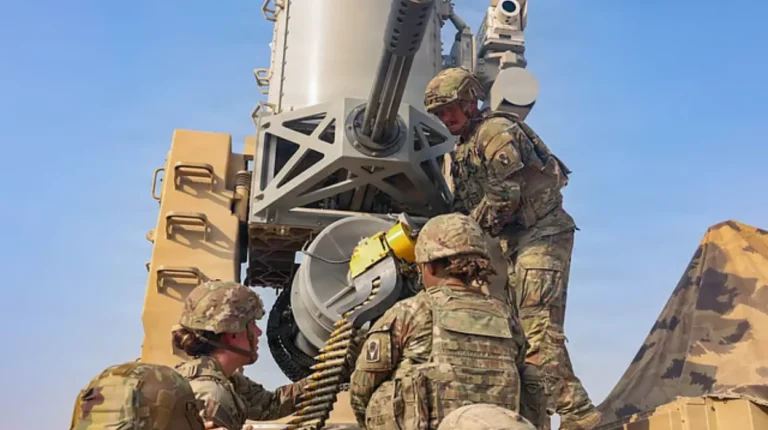
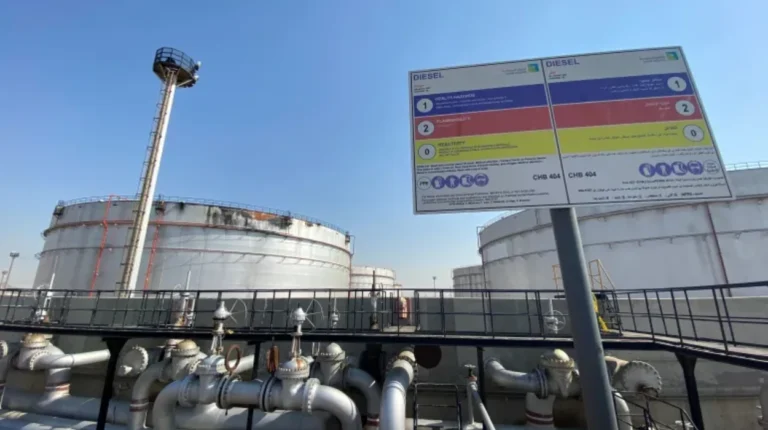
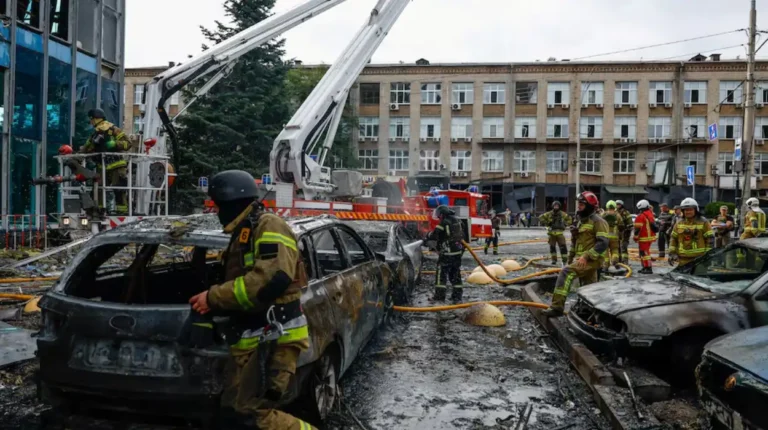
The United States is preparing to take its controversial anti-drug campaign in Latin America from the sea to the land, expanding a military operation that has already killed at least 221 people aboard suspected drug-trafficking boats.
According to the Trump government, the next stage will include joint actions with the authorities of Latin American countries against drug cartels and armed groups that have been defined as terrorist organizations by Washington. But the planned expansion has raised many questions about possible civilian casualties, violations of national sovereignty, the legitimacy of the military strikes, and whether or not the use of military force decreases cocaine supply to the United States. This land offensive comes after Operation Southern Spear, which is a military operation conducted by U.S. troops since September 2025 against vessels transporting drugs in the Caribbean and eastern Pacific areas. As of July 14, 2026, according to data gathered by the Washington Office on Latin America, 67 vessels were destroyed in 63 attack missions with 221 deaths.
From maritime strikes to land operations
It became very clear that there was a new strategy adopted by the administration during the tour of the Defense Secretary of the United States Pete Hegseth to Panama. According to Hegseth, Colombia, Honduras, and Guatemala had agreed to allow joint military operations in their countries against crime organizations following the example of Ecuador that had already started joint operations with the United States in March. However, Guatemala later claimed that no such deal had been made with the United States. President Bernardo Arévalo stated that such a deal should be approved by the Congress.
Speaking during a military exercise in Panama, Hegseth said the land campaign would replicate the approach used at sea.
“It will be like you saw with the strikes on the drug boats,”
Hegseth said. “Same effect on land.” He added:
“We’re working with Ecuador. We’re working with Colombia. We’re working with partners to bring the fight to the designated terrorist organizations on land.”
The statement suggests that the United States is not merely offering intelligence, training or logistical assistance. It is considering direct participation in combat operations, potentially including raids, airstrikes, drone missions and targeting support. The administration has not publicly explained the precise rules governing the proposed operations or whether U.S. troops would operate independently or alongside local forces.
The scale of the boat campaign
Operation Southern Spear is a fundamental departure from the traditional U.S. model for dealing with drug trafficking problems. Where the past has seen coast guard patrols, boat seizures, apprehension, prosecution, and criminal trials, the administration now has approved the use of military strikes against drug boats. In its analysis of the program, WOLA reports 44 such attacks in the eastern Pacific and 17 in the Caribbean. The group stated that U.S. authorities have provided 63 videos showing instances when boats have been hit. But there has been little publicly available information regarding who was killed, the intelligence on which the identification of the boats was based, or the alleged drugs carried in them. The operation itself has been a secret program.
There has not been publicly available data that could provide the identity of the victims, criminal organizations associated with them, amounts of drugs involved and the reasons for non-interception and non-arrest. The lack of evidence in each individual case has been one of the main flaws of the administration’s position. A video of the destruction of a boat doesn’t necessarily mean that people aboard were traffickers or that lethal force was justified.
The campaign has also generated questions about the treatment of survivors. WOLA says that two people who initially survived a strike were allegedly killed in a follow-up attack. If verified, the incident could raise serious legal questions involving the protection of shipwrecked people and individuals who are no longer taking part in hostilities.
Ecuador becomes the test case
Ecuador is the first country where the new model has visibly moved onto land and into joint operations. The United States and Ecuador began conducting missions in March against alleged drug-trafficking sites and criminal groups.
The partnership is taking place as Ecuador struggles with severe violence linked to organized crime. Drug gangs have expanded their influence over ports, prisons, fishing communities and transport routes. Ecuador’s Pacific coastline has become a major departure point for cocaine shipments moving toward North America and Europe.
But the country’s security crisis also demonstrates the danger of relying on military targeting in areas where criminal activity overlaps with civilian life. The Associated Press reported that a New York Times investigation found that one March strike on an alleged drug laboratory instead destroyed a cattle farm.
Reuters stated that Ecuadorian fishermen had been at risk due to attacks of cartels as well as the U.S. military operations. According to fishermen, they were under attacks from drones, arrested by English-speaking gunmen, and transferred to Salvadoran naval forces. According to three security experts quoted by Reuters, it is almost sure that the United States was behind the attacks, even though the U.S. officials have not confirmed them due to security reasons. Reuters also said that criminal gangs were demanding extortion money from fishermen approximately $1,200 per trip, whereas the delivery of cocaine could earn them as much as $40,000. These numbers explain why the coast community has reasons to be cooperative with cartels but at risk of wrong military attacks.
In one joint maritime operation conducted between the United States and Ecuador, law enforcement agencies confiscated 760 kilograms of cocaine on board of Ecuadorian flagged tuna fishing vessel. The United States Coast Guard reported about the result of their counter-narcotics operation where they seized 91,000 kilograms of cocaine and 160 suspects of trafficking drugs until April.
Colombia’s expanding role
Colombia is likely to become the most consequential partner in the land phase. It remains a major cocaine-producing country and has several armed organizations operating in remote areas where state control is limited.
Hegseth said Colombia’s new president, Abelardo de la Espriella, had requested U.S. collaboration against groups including the National Liberation Army and dissident factions of the former Revolutionary Armed Forces of Colombia. Washington refers to these organizations as terrorist groups and argues that they can be targeted under the laws of armed conflict.
“Designated terrorist organizations, with partnered governments, will be legitimate targets of the United States government,”
Hegseth said.
However, this statement carries political weight but lacks legal standing. First, while the classification of a group as a terrorist group might not necessarily be a sufficient condition to classify all members, associates, or anyone traveling in the suspected vessels as lawful targets for military forces, the mere classification of the group as terrorist does not indicate an armed conflict situation. Other issues raised by Colombia’s offer of cooperation include those related to implementation. For instance, there are no explanations as to which groups would be targeted, the standards for evidence needed, decision-making criteria for the execution of operations, or investigation of possible civilian deaths resulting from such operations.
Legal basis remains disputed
The U.S. administration maintains that the campaign is lawful. Its apparent legal argument is that cartels and allied armed groups constitute terrorist organizations engaged in an armed conflict with the United States.
Under this interpretation, the administration claims authority to use military force against designated groups and does not regard each operation as a conventional law-enforcement action. Hegseth has also argued that the campaign is directed at organizations threatening U.S. citizens and regional security.
Critics reject that reasoning. They say drug trafficking is generally a criminal enterprise motivated by financial gain, not an armed conflict motivated by political objectives. The classification of cartels as terrorist organizations, they argue, cannot automatically transform suspected smugglers into battlefield targets.
WOLA has described the attacks as extrajudicial executions and questioned their legal foundation. Ben Saul, the United Nations special rapporteur on human rights and counterterrorism, said:
“The activities of organized crime groups will rarely qualify as terrorism.”
He argued that organized crime is generally driven by material profit, while terrorism normally involves a political motive.
The U.S. administration has reportedly relied on a classified Justice Department Office of Legal Counsel opinion issued in September 2025. Because the opinion has not been fully released, lawmakers, courts and the public cannot independently assess the reasoning behind the targeting policy.
The International Criminal Court has also become part of the political dispute. Hegseth warned that the ICC could investigate U.S. actions in Latin America, describing such a move as illegitimate. No ICC investigation had been publicly announced in the latest reports.
A campaign whose effectiveness is contested
According to the administration, Operation Southern Spear has disrupted the flow of narcotics. According to Hegseth, the number of narco-vessels has been cut down by 65 percent in the western Caribbean, 60 percent in the eastern Caribbean and nearly 50 percent in the eastern Pacific. Nevertheless, reporting based on the assessments of American law-enforcement has questioned the impact of the campaign in terms of reducing the amount of cocaine coming into the country. According to the Washington Post, the analysts of DEA and Pentagon estimated that the strikes failed to make any significant impact on cocaine’s availability, prices and the total amount.
Apparently, the drug dealers adjusted to the situation by turning to larger vessels, coastal transportation, commercial ports and containers. Some of the routes have been redirected overland to Mexico, while others continued their work through major commercial shipping routes. This detail is important. Lower numbers of smaller suspect vessels may mean a shift in the method of trafficking and not a reduction in the cocaine trade. Destruction of the vessel and killing of its personnel may mean the destruction of just one shipment, but not the weakening of the financiers, corrupt politicians, logistics companies and armed organizations that control the system. As Michelle Maffei, the organized-crime expert at the University of Guayaquil, stated, the majority of cocaine shipments are made using large commercial ports and not small fishing boats.
Sovereignty and regional politics
The proposed land operation would increase the U.S. military presence in a region where governments have historically been sensitive to foreign intervention. Even when a government agrees to cooperation, domestic opposition could grow if U.S. troops conduct raids or airstrikes that kill civilians.
Michael Shifter of the Inter-American Dialogue described the strategy as an effort to legitimize broader U.S. military activity in the Western Hemisphere. He said the relationship was “not cooperation” but an asymmetrical arrangement in which Washington held greater power.
Mexico has cooperated with the United States on security matters, but has been opposed to the use of U.S. armed forces in fighting cartels on Mexican territory. This may be the position other governments will have to take in balancing the gains from U.S. intelligence, equipment, and funding on the one hand and the political danger of allowing combat missions from outside on the other hand. The administration has portrayed its policy as an attempt at reaffirming U.S. dominance in the Western Hemisphere. The critics view it as an updated version of the interventionist policy where the United States decides what is a threat in the region and demands that the Latin American states fall into line with its military reaction. On August 4, the U.S. Southern Command created the Joint Task Force Western Hemisphere as a part of its strategy.
The risk of a wider conflict
The risks of shifting from boat strikes to strikes on land are significantly higher. The cartels and the armed groups may turn to retaliation against U.S. government personnel, local governments, and civilians who are thought to be working with the United States. The attack on a rural camp might place the United States in a complex situation where territory is contested, political tensions rise, and there are issues of conscription and ongoing insurgencies. When armed organizations shift their bases from the remote locations to the towns, the strategy may end up exposing more civilians rather than protecting them.
Moreover, such a policy will blur the line between police action and military action and open an opportunity for the executive branch to designate every suspected criminal organization as a terrorist organization without requiring Congress’s permission. For the Latin American people, this means immediate threats. The fishermen in Ecuador are reported to feel threatened by both the cartels and the U.S. forces. They cannot prove their innocence and receive an open investigation after the attack.