Ukrainian President Volodymyr Zelenskiy has delivered his sharpest rebuke yet of European allies, accusing them of leaving Ukraine’s air defences effectively “empty” at a critical moment as Russian ballistic missiles battered the country’s energy infrastructure and pushed it to the edge of a nationwide blackout.
Speaking in Kyiv, Zelenskiy said promised Pac-3 interceptor missiles for Ukraine’s Patriot air defence systems arrived a day late due to a missed payment by a European partner under a multinational procurement mechanism. That delay, he argued, translated directly into millions of Ukrainians losing access to electricity, heating and water during what has become the coldest winter of the war.
“The tranche under the PURL initiative was not paid. The missiles did not arrive,”
Zelenskiy said, declining to name the country responsible but leaving little doubt that, in his view, bureaucratic inertia in Europe had lethal real-world consequences.
A Fragile Pause Amid Ongoing Attacks
Zelenskiy’s remarks followed comments by U.S. President Donald Trump, who claimed Russian President Vladimir Putin had agreed to pause strikes on Ukraine’s energy infrastructure for a week during an extreme cold spell. On the surface, there appeared to be partial compliance: air-raid sirens were silent in Kyiv overnight, and Ukraine’s air force reported no missile or drone strikes in much of the country.
Yet the ceasefire was far from comprehensive. Ukrainian officials said Russia launched 111 drones and at least one missile targeting eastern frontline regions, underscoring how limited and reversible any such pause remains. The ambiguity surrounding what Moscow considers “energy infrastructure” only deepened Ukrainian skepticism about the deal’s durability.
Patriot Missiles: The Only Shield Against Ballistic Threats
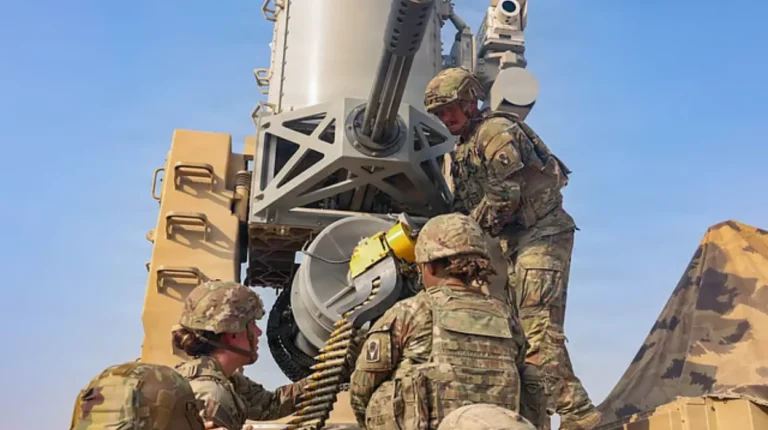
The heart of Zelenskiy’s warning lies in a technical but decisive reality: Pac-3 interceptor missiles are the only munitions in Ukraine’s arsenal capable of shooting down Russian ballistic missiles. During Russia’s January 20 attack, Kyiv faced 34 ballistic and cruise missiles, according to Ukraine’s air force—precisely the kind of assault Patriot systems are designed to counter.
Zelenskiy had already warned on January 16 that air defence stocks were “perilously low,” with some systems reportedly left without any interceptor missiles at all. The failure to replenish these stocks on time, he argued, allowed Russian strikes to cripple power plants and water infrastructure with near impunity.
The PURL Initiative and Europe’s Accountability Gap
The Prioritised Ukraine Requirements List (PURL) initiative was launched by the United States and NATO last year to pool European funds for purchasing critical U.S.-made systems, including Patriots. Contributors include Germany, Norway, Poland, the Netherlands, Belgium, Canada, Luxembourg, Portugal, Slovenia and Spain.
Two Western officials briefed on the initiative disputed Zelenskiy’s claim that a missed payment caused the delay, but declined to provide details—an opacity that has only reinforced Kyiv’s frustration. For Ukraine, the dispute is less about technical accuracy than about outcomes: missiles did not arrive when intelligence indicated ballistic strikes were imminent.
Zelenskiy’s anger, aired publicly at the World Economic Forum in Davos earlier this month, reflects a growing perception in Kyiv that Europe’s political commitments are not being matched by operational urgency.
Energy Infrastructure as a Weapon of War
Ukrainian officials have accused Russia of conducting “energy terror” by systematically targeting power plants and gas facilities during winter, a strategy designed to erode civilian morale and pressure Kyiv into concessions as peace talks loom.
The timing is especially sensitive. As the Trump administration pushes both sides toward negotiations, Moscow appears to be leveraging energy deprivation as a bargaining tool, betting that Western fatigue—and logistical delays—will weaken Ukraine’s resolve.
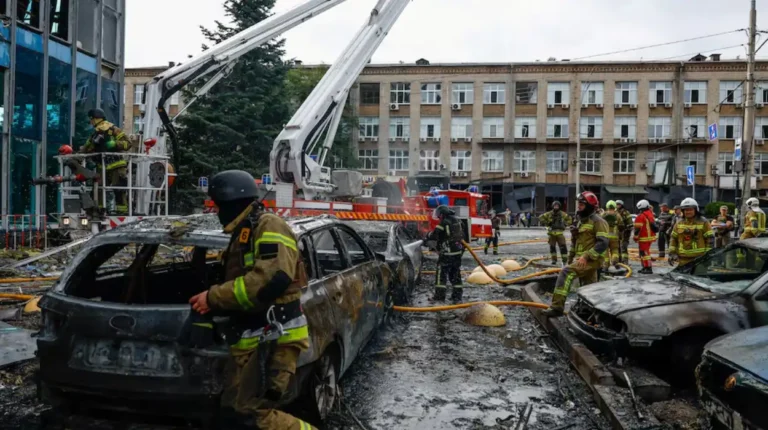
Russian strikes have repeatedly left Kyiv and other cities without power, heat and water, highlighting how air defence shortfalls translate directly into humanitarian crises rather than abstract military setbacks.
Europe’s Strategic Dilemma
Zelenskiy has acknowledged that his comments were delivered “emotionally,” but his core message was strategic: Europe and Ukraine cannot afford misalignment when warning time is measured in hours and missile inventories in single digits.
“I know ballistic missiles are incoming, and partners know that my air defence units are empty—empty NASAMS, an empty Patriot,”
he said, recalling the moment Ukraine received satellite intelligence of an impending strike earlier this month.
EU foreign policy chief Kaja Kallas echoed the urgency, warning that European capitals “must dig deeper into their air defence stocks” as Ukraine faces a potential “humanitarian catastrophe” this winter.
The Cost of Delay
Zelenskiy’s accusations point to a broader European problem: a mismatch between political declarations of solidarity and the slow, fragmented mechanisms used to deliver life-saving military equipment. In a war where minutes can determine whether cities remain lit or freeze in darkness, procedural delays are no longer neutral—they are strategic failures.
As Ukraine enters the fifth year of Russia’s full-scale invasion, the air defence gap has become more than a technical issue. It is a test of Europe’s willingness to treat Ukraine’s survival as a matter of immediate security rather than deferred responsibility.