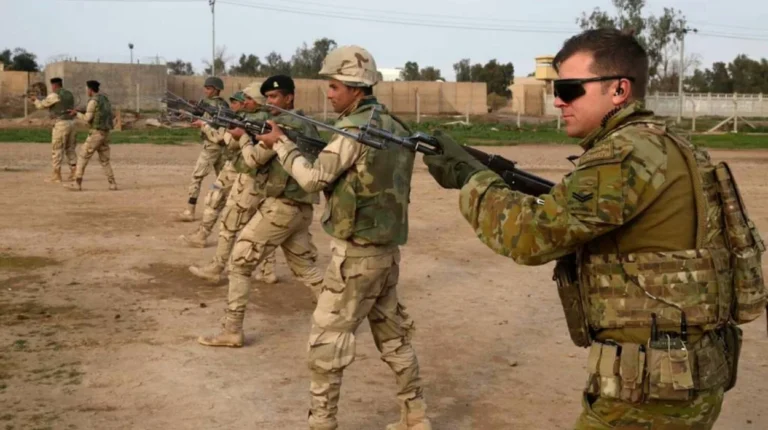
The Post-Afghanistan Vacuum that emerged after the 2021 U.S. withdrawal has reshaped regional security dynamics, with the Taliban consolidating power into what analysts describe as a second-generation governance model. By 2025, the Taliban had transitioned from insurgency to state authority, enforcing stricter ideological control while simultaneously navigating international isolation. Internal restructuring, including suppression of rival factions such as ISIS-K, has enabled the regime to redirect focus toward regional influence and cross-border security engagement.
Security assessments in 2025 suggest that Afghanistan under Taliban 2.0 has become a complex mix of centralized control and fragmented local authority. While Kabul maintains political dominance, peripheral regions continue to serve as permissive environments for militant regrouping. This duality has allowed the regime to publicly assert stability while indirectly enabling militant networks to operate with varying degrees of autonomy.
Cross-Border Spillover Dynamics
The consequences of the Post-Afghanistan Vacuum are most visible in neighboring states, where porous borders and historical militant linkages have facilitated renewed insurgent activity. Regional security institutions increasingly view Afghanistan as both a source of instability and a strategic pivot for transnational militant coordination.
Pakistan’s Tribal Border Crisis
Pakistan has experienced a notable resurgence in militant violence along its western frontier, particularly in Khyber Pakhtunkhwa. The Tehrik-i-Taliban Pakistan has leveraged Afghan sanctuaries to regroup and intensify operations, carrying out a significant number of attacks in 2025. Pakistani military officials have indicated that cross-border movement remains a persistent challenge, with militants exploiting terrain and local support networks to evade enforcement.
Military responses, including targeted airstrikes, have disrupted militant infrastructure but also contributed to civilian displacement, complicating counterterrorism efforts. The weakening of traditional tribal governance mechanisms further limits local resilience, creating a vacuum that militant actors continue to exploit.
Kashmir Militancy Revival
In India-administered Kashmir, the Post-Afghanistan Vacuum has coincided with a gradual revival of militant activity. Security agencies report increased infiltration attempts and improved tactical sophistication among militant groups. These developments are often linked to training and logistical support networks with roots in Afghanistan, reflecting the enduring interconnectedness of regional militant ecosystems.
Indian authorities have responded with enhanced surveillance and counter-infiltration measures along the Line of Control. However, the evolving nature of militancy, including the use of digital communication and decentralized cells, presents ongoing challenges for maintaining stability in the region.
ISIS-K Counter-Narrative Expansion
While the Taliban has consolidated authority, ISIS-K has positioned itself as a rival force seeking to undermine Taliban legitimacy and expand its own regional footprint. The Post-Afghanistan Vacuum has created ideological and operational space for ISIS-K to attract recruits and launch attacks both within Afghanistan and beyond.
Regional Caliphate Ambitions
ISIS-K’s strategy focuses on presenting itself as the more uncompromising alternative to Taliban governance. By 2025, the group had expanded recruitment efforts across Central Asia, leveraging online platforms and cross-border networks. Analysts note that ISIS-K propaganda emphasizes transnational jihad, appealing to individuals dissatisfied with Taliban pragmatism.
Attacks targeting Taliban positions, particularly in eastern and southern Afghanistan, highlight the group’s continued operational capability. These incidents reinforce the perception of Afghanistan as a contested security environment despite Taliban control.
Indian Subcontinent Probes
ISIS-K has also demonstrated an ability to project influence into South Asia, with security agencies in India identifying links between local cells and Afghan-based handlers. Digital radicalization and cryptocurrency funding channels have facilitated this outreach, enabling the formation of small, decentralized networks capable of executing localized attacks.
These developments underscore the adaptability of extremist groups within the Post-Afghanistan Vacuum, where technological tools complement traditional militant strategies.
Indian Security Posture Shifts
India’s response to the evolving threat landscape reflects a combination of military preparedness and intelligence integration. The Post-Afghanistan Vacuum has prompted a reassessment of border security and internal counterterrorism strategies.
Border Fortification Drives
India has intensified efforts to secure its borders through advanced surveillance systems, including thermal imaging and drone monitoring. These measures have improved detection rates of infiltration attempts, particularly in high-risk sectors along the Line of Control. Military modernization programs emphasize rapid response capabilities and hybrid warfare preparedness.
Domestic Intelligence Fusion
Enhanced coordination among intelligence agencies has become a cornerstone of India’s counterterrorism approach. Multi-agency fusion centers process large volumes of data, enabling quicker identification of potential threats. Legislative adjustments have also expanded the scope of counterterrorism laws, targeting financial and logistical networks linked to extremist groups.
Regional State Responses Fragmented
The Post-Afghanistan Vacuum has exposed disparities in how South Asian states respond to emerging threats. While some countries have strengthened their counterterrorism frameworks, others face structural and resource limitations that hinder effective action.
Bangladesh and Rohingya Dynamics
Bangladesh’s security concerns are increasingly tied to developments in refugee camps, where radicalization risks persist. Reports indicate attempts by extremist actors to exploit these environments for recruitment and training. Cross-border linkages further complicate the situation, as militant networks seek to integrate local grievances into broader ideological narratives.
Sri Lanka Security Adjustments
Sri Lanka continues to address the legacy of past terrorist attacks while adapting to new threats linked to transnational networks. Intelligence cooperation with regional partners has improved early detection capabilities, though challenges remain in monitoring online radicalization and diaspora connections.
Central Asian Ripple Effects
Beyond South Asia, the Post-Afghanistan Vacuum has influenced security dynamics in Central Asia, where governments face renewed concerns about border stability and extremist infiltration.
Tajik-Afghan Frontier Pressures
Tajikistan has reported increased tensions along its border with Afghanistan, prompting military mobilization and enhanced surveillance. The presence of militant groups in adjacent Afghan regions raises concerns about cross-border incursions and local destabilization.
Uzbekistan and Fergana Valley Concerns
Uzbekistan’s focus remains on preventing the spread of extremism into the Fergana Valley, a historically sensitive region. Authorities have strengthened monitoring and community engagement programs to counter radicalization, reflecting lessons learned from earlier periods of instability.
Economic Underpinnings of the Terror Surge
Economic factors play a significant role in sustaining militant activity within the Post-Afghanistan Vacuum. Afghanistan’s reliance on informal and illicit economies provides revenue streams that can indirectly support extremist networks.
Illicit trade, including narcotics trafficking and unregulated financial systems, continues to generate funds that flow across borders. These financial networks are difficult to track, often operating through informal channels that bypass conventional regulatory mechanisms. The persistence of such systems highlights the intersection between economic fragility and security risks in the region.
International Counter-Terror Gaps
Global and regional powers have sought to address the implications of the Post-Afghanistan Vacuum through collaborative initiatives. However, gaps in coordination and differing strategic priorities limit the effectiveness of these efforts.
Multilateral Security Efforts
Initiatives involving regional alliances and international partners focus on intelligence sharing, maritime security, and counterterrorism training. While these efforts contribute to capacity building, analysts note that the absence of a unified approach to Afghanistan limits their overall impact.
Strategic Competition and Constraints
Geopolitical competition further complicates counterterrorism cooperation. Divergent interests among major powers influence engagement with Afghanistan and shape the broader regional security environment. This fragmentation reduces the potential for cohesive responses to transnational threats.
2025 Operational Trends and Escalation Patterns
Security developments in 2025 reflect a pattern of increased frequency and geographic spread of attacks linked to the Post-Afghanistan Vacuum. High-profile incidents across Pakistan, India, and Afghanistan illustrate the interconnected nature of regional threats.
These घटनाओं indicate that militant groups are not only sustaining operations but also adapting to new conditions, including technological advancements and shifting geopolitical alignments. The persistence of such trends suggests that the security environment remains fluid and unpredictable.
The Post-Afghanistan Vacuum continues to redefine South Asia’s threat landscape, blending localized insurgencies with transnational networks and evolving tactics. As regional actors attempt to contain these dynamics, the interplay between governance gaps, ideological competition, and technological adaptation raises a critical question about how long current containment strategies can hold before the ripple effects extend beyond the region’s already fragile periphery.