The Sahel Entrenchment is an indication of the structural change of the insurgency environment in West Africa with jihadist groups like Jama’at Nusrat al-Islam wal-Muslimin (JNIM) and Islamic State Sahel (IS Sahel) focusing on the territorial governance as opposed to episodic violence. Instead of acting as mobile insurgent networks, they are integrating themselves into local economies, social systems, and informal administrative systems into fragmented Sahelian spaces.
Over the course of 2025, the trend of conflicts changed in a manner that seems counterintuitive. Although there has been a decrease in the number of attacks in certain areas, its intensity and organization has escalated. Low-level ambushes are being substituted by drone attacks, multi-site attacks, and highly-advanced improvised explosive devices. This means that insurgent groups are not compromising but restructuring on territorial consolidation as opposed to the visibility-based violence.
Violence contraction alongside operational sophistication
The drop in the frequency of attacks does not represent the insurgents decline but strategizing. Governance mechanisms are being tightened and exposure minimized by groups in places they are in control, with long-term control being more important than short-term disruption.
JNIM Territorial Governance and Proto-State Structures
JNIM has matured to be the most structurally developed player in the Sahel Entrenchment landscape. It is projected that by early 2026 it will have a different levels of influence over much of northern Mali and Niger. The group does not build the state formally, but rather, through the layered governance systems that incorporate the taxation system, dispute management, and movement control into the local life.
Its power does not reside in a centralized form in the conventional meaning but spread out in networks that incorporate both force and negotiated conformity. This enables the group to be adaptable whilst having enduring dominance over fragmented areas that have weak or no presence of states.
Taxation networks and economic extraction systems
The financial model of JNIM is based on the systematic taxation of trade routes, agriculture and informal markets. These systems result in high yearly profits, in the tens of millions of dollars, that support the ability to operate. Notably, taxation is designed in a way that it is predictable and this enhances compliance as opposed to just coercion.
Civil order through coercive administration
In some areas, such as the north of Burkina Faso and a few instances of temporary control in Djibo in 2025, JNIM has already been able to control mobility, dictate and limit access to state institutions. Although there is no formal governing infrastructure, it replaces the state power with the use of coercion yet organized local governance.
IS Sahel Expansion and Competitive Territorial Governance
IS Sahel has a parallel yet different logic of governance. Whereas JNIM emphasizes on local embedding, IS Sahel, puts its emphasis on the control of strategic corridors and resource-rich areas especially around Menaka and Gao regions in Mali. It has a more militarized model, with the focus on the territorial dominance and economic exploitation rather than social assimilation.
Inter-IS Sahel and JNIM competition has led to an increase in governance experimentation in the areas of conflict. Both groups are trying to show not only military power but also the administrative one, practically transforming the sections of the Sahel into the arenas of the parallel state-buildings.
Route control as economic foundation
The governance framework of IS Sahel heavily relies on the control of their smuggling routes and transit routes. These routes also serve as financial life lines in that they can operate even when faced by the military. The power to move is equated to the power to control revenue and power.
Fragmented authority and overlapping control zones
IS Sahel works in a stratified environment in the eastern Sahel where there is coexistence of state forces, militia and the insurgent rule. This disintegration undermines the centralized power and enables insurgent systems to exist despite some military assaults every now and then.
Sahel Fragmentation and Institutional Retrenchment
Weakened security architecture in the region has stimulated Sahel Entrenchment. With the exit of Mali, Burkina Faso, and Niger as ECOWAS members, and the establishment of the Alliance of Sahel States in 2025, there is now much less coordination in the region. The break-up of the multinational forces and the decreased international presence has left gaps in governance in key areas along the borders.
This disintegration has not only redefined the situation in terms of security but also that of governance competition itself. Insurgent organizations have been quick to exploit the loopholes in the institutions, and have built administrative structures in the regions where state power has disappeared or disintegrated.
Institutional withdrawal and governance vacuum expansion
The international missions have been downsized and this has led to reduced surveillance and coordination capacity throughout the Sahel. Insurgent forms of governance have rapidly occupied these vacuums, and are more adaptive to unstable environments.
Structural vulnerabilities from climate and insecurity
The three major determinants of recruitment and compliance are food insecurity, climate stress and economic instability. These forces enhance the attractiveness of insurgent rule in the rural regions of the country where governments are in patchy form or non-existent.
Coastal Spillover and Expanding Regional Pressure
The Sahel Entrenchment is spreading to coastal West Africa, outside of the conflict areas in the interior. An increasing spillover effect in the countries that are affected like Benin, Togo and northern Nigeria is the cross border incursions and coordinated attacks across frontier corridors.
Such expansion is an indication of military mobility and diffusion of governance. Not only are insurgent groups launching attacks, but also trying to gain influence by informal networks of taxation and partnerships with local actors in coastal areas.
Cross-border adaptation of governance systems
Insurgent groups are adapting to the governance structures to coastal conditions through entrenching themselves in informal economies and trafficking routes. This will enable continuous influence in regions where there is a greater presence of the state.
Bilateral security coordination and containment strategies
States like Benin and Nigeria in turn are also enhancing bilateral collaboration by joint patrols and the exchange of intelligence. These are to counter the infiltration of governance as opposed to concentrating on military face off.
Counterterrorism Constraints and Governance Competition
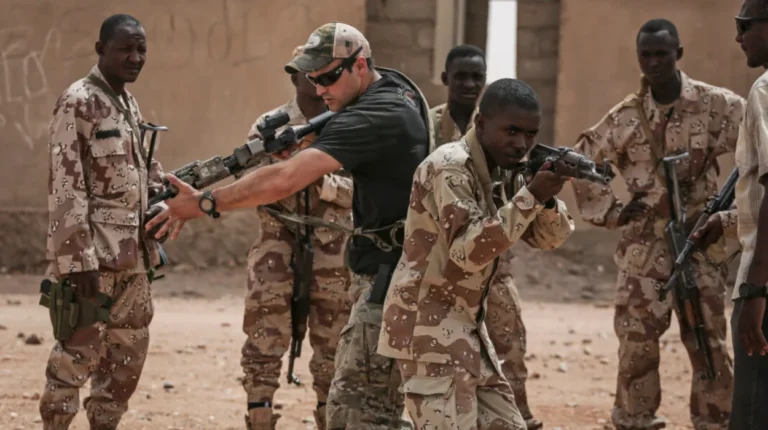
In spite of the heightened military action, counterinsurgency operations are limited structurally. Most governments in Sahelian countries are run under military regimes that have limited ability to govern effectively in the long term, which limits their ability to stabilize the territory.
The effort to promote international cooperation, such as interoperability initiatives in 2025, indicate awareness of the gaps in coordination, but are not balanced in their implementation. The existence of a decentralized system of authority continues to benefit insurgent systems of governance.
Intelligence asymmetry and adaptive insurgent networks
The resilience of insurgent groups is achieved because of decentralization, and strong rootedness. This can enable the quick rebound of military pressure coupled with continuity of governance in the controlled areas.
Governance absence as strategic enabler
The absence of sound governance is the key facilitating element towards Sahel Entrenchment. In the absence of long-term administrative occupation, territorial conquests of state forces are provisional and can always be undone.
Governance Competition Defines the Sahel’s Strategic Trajectory
Sahel Entrenchment marks a shift in the nature of conflict across West Africa, where governance itself has become the primary arena of competition. JNIM and IS Sahel are no longer purely insurgent organizations but hybrid actors combining military capability with administrative functions.
The future trajectory of the region will depend on whether formal state institutions can restore durable governance faster than insurgent systems consolidate their parallel structures. The Sahel is increasingly evolving into a contested governance environment where authority is continuously negotiated, enforced, and redefined across shifting territorial landscapes.