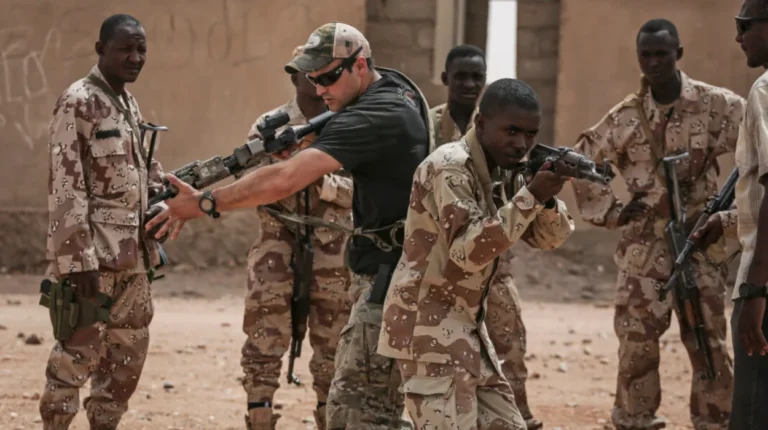
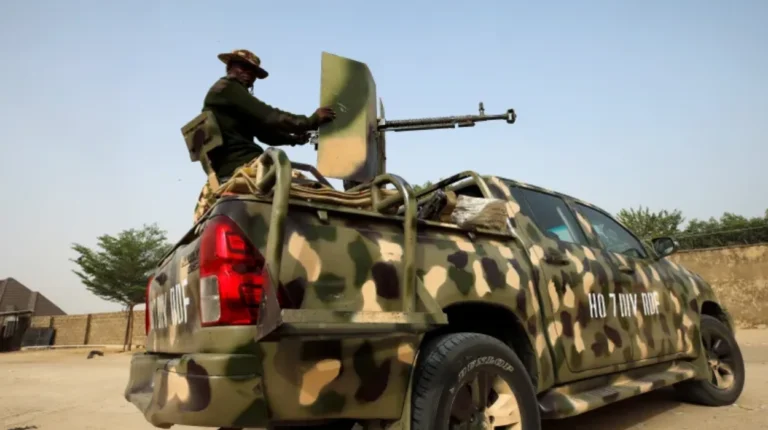
The US-Africa counterterrorism pivot reflects a significant recalibration in Washington’s security approach across the Sahel. With growing instability and the expansion of armed groups, the United States has shifted from direct military involvement toward partner-based strategies. This transition emphasizes intelligence sharing, surveillance capabilities, and targeted training rather than large-scale troop deployments.
By early 2026, the Sahel accounted for more than half of global terrorism-related deaths, underscoring the urgency behind this pivot. The withdrawal of French forces from Mali in 2023 created a vacuum that reshaped regional security dynamics, prompting the United States to reassess its role. Developments throughout 2025, including reduced troop presence and expanded drone operations, laid the groundwork for the current approach.
Reduced Footprint and Expanded Capabilities
The United States has maintained a limited military presence of approximately 1,000 personnel across Africa, focusing on high-value intelligence operations. This model mirrors earlier strategies used in Somalia, where a minimal footprint supported targeted strikes and surveillance.
Advanced reconnaissance systems and remote monitoring capabilities now play a central role. These tools enable US forces to track militant activity while minimizing direct exposure, aligning with broader efforts to reduce long-term military commitments.
Partner Capacity Building as Core Strategy
Training and equipping local forces has become the cornerstone of US engagement. Programs under regional frameworks aim to enhance operational effectiveness against groups such as Boko Haram and affiliates linked to transnational networks.
This approach reflects lessons from earlier interventions, where reliance on external forces proved unsustainable. By strengthening local institutions, Washington seeks to create durable security structures capable of managing internal threats.
Sahel Reengagement Brings Complex Political Tradeoffs
Reengagement with Sahel governments introduces new challenges, particularly as several countries are now governed by military authorities. The US Africa counterterrorism pivot prioritizes security cooperation over political conditionality, marking a shift from earlier policies.
Cooperation with Military Authorities
The United States has resumed engagement with governments in Mali, Niger, and Burkina Faso despite concerns about governance. This pragmatic approach aims to maintain operational access and counter the rapid expansion of militant groups.
However, cooperation remains constrained. Restrictions on foreign military activities and shifting alliances limit the effectiveness of joint operations. These constraints highlight the tension between strategic necessity and political complexity.
Competition with External Actors
The regional landscape has become increasingly multipolar. Russian-linked security actors have expanded their presence, offering military support without governance conditions. At the same time, Chinese investments in infrastructure strengthen economic influence across the Sahel.
This competition shapes US policy decisions, as maintaining influence requires engagement even under less favorable political conditions. The pivot therefore reflects not only counterterrorism priorities but also broader geopolitical considerations.
Fulani Communities Face Rising Security Pressures
The US Africa counterterrorism pivot intersects with deep-rooted social tensions, particularly affecting Fulani communities across West Africa. These pastoral groups, spread across multiple countries, have become increasingly vulnerable amid escalating violence.
Targeted Violence and Displacement
Fulani populations have faced attacks from both state-backed militias and local defense groups. In several regions, accusations of collaboration with armed groups have led to collective punishment, including village raids and displacement.
Environmental pressures further exacerbate the situation. Desertification and shrinking grazing lands have forced herders to migrate southward, intensifying competition with farming communities. These dynamics transform localized disputes into broader cycles of violence.
Risk of Radicalization
Marginalization and insecurity create conditions that armed groups can exploit. Recruitment efforts often target individuals who have lost livelihoods or family members in communal violence.
While public narratives frequently associate Fulani communities with extremism, evidence suggests a more complex reality. Many victims of violence belong to the same communities that are often portrayed as perpetrators, highlighting the need for nuanced policy responses.
Religion and Ethnicity Intersect in Conflict Narratives
The framing of violence in the Sahel often emphasizes religious divisions, yet underlying drivers extend beyond faith-based identities. The US Africa counterterrorism pivot must navigate these layered dynamics to avoid reinforcing simplistic interpretations.
Competing Narratives of Victimhood
In Nigeria, attacks on Christian communities have drawn significant attention, with local leaders describing persistent insecurity. At the same time, Fulani communities have experienced large-scale casualties over the past decade, often overlooked in dominant narratives.
These competing accounts shape domestic and international perceptions, influencing policy priorities and resource allocation. A narrow focus on one dimension risks overlooking broader patterns of violence.
Jihadist Exploitation of Divisions
Armed groups leverage existing tensions to expand their influence. By framing conflicts in religious terms, they attract recruits and deepen divisions between communities.
However, the root causes often lie in land disputes, economic hardship, and governance gaps. Addressing these factors requires a comprehensive approach that goes beyond counterterrorism operations.
Nigeria’s Security Crisis Reflects Broader Regional Trends
Nigeria remains central to the US Africa counterterrorism pivot, given its strategic importance and ongoing security challenges. The country’s experience illustrates the intersection of local dynamics and regional instability.
Escalating Violence and Local Responses
Communal violence in Nigeria’s Middle Belt has intensified, with both farming and herding communities suffering losses. Reports from 2025 indicated thousands of fatalities linked to these conflicts, underscoring the scale of the crisis.
Security forces have focused on combating armed groups, yet local militias continue to play a significant role. This fragmented security environment complicates efforts to establish lasting stability.
Limitations of Current Strategies
Training programs and intelligence support have improved operational capabilities, but underlying tensions persist. Economic disparities, governance challenges, and environmental stressors continue to drive conflict.
The US approach, centered on counterterrorism, may not fully address these structural issues. This gap raises questions about the long-term effectiveness of the current strategy.
Regional Security Risks Expand Beyond Immediate Threats
The broader implications of the US Africa counterterrorism pivot extend across West Africa and beyond. The interplay between local conflicts and transnational threats creates a complex security environment.
Expansion of Armed Groups
Militant organizations continue to exploit governance gaps and border vulnerabilities. Their ability to operate across multiple countries complicates coordinated responses and increases the risk of regional spillover.
Efforts to contain these groups require collaboration among neighboring states, yet political differences and resource constraints often limit cooperation.
Civilian Impact and Governance Challenges
Civilian populations bear the brunt of ongoing instability. Displacement, food insecurity, and limited access to basic services contribute to humanitarian crises across the region.
Governance challenges further undermine stability. Weak institutions and limited state presence in rural areas create conditions where non-state actors can exert influence.
2025 Developments Continue to Shape Policy Direction
Events in 2025 remain central to understanding the current trajectory of US policy. The transition from large-scale interventions to targeted engagement reflects lessons learned from previous efforts.
Shift from Intervention to Support
The reduction in US troop levels marked a turning point in strategy. By focusing on support roles, Washington aims to avoid the long-term commitments that characterized earlier interventions.
This shift aligns with broader policy trends emphasizing efficiency and sustainability. However, it also places greater responsibility on local actors to manage complex security challenges.
Persistent Gaps in Implementation
Despite strategic adjustments, gaps remain in implementation. Limited coordination among regional partners and resource constraints hinder progress.
These challenges highlight the need for integrated approaches that combine security measures with economic and social initiatives. Without such integration, gains achieved through counterterrorism efforts may prove temporary.
Balancing Security Objectives with Social Realities
The US Africa counterterrorism pivot represents a calculated effort to address immediate threats while adapting to evolving geopolitical realities. Yet its effectiveness depends on the ability to balance military objectives with the social dynamics shaping conflict.
As engagement deepens across the Sahel, the risk of unintended consequences remains significant. Policies that overlook community-level impacts may inadvertently fuel the very instability they aim to reduce.
The trajectory of the pivot suggests a continuing search for equilibrium between strategic interests and local realities. Whether this approach can reconcile counterterrorism priorities with the complexities of ethnic and economic tensions remains uncertain, leaving open the question of how external interventions can adapt to conflicts that resist conventional solutions.