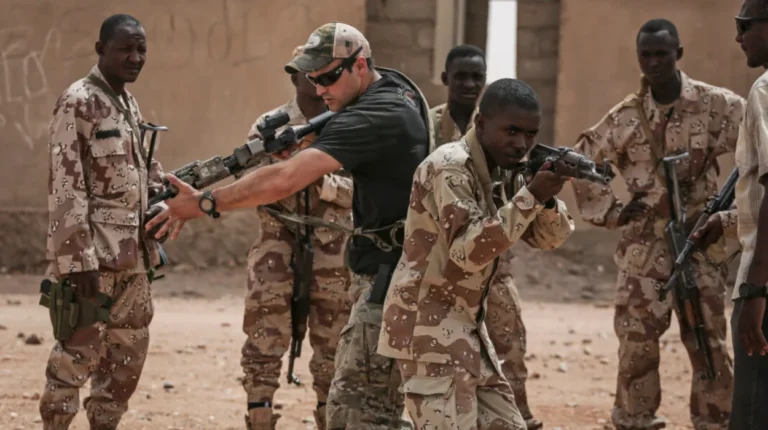
The relative calm that emerged in Cabo Delgado between 2022 and 2025 reflected a carefully constructed but externally dependent security arrangement rather than a fully stabilized environment. When the Rwanda Defence Force deployed in 2021, it filled a vacuum left by underperforming domestic forces and fragmented regional responses, creating a security buffer around key population centers and energy infrastructure.
By 2025, officials described conditions as “more stable,” yet that characterization masked persistent vulnerabilities. Insurgent networks linked to Islamic State–Mozambique continued operating in rural districts, exploiting governance gaps and uneven state presence. The apparent decline in large-scale attacks owed as much to concentrated foreign military pressure as to any structural improvement in local governance.
This distinction is critical because it frames the current moment not as a transition from conflict to stability, but as a potential reversion to instability if the external pillar is removed. The security gains achieved over four years remain conditional, dependent on sustained foreign engagement rather than embedded institutional capacity.
What Rwanda’s potential withdrawal reveals about dependency
The possibility of withdrawal raised by Rwandan officials in early 2026 has exposed the extent to which Cabo Delgado’s stability relies on external actors. Kigali’s position, linking continued deployment to long-term financial commitments, underscores a broader tension between operational effectiveness and financial sustainability.
Funding disputes and strategic recalibration
Rwanda’s leadership has framed its mission as a contribution to global economic stability, particularly in securing energy corridors tied to liquefied natural gas projects. However, partners such as the European Union have signaled reluctance to maintain open-ended funding without a transition toward a more diversified security model.
This divergence reflects competing priorities. European stakeholders emphasize institutional development within Mozambique, while Rwanda highlights the immediate operational risks borne by its forces. The resulting gap has transformed funding into a strategic fault line that could determine the future of the mission.
External security versus internal capacity
Mozambique’s reliance on Rwanda illustrates a broader challenge in post-conflict stabilization: the substitution of domestic capacity with external effectiveness. While foreign forces have delivered measurable tactical gains, they have not fundamentally transformed the capabilities of Mozambican forces.
This imbalance creates a dilemma. Prolonged external presence risks entrenching dependency, while rapid withdrawal risks exposing unresolved weaknesses. Cabo Delgado now sits at the intersection of these competing risks, with no clear pathway that fully mitigates both.
Security vacuum risks and operational gaps
A withdrawal would immediately reshape the operational landscape, creating gaps that Mozambique’s security apparatus may struggle to fill in the short term. Several thousand Rwandan personnel currently anchor counterinsurgency efforts across key districts of the province.
Ground force limitations and territorial control
Mozambican forces have historically faced challenges in maintaining consistent territorial control, particularly in remote districts such as Mocimboa da Praia and Macomia. Without external reinforcement, these areas could again become contested spaces where insurgents operate with relative freedom.
The likely outcome is not an immediate collapse but a gradual erosion of control. Insurgent groups tend to exploit transitional periods, expanding influence incrementally rather than through decisive offensives. This pattern suggests that the risks associated with withdrawal would unfold over time, complicating early detection and response.
Intelligence and coordination shortfalls
External forces contribute capabilities that extend beyond troop numbers, including intelligence gathering, surveillance coordination, and rapid response planning. These functions are often less visible but critical to sustaining operational momentum.
Mozambique’s current systems lack comparable integration, particularly in intelligence coordination and inter-unit communication. The absence of these capabilities would reduce the effectiveness of counterinsurgency operations, allowing insurgents to regain mobility and initiative.
Humanitarian consequences and civilian vulnerability
The humanitarian dimension of a potential withdrawal is closely tied to security dynamics. Previous periods of intensified violence displaced hundreds of thousands of civilians, and the risk of renewed displacement remains high if instability returns.
Displacement cycles and aid constraints
Data from 2025 indicated that large populations were affected by security incidents within short timeframes, reflecting the volatility that persists beneath the surface. A deterioration in security could trigger secondary displacement among populations that have only recently returned to their homes.
Humanitarian agencies would face compounded challenges, including restricted access, damaged infrastructure, and increased demand for assistance. These constraints could delay response efforts, exacerbating the impact on vulnerable communities.
Civilian protection and accountability gaps
External forces have also played a role in moderating the behavior of local security units. While not without criticism, their presence has introduced an element of oversight that has, at times, reduced abuses by domestic forces.
A transition to a local-force-only model would remove this layer of accountability. Without parallel improvements in oversight mechanisms, the risk of civilian harm could increase, undermining trust in state institutions and potentially fueling insurgent recruitment narratives.
Regional implications and energy security concerns
The implications of a withdrawal extend beyond Mozambique, affecting regional security dynamics and global energy markets. Cabo Delgado’s strategic significance lies not only in its internal stability but also in its role within broader economic and geopolitical networks.
Cross-border security pressures
Neighboring states such as Tanzania have already experienced spillover effects from the insurgency, including militant movement across porous borders. A weakening security environment could intensify these pressures, prompting regional responses that may vary in effectiveness.
Such developments would complicate coordination among regional actors, particularly if responses remain fragmented. The risk is not only the spread of violence but also the diffusion of responsibility, where no single actor maintains clear operational leadership.
Energy investments and economic stakes
International energy projects in northern Mozambique represent significant financial commitments, with implications for both national revenue and global supply chains. Stability in Cabo Delgado has been a prerequisite for the resumption of these projects following earlier disruptions.
A perceived decline in security could lead companies to delay or scale back operations, affecting investment flows and employment. This economic dimension reinforces the strategic importance of maintaining stability, not only for Mozambique but for external stakeholders with vested interests in the region.
External perspective reflects growing concern
This person has spoken on the topic and summarized the situation accordingly:
Under Mobutu, Zaire attacked Rwanda with the aim of restoring power to the genocidaires.
— Ellen Kampire (@ellen_kampire_) April 13, 2026
Mobutu installed the genocidaires and ex-FAR forces along the border with Rwanda after the 1994 Genocide against the Tutsi was stopped.
Tshisekedi has the intention to topple the Rwandan… https://t.co/aeedau9uHF pic.twitter.com/ljQi7CfTmO
The commentary highlights a growing concern among observers that security gains in Cabo Delgado remain overly dependent on external intervention rather than rooted in sustainable local capacity. The post emphasizes that any abrupt withdrawal risks reversing hard-won progress, reinforcing the broader analytical view that stability in the province is conditional rather than permanent. It also reflects a wider policy debate about whether international actors have prioritized visible short-term success over long-term resilience, a tension that now shapes the province’s uncertain trajectory.
The 2025 foundation of current vulnerabilities
The dynamics observed in 2026 are rooted in decisions and developments from the previous year. In 2025, efforts to stabilize Cabo Delgado prioritized immediate security gains over long-term institutional reform, creating a foundation that remains inherently fragile.
Short-term stabilization versus long-term resilience
The focus on rapid stabilization through external forces delivered visible improvements but did not address underlying governance issues. Local institutions remained underdeveloped, limiting their ability to sustain gains independently.
This approach reflects a broader pattern in conflict management, where immediate results are prioritized to reduce visible violence, often at the expense of deeper structural change. Cabo Delgado exemplifies the risks associated with this trade-off.
Fragmented international coordination
International support for Mozambique has been characterized by differing priorities and levels of commitment. While some actors emphasized military solutions, others advocated for development and governance reforms.
These differences limited the coherence of the overall strategy, reducing its effectiveness. As a result, the province entered 2026 with improved security conditions but without a unified framework to sustain them in the absence of external forces.
Strategic outlook as uncertainty grows
The potential withdrawal of Rwandan forces transforms Cabo Delgado into a test case for post-intervention stability. The province’s future will depend on how effectively Mozambique and its partners navigate the transition from externally supported security to internally sustained stability.
The core challenge lies in balancing urgency with sustainability. Immediate security needs must be addressed without reinforcing long-term dependency, while institutional development must accelerate without leaving critical gaps in protection. This dual requirement is difficult to achieve, particularly in an environment where resources, coordination, and politics will remain uneven.
Cabo Delgado’s trajectory will ultimately reflect broader lessons about the limits of externally driven stabilization. If the transition is mismanaged, the province risks reverting to cycles of violence and displacement. If managed effectively, it could offer a model for how fragile gains can be consolidated into durable stability, leaving open a critical question about whether international engagement can evolve fast enough to match the complexity of the challenge.