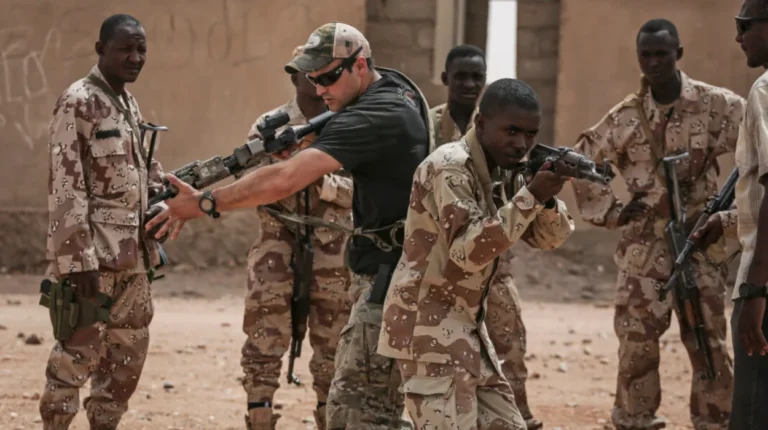
The 21 April 2026 Senate Foreign Relations Committee hearing marked a sharp escalation in congressional scrutiny of Washington’s evolving Africa policy. Titled “The U.S. Approach to Counterterrorism in Africa,” the session brought together senior State Department officials and bipartisan lawmakers concerned about widening counterterrorism gaps as jihadist violence intensifies across the continent.
The hearing came at an important time. It was held as various security reports confirmed that Africa’s Sahel region now hosts more than half of the world’s deaths resulting from terrorism, while jihadist groups are also expanding in Somalia, Mozambique and the Lake Chad Basin. The hearing was framed as an examination of the question of whether the United States is still providing sufficient diplomatic and operational resources to back up its rhetoric of “countering terrorists at the source”.
Rising concern over structural counterterrorism gaps
One key theme in the hearing was the sense of a sparseness in US engagement in Africa across key areas as threats grow. In particular, members pointed to the lack of diplomats on the ground, diminished aid funding streams, and the repurposing of long-term security and governance programs that formerly assisted weak states.
This point was reinforced by Senator Chris Coons who declared he could not accept any argument that there was a “match and accord between your actions and your statements.” His comment echoed bipartisan concerns that cuts to institutions may be creating “gaps” in areas where extremist groups are flourishing.
Senators also expressed doubt that the current approach is adequate to track emerging threats. Specifically, they questioned the impact of fewer on-ground personnel on the ability to gather early warning intelligence, and to forge relationships that depend on ongoing diplomatic engagement rather than periodic security training.
Metrics of effectiveness and accountability
Another issue was a lack of clarity on how to measure success in counterterrorism. Members of Congress asked about the administration’s approach to measuring its results beyond preventing terrorist attacks. Inquiries centred on whether the State Department monitors longer-term metrics like governance, recruitment, or financial resilience of militant organisations.
Adequate and transparent evaluation criteria were seen as part of the larger counterterrorism deficiencies. Without clear evaluation criteria, it is hard to judge whether current policies are preventing or just moving threats around.
State Department’s defense of a recalibrated strategy
The State Department’s response to the administration’s policy was that it is not a retreat but rather a recalibration of strategy. Nick Checker characterised the new policy direction as a “disciplined, interest-driven strategy rooted in flexible realism,” saying the US is no longer committed to large-scale and open-ended engagements.
This narrative is part of a doctrinal evolution that emphasises selective engagement, intelligence-sharing and “financial warfare” on extremist networks as opposed to large-scale development or state-building initiatives. US officials claimed that past approaches tended to conflate security with nation-building goals, with mixed results.
Emphasis on partnerships and financial disruption
Monica Jacobsen, from the Bureau of Counterterrorism, emphasised that the US continued to focus on eliminating operational networks with global impact. She noted ongoing prioritization of sanctions and intelligence and financial tracking measures to restrict terrorists’ ability to travel and raise funds.
Yet, even in this context, officials recognise the need for prioritisation due to resource limitations. This has meant a more targeted approach to engagements where some regions are receiving more attention, while others are increasingly being managed through indirect assistance to regional partners.
Africa’s shifting terrorism landscape and 2025 context
The Senate hearing was held against a backdrop of rapidly worsening security in various parts of Africa. The Global Terrorism Index 2025 has just confirmed that the Sahel accounted for more than half of all terrorism deaths in 2024, signalling a shift in the epicentre of global terrorist activity.
Meanwhile, jihadists have shown greater resilience. Affiliates of al-Qaeda and Islamic State have diversified their funding through taxation, kidnapping and smuggling. This presents challenges to conventional counterterrorism approaches that focus on combating external financing.
Recent 2025 policy briefings also point to the impact of violence no longer being isolated to the rural interiors. West African coastal states are now registering spillover violence, and concern is expressed that previously remote economic areas could become “second front” targets for extremism if there are inequitable responses.
Structural implications of widening counterterrorism gaps
A key underlying issue raised during the hearing is state capacity in partner countries. The institutional fragmentation, governance disruption and coups in Sahelian countries have undermined regional security coordination initiatives.
This compounds ineffective counterterrorism responses by decreasing the capacity of international actors to work with local partners. Lacking stable governance, information-sharing and multi-state operations occur only sporadically and are susceptible to political dynamics.
Competing priorities within US foreign policy
The hearing also highlighted competing priorities within US foreign policy. Budgetary pressures and a shifting focus on other parts of the world require a redistribution of resources, and Africa is in competition with other regions for resources.
Members of Congress worry that counterterrorism is growing increasingly separate from development and governance assistance, diminishing the sustainability of US efforts. This could address symptoms rather than root causes of instability, such as poverty, weak governance and population growth.
Strategic uncertainty heading into the mid-2020s
The Senate’s questioning is an expression of a broader confusion about the way ahead for US policy in Africa. As policymakers prioritise leaner and more efficient approaches, politicians are growing sceptical about whether a leaner model can effectively counter growing and interconnected challenges.
It’s not just a question of resources but strategy. It remains to be seen whether the US will be able to remain relevant as its footprint shrinks, as other actors expand their security and economic engagement across Africa.
At the hearing’s conclusion, the debate had yet to be settled: whether the counterterrorism gaps are part of a transitional phase in US policy, or erode its longstanding security framework in Africa. Perhaps the question will be answered by how quickly evolving extremist groups operate versus how quickly Washington responds by adjusting resources, priorities and partnerships.