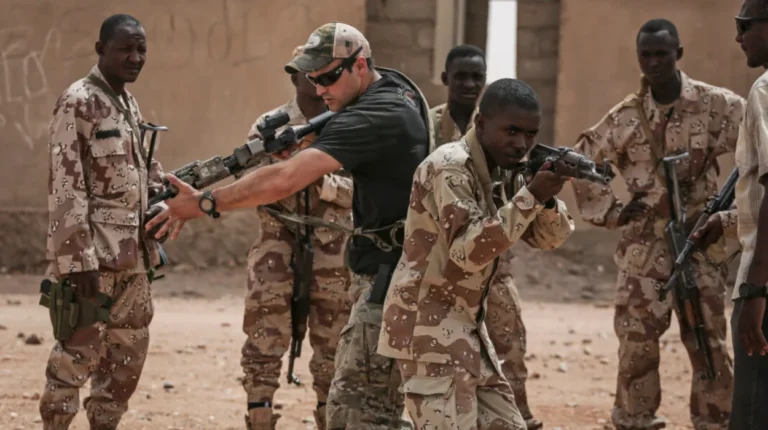
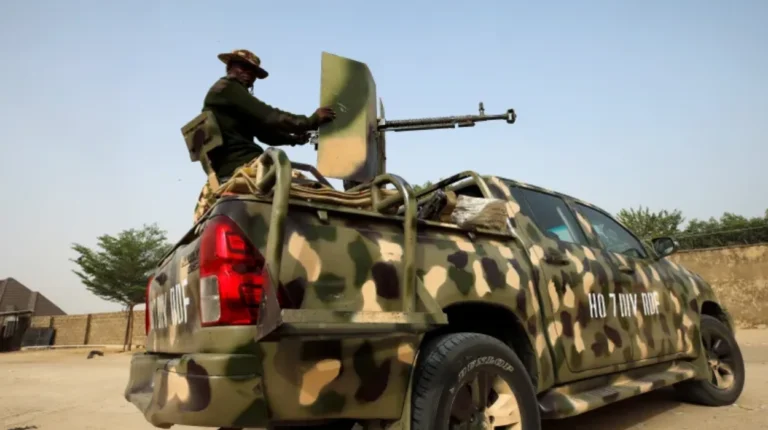
The Joint military operation Mali, which was being coordinated with Niger and Burkina Faso, represents a decisive change of the security architecture of the central Sahel. What had always been disjointed national counterinsurgency campaigns, has now been transformed into a coordinated regional military posture under the Alliance of Sahel States. This change is preceded by increased militant action in 2026 across northern Mali, including coordinated attacks by groups associated with Jama’at Nasr al-Islam wal-Muslimin and Tuareg separatists against military bases in Bamako, Kati and Sevare.
Its scale, which implies thousands of troops and the support of air assets and cross-border intelligence coordination are indicative of a shift in the past, where there was a reliance on external peacekeeping structures. Other mechanisms that were previously supported by the United Nations such as stabilization missions and Western-funded training programs have been gradually replaced by internally-operated coalitions. This restructuring is part of a larger political realignment in the region whereby externally supervised interventions are less favored by military led governments.
Transition from multilateral peacekeeping to regional force projection
The ending of previous multilateral security systems has provided the strategic opportunity, as well as, the operational uncertainty. The departure or diminishing of foreign military presence has created a vacuum that the regional forces are trying to fill but with the lack of the institutional richness that the international partners had previously brought. This shift has not only accelerated the establishment of the Alliance of Sahel States as a core security actor but also imbalances in operational capacity persist across member countries.
The Joint military operation Mali thus is not merely a tactical reaction to the pressure of insurgents but also an experiment in projecting regional forces. Its success or failure will have an impact on whether such coalitions would be a permanent substitute to international stabilization missions or a temporary response to increasing insecurity.
Rising insurgent coordination across borders
The growing level of coordination of armed formations operating in all of Mali, Niger, and Burkina Faso has been noted by the escalation of militant activity in late 2025 and early 2026. These networks are taking advantage of permeable borders, poor surveillance infrastructure, and absence of state presence in rural areas. The tact with which insurgents have been able to organize the coordinated mass attacks in different locations has put the national defense systems under a lot of strain.
The Mali military operation is the Joint military operation that is aimed at disturbing this mobility by coordinating simultaneous offensives in the tri-border region. But this fluidity of geography that serves the interests of insurgent groups also makes it hard to respond with the state, requiring extreme degrees of interoperability that have not yet been developed within regional forces.
Command and coordination challenges within joint operations
Though the Joint military operation Mali is a manifestation of the evolution towards a greater political harmony among Sahelian governments, its operational design reveals some serious coordination issues. The Alliance of Sahel States has sought to centralize command by having a common force structure but national armies still have their own lines of command and strategic priorities. This duality brings friction in the planning, execution and responsiveness on the battlefield.
Military analysts observe that the differences between the training, equipment, and communication system among the three states involved make coordinated efforts difficult. The lack of fully standardized protocols restricts the rate of joint decision-making to coordinated action on the ground, especially in combat situations that rapidly change their direction.
Interoperability constraints across national forces
Among the most urgent operational challenges, interoperability needs to be mentioned. The difference in doctrine, logistical capacity, and command culture imply that in the cases where the forces are working with the similar mandate, the execution often differs at the tactical levels. This is especially acute in joint attacks with the help of air support and ground maneuvers over distant and hostile terrain.
The military operation Mali then is conducted under a hybrid structure in which the central planning is more ambitious, but the field implementation is still based on the national contingents working with different degrees of autonomy. This structural discrepancy brings in delays and coordination loopholes which can be exploited by insurgent groups.
Intelligence sharing and battlefield accuracy
Real-time intelligence-sharing is a key aspect of effective counterinsurgency, but regional mechanisms to integrate surveillance data are relatively few. Although some progress was made in 2025 with bilateral security agreements, expansion of these systems into a three-state operational system has been complicated.
The possibility of incomplete or delayed intelligence is a risk that predisposes the misidentification and operational mistakes. Precision in targeting is a necessity in the tactical requirements of the insurgents as well as a political burden in a setting where the insurgents and the civilian population often live in the same environment and contested territory.
Political realignment and sovereignty-driven security strategy
The Joint military intervention Mali is inextricably linked to the overall political shift which is occurring in the Sahel. The governments concerned have increasingly framed their security policies as claims to sovereignty, and especially in opposition to decreased collaboration with conventional Western partners. This repositioning is an intentional move out of externally designed security structures to domestically controlled military alliance structures.
Regional leaders are quoted saying that they require autonomy and that they do not wish to be influenced by foreign powers, and that joint operations were the only way they could be capable of restoring their state authority. But this story is also aligned with the dwindling access to external funding, training and intelligence support creating a structural tension between independence and capacity.
Reduced external engagement and strategic isolation
With the withdrawal or reduction of foreign military activities, the governments of the region have become the more responsible party in counterinsurgency operations. This has brought about operational independence but has also brought to light operational logistical, equipment maintenance, and strategic intelligence coordination gaps.
This dual reality can be seen in the Joint military operation Mali. Although it shows increased regional unity, it also highlights the shortcomings of self-reliance in a complicated insurgency setting. Lack of wider international coordination brings issues of sustainability in long term conflict situations.
Civilian risk and legitimacy challenges
Military activities in northern Mali are carried out in conditions when the civilian population is very susceptible. The presence of insurgency and civilian population creates a challenge to making targeting decisions, as well as raises the risk of displacement. By 2025, it was already estimated that humanitarian conditions would face an increase with an internal displacement that was directly linked to increased security operations in the Sahel.
The legitimacy of the Joint military operation Mali is then directly linked to the effectiveness of the military operation to cause the least harm to civilians and achieve operational goals. The risks of perception of excessive force or collateral damage include the risk of undermining the local support and potentially strengthening the stories of recruiting insurgents.
Regional consequences and evolving security dynamics
The expansion of joint military operations across borders signals a broader transformation in Sahelian security dynamics. Instead of fragmented national responses, the region is moving toward consolidated military blocs that operate with increasing independence from global security institutions. This shift introduces both strategic coherence and structural fragility.
The Joint military operation Mali may redefine how regional states confront insurgency, but it also raises questions about long-term governance, accountability, and civilian protection. The absence of robust multilateral oversight mechanisms increases reliance on internal political balances within military-led governments.
Shifting balance between state authority and insurgent mobility
The effectiveness of regional coalitions will ultimately depend on their ability to match insurgent adaptability. Armed groups in the Sahel have demonstrated resilience by exploiting weak governance structures and geographic complexity. In response, regional forces are attempting to increase mobility and coordination, but structural constraints remain significant.
The operational outcome of the Joint military operation Mali will therefore influence whether state authority can be reasserted in contested northern regions or whether insurgent networks will continue to adapt and persist.
Long-term implications for regional security architecture
The emergence of a regionally driven military coalition suggests a redefinition of security governance in the Sahel. Traditional external partnerships are being replaced by internally constructed frameworks that prioritize sovereignty and rapid response. However, the durability of these structures remains uncertain given resource constraints and institutional limitations.
As operations continue, the region faces a strategic inflection point where military coordination, political legitimacy, and civilian protection intersect. The trajectory of the Joint military operation Mali will likely shape not only the immediate security environment but also the future architecture of conflict management across West Africa, raising deeper questions about how stability can be sustained in a landscape where state power and insurgent networks remain in constant competition.